In the midst of the RAMpocalypse and the billions of dollars being thrown at AI, it's easy to become blind to the fact that the use of machine learning can be highly beneficial in lots of different scenarios. Case in point: an update to an old AMD GPU Linux driver was created with the help of Microsoft's Copilot.
As reported by Phoronix, the driver is R600 Gallium3D, an open-source package for Mesa, that's exclusively for AMD's Terascale architecture GPUs. These first appeared in 2007, with the Radeon HD 2000-series, before bowing out with the HD 6000-series three years later (though a variety of rebadged chips continued to appear in later Radeon models).
Since AMD no longer offers any kind of official support or updates for this driver set, it's down to the coding community to keep these alive, and Gert Wolny seems to be one of the very few coders working on the R600 drivers these days. Since it's obviously not a full-time, paid job, you'd naturally expect anyone in this situation to be getting help from any source available.
That's precisely what's happened in this instance, where Wolny has leaned on GitHub Copilot to help out with tidying up the shader compiler code. This process is called refactoring, and it essentially irons out hiccups, bloated code, duplication, and so on without changing what it all fundamentally does.
This is something that AI is quite good at, as it can quickly spot things among the vast sea of code lines that the human brain could potentially miss. Microsoft has a short tutorial on Copilot refactoring if you're interested in learning more about what it can do.
Admittedly, none of this is likely to be noteworthy to most PC gamers, because it's only for old hardware that can't be used to run any of the latest games. But if you do have a penchant for vintage hardware, running on Linux to avoid having to deal with Windows spitting the dummy out over drivers, then it's surely good news for you.
One question worth considering is how long it will be before AI is used to handle the whole process of keeping older hardware alive and kicking, rather than just doing a spot of code spring cleaning. Given how rapidly we've gone from AI simply being a topic of academic interest to now defining today's world of computing, the answer is likely to be 'not very long at all.'
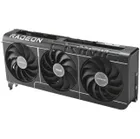
1. Best overall: AMD Radeon RX 9070
2. Best value: AMD Radeon RX 9060 XT 16 GB
3. Best budget: Nvidia RTX 5050
4. Best mid-range: AMD Radeon RX 9070 XT
5. Best high-end: Nvidia GeForce RTX 5090