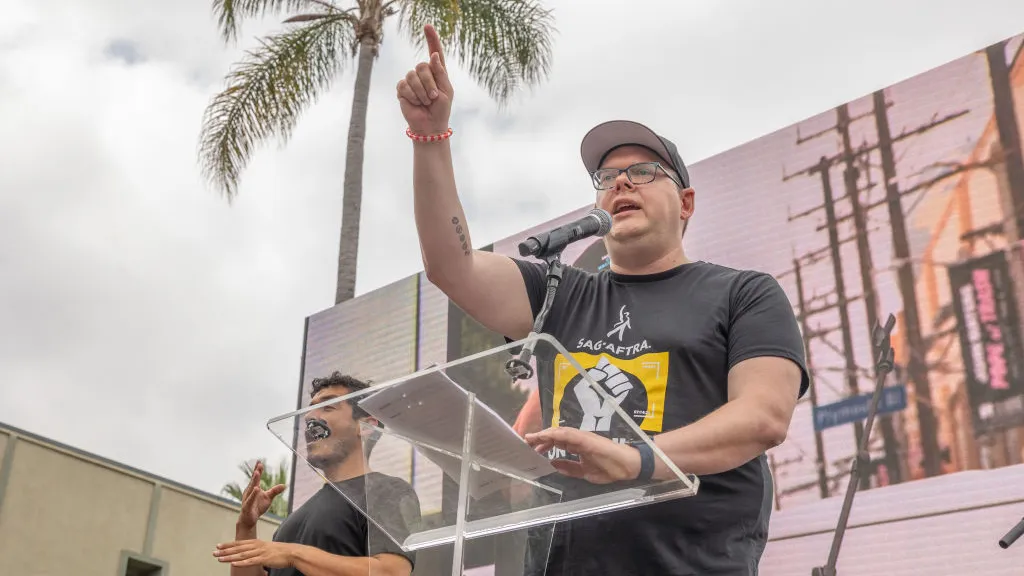
It's happening again: Videogame voice and motion capture actors in the SAG-AFTRA union are going on strike. Over 160,000 performers will refuse to work on new games in production at a number of major developers, including Activision, Disney, and EA, until the companies agree to a contract with "critical AI protections" for union members. The strike officially begins on July 26.
The voice actors, who authorized the strike with a 98.32% "yes" vote, want big game makers to inform the union when they plan to use generative AI in a way that would replace the work of actors, and to negotiate compensation when they want to generate material based on an actor's voice or likeness.
The actors are striking for "fair compensation and the right of informed consent for the AI use of their faces, voices, and bodies," according to SAG-AFTRA national executive director Duncan Crabtree-Ireland.
The game makers in negotiation with the union say they've already offered "meaningful AI protections that include requiring consent and fair compensation," with terms that are "among the strongest in the entertainment industry," but the union disagrees.
"Although agreements have been reached on many issues important to SAG-AFTRA members, the employers refuse to plainly affirm, in clear and enforceable language, that they will protect all performers covered by this contract in their AI language," reads the union's strike announcement.
"Eighteen months of negotiations have shown us that our employers are not interested in fair, reasonable AI protections, but rather flagrant exploitation," says actor and union negotiator Sarah Elmaleh. "We refuse this paradigm—we will not leave any of our members behind, nor will we wait for sufficient protection any longer."
"We are disappointed the union has chosen to walk away when we are so close to a deal, and we remain prepared to resume negotiations," said Audrey Cooling, a spokesperson for the game producers, in a statement sent to PC Gamer.
Generative AI voices will arguably never be able to perform as convincingly as real actors, but there are already examples in the wild of actors being replaced by AI text-to-speech, and of generative AI being used to mimic voices. Stellaris uses generative AI voices based on the voices of real actors, for instance, although Paradox pays royalties to the actors who provided the AI training data, which is the kind of agreement a contract with AI protections can require.
This new frontier of generative AI use is messy: One notable incident saw OpenAI use a voice that sounded very similar to Scarlett Johansson's, mimicking the Hollywood star's performance as an AI companion in the movie Her. AI voice replication is also being used by non-professionals, in some cases to create material that actors vehemently object to, such as pornography. It's hard to stop hobbyists, but contractual protections could at least prevent game companies from exploiting a hired actor's likeness for work they didn't agree to.
AI was also one of the issues that motivated SAG-AFTRA and Writers Guild of America strikes on Hollywood studios in 2023.
SAG-AFTRA's videogame actors in particular last went on strike in 2016 over residuals. That strike, which targeted the same set of game makers, lasted for nearly a year. It isn't obvious how significantly it hindered in-development games at the time, as big developers wouldn't have publicly attributed delays to the strike, but one notable consequence was that actor Ashly Burch did not reprise her role as Chloe in Life is Strange: Before the Storm.
This article has been updated to include a statement from the game producers.