Ubisoft shares plummet to lowest price in over 14 years amid its recently announced 'restructuring' centered on cancellations, layoffs, and generative AI
The gaming giant's share price took a hefty 34% hit the day after the announcement.
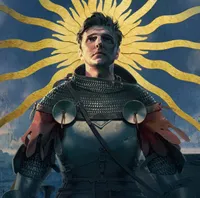
Wednesday, Ubisoft announced a "major reset" of its organizational hierarchy and game development plans that CEO Yves Guillemot said would foster "the conditions for a return to sustainable growth." That included a fundamental shakeup to its internal studio structure, the cancellation of six projects including the Prince of Persia: The Sands of Time remake, and for some reason, a promise that more "player-facing generative AI" was on the way.
As you might expect when a company announces everything is on fire, everything is on fire: as CNBC pointed out a day after the announcement, the company's share price went down by around 34% after the restructuring was announced. When the stock market closed yesterday the price sat at €4.06 (around $4.80) a share.
This marks the lowest point in a long downward trajectory going back to 2021 as you can observe on CNBC's website, and it's the lowest share price the company has seen since 2011—the year it reported a $74 million loss. While it's not the lowest the share price has ever been, nor is it perhaps as dicey as the hostile takeover Vivendi backed off from in 2018, it signals the graveness of this moment for the company.
It's no surprise that Ubisoft is hitting all sorts of panic buttons given its financial struggles as of late, but it's being chided for the particular buttons it's chosen to push. Right after the restructuring was announced, French game industry union Solidaires Informatique called for strike in response to the "disastrous" announcement. Along with an end to the company's cost reduction plan and pay raises, one of the union's demands is improved remote work conditions, which Ubisoft quietly took a sledgehammer to amid the announcements.
With EA bought by a Saudi-Kushner alliance and Activision comfortably absorbed into Microsoft, Ubi is part of a dying cohort of third-party (that is, non console-producing) mega publishers that dominated the industry in the 2000s and 2010s. Healthy examples can now mostly be found in East Asia: Japanese legacy publishers like Capcom, Square Enix, Sega, and Konami, Tencent in China, or Krafton, Pearl Abyss, and Nexon in Korea.
2026 games: All the upcoming games
Best PC games: Our all-time favorites
Free PC games: Freebie fest
Best FPS games: Finest gunplay
Best RPGs: Grand adventures
Best co-op games: Better together
Keep up to date with the most important stories and the best deals, as picked by the PC Gamer team.
Justin first became enamored with PC gaming when World of Warcraft and Neverwinter Nights 2 rewired his brain as a wide-eyed kid. As time has passed, he's amassed a hefty backlog of retro shooters, CRPGs, and janky '90s esoterica. Whether he's extolling the virtues of Shenmue or troubleshooting some fiddly old MMO, it's hard to get his mind off games with more ambition than scruples. When he's not at his keyboard, he's probably birdwatching or daydreaming about a glorious comeback for real-time with pause combat. Any day now...
You must confirm your public display name before commenting
Please logout and then login again, you will then be prompted to enter your display name.