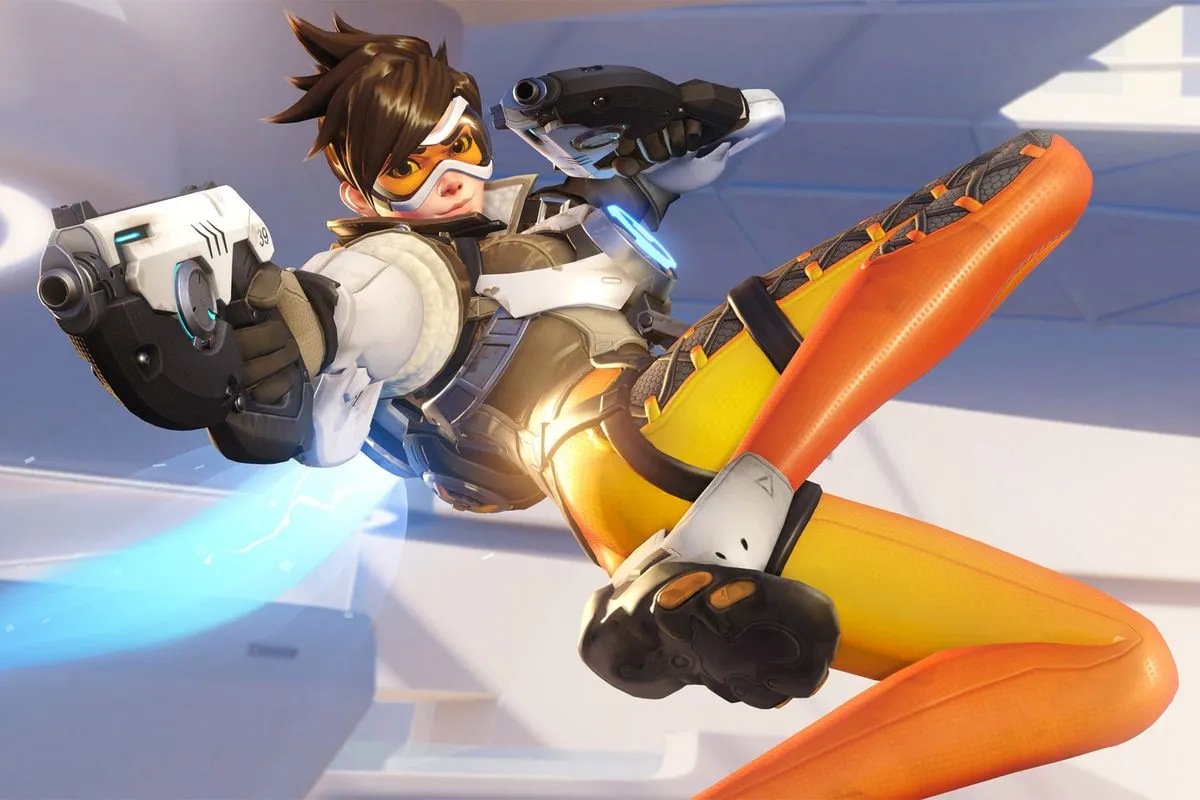
The US Department of Justice has filed a lawsuit over Activision Blizzard's "Competitive Balance Tax" in the Overwatch and Call of Duty leagues that it says "penalized teams for paying esports players above a certain threshold and limited player compensation in these leagues." At the same time, the DOJ also submitted a proposed settlement that, if approved by the court, will end the matter as long as Activision promises not to do it again.
The lawsuit notes that both Overwatch and Call of Duty are massively successful games, and that their respective pro leagues "have generated hundreds of millions of dollars for Activision from franchise fees, sponsorship revenues, exclusive streaming deals with YouTube, and the Overwatch League’s television broadcast deal with Disney (including subsidiaries ESPN and ABC)." Like most other sports leagues, the Overwatch and Call of Duty leagues are made up of independently owned teams, who are in constant competition to sign and retain the best players.
"From the inception of each league, Activision and the teams agreed to impose rules that had the purpose and effect of substantially lessening competition for players by suppressing player compensation," the lawsuit states. "Under these rules, which Activision called the 'Competitive Balance Tax,' teams were fined if their total player compensation exceeded a threshold set by Activision each year. For every dollar a team spent over that threshold, Activision would fine the team one dollar and distribute the collected sum pro rata to all non-offending teams in the league."
This agreement had a few effects, according to the DOJ. It reduced the likelihood of expensive bidding wars for players, and for teams that did spend large for marquee players, it had the knock-on effect of driving down the salaries for everyone else. "Teams also understood that the Tax incentivized their competitors to limit player compensation in the same way, further exacerbating the Tax’s anticompetitive effects," the lawsuit states.
Sports fans reading this might reasonably wonder why Activision Blizzard is getting heat for imposing a salary cap, which is common in other sports leagues: The NBA, WNBA, NFL, NHL, MLS, CFL, NLL, and various others all have salary caps, for instance, and that's just in North America. The reason, like so many other Activision issues, comes down to a lack of proper representation: Other pro leagues reached salary cap agreements through collective bargaining, but players in the Overwatch and Call of Duty leagues are not unionized, and the cap was imposed on them without their input or consent.
"Videogames and esports are among the most popular and fastest growing forms of entertainment in the world today, and professional esports players—like all workers—deserve the benefits of competition for their services, Jonathan Kanter, assistant attorney general of the Justice Department’s Antitrust Division, said in a statement. "Activision’s conduct prevented that from happening. Today’s lawsuit makes clear that the Antitrust Division remains committed to protecting workers across all types of industries from anticompetitive conduct."
Alongside the lawsuit, the Antitrust Division also filed a proposed consent decree—basically a settlement of the case—which would prohibit Activision from imposing any rule that either limits player salaries or penalizes teams for throwing around too much cash. Activision also has to agree to eliminate the Competitive Balance Tax in its esports leagues.
In a statement sent to PC Gamer, Activision effectively agreed with the terms of the settlement, although it denied that Competitive Balance Tax broke any rules.
"Activision Blizzard Esports is committed to being a leader in the esports industry and creating opportunities for players to earn fair pay and benefits," a company representative said. "When we launched The Overwatch and Call of Duty Leagues, we wanted to create viable career opportunities for the players requiring minimum salaries and mandatory benefits as part of player contracts. As a league, we also wanted our products to be competitive, so we carefully designed and implemented the Competitive Balance Tax.
"We have always believed, and still believe, that the Competitive Balance Tax was lawful, and it did not have an adverse impact on player salaries. The tax was never levied, and the leagues voluntarily dropped it from our rules in 2021. We remain committed to a player ecosystem with fair pay and healthcare and continue to have the least restrictive player mobility compensation system across all of the major sports leagues."
The DOJ's investigation into the Overwatch League's salary cap actually began in July 2021, but negotiations to settle the matter broke down in late 2022, according to the Jacob Wolf Report. But with Microsoft's proposed acquisition of Activision Blizzard steaming toward its conclusion—and looking increasingly likely to succeed—it's possible the company was growing eager to clear the slate and remove any potential roadblocks.
Assuming the settlement is approved by the court, this will mark Activision Blizzard's second settlement with a US government regulatory body this year. In February, it agreed to pay a $35 million fine to settle charges that it violated rules protecting whistleblowers and failed to properly disclose information to investors.