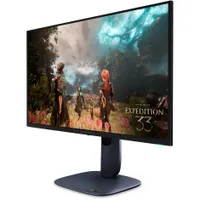
Dell's monitor division has been consistently delivering great panels for years, and in recent times the Alienware branding has lead to some of the most affordable versions of the best panels, too. Which probably seems utterly counterintuitive to those of you more used to Alienware's laptops and PCs sitting right at the top (and often well beyond) what most people would call premium priced.
But since it started creating OLED gaming monitors a few years back it has made a name for itself under-cutting the competition while still delivering the same high-quality screens. Take a look at the recent Alienware AW3926QW, which earned a stellar review just yesterday, and the fact we recommend the AW2726DM as the best budget OLED, for just a couple of examples. And they only get more reasonably priced when they're on offer, as with the Alienware AW2725Q I just spotted on its latest deals page. This is a 27-inch 4K QD-OLED display discounted down from $699 to $573 at Dell.
It's not the latest in OLED monitor tech, but the march of pace in panel technology means that excellent screens of last year are now far more affordable than they were not so long back. When we published our initial Alienware AW2725Q review last year, it cost around £800 - £900, which means we're getting well over a third lopped off that original price tag.
- Join us on WhatsApp for daily deals, direct to your phone.
But don't fear that you're getting some sort of obsolete technology picking up this older monitor, because it's still got a specs sheet that is right up there with the best around. For one thing, most of the recent OLED panel updates have been either in the ultrawide or 32-inch sizes, which means the 27-inch 4K panels haven't really changed.
Even so, where the absolute best OLED panels from either LG or Samsung are still only hitting 275 - 300 nits in terms of fullscreen brightness, this Alienware isn't far off the pace at 250 nits. This is seen as one of the slight failings of current OLED technology, but this display is still right up there.


And is that lack of fullscreen brightness really an issue? If you game under very bright lights, maybe—and if you are there's a slight purple tint to QD-OLED panels which isn't great—but otherwise it's the level of contrast that really makes your chosen games pop.
This is a gaming monitor that will sing with HDR enabled (and deals admirably well with SDR content without you having to switch between the modes in Windows all the time), and the brightest pin points of a HDR image will pop at up to 1,000 nits. Which is plenty bright enough.
I really like the rounded vibe of the recent Alienware AW30 design, and the curvy stand and backing of the monitor look great. But more importantly remain stable, too.
In all, if you're after affordable 4K OLED visuals, Alienware's 27-inch option is a great pick, especially at this price.
👉Check out more Dell monitor deals👈
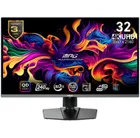
1. Best overall / 4K:
MSI MPG 322UR X24
2. Best budget 4K:
Asus ROG Strix XG27UCG
3. Best budget OLED
Alienware AW2726DM
4. Best 1440p:
MSI MPG 271QRX
5. Best budget 1440p:
KTC H27T22C-3
6. Best 1080p:
AOC Gaming C27G4ZXE
7. Best Ultrawide:
Gigabyte MO34WQC2
8. Best budget ultrawide:
Koorui 34E6UC
9. Best competitive
KTC 25M1