The Fallout TV series returns this week, with season 2's episodes dropping weekly until February. This season of the show has opted for the setting of New Vegas, and PCG's Ted Litchfield recently had the opportunity to speak to the lead writer of Fallout: New Vegas, John Gonzalez.
As well as some inconveniently correct observations on the lack of credit and residuals for videogame writers, Gonzalez was in a reflective mood on how some aspects of the 2010 game come across in 2025. This includes one of New Vegas' most memorable characters, Mr. House, a tech tycoon kept alive by a supercomputer who runs the post-nuke Vegas, and who'll have a major role in season 2 of the show.
Article continues below"But Mr. House is unique in that he was able to calculate when the Great War was going to occur within a window of a few days—he was just a couple of days short of getting the platinum chip. I don't think we're seeing that Elon Musk is able to calculate things to that degree of precision."
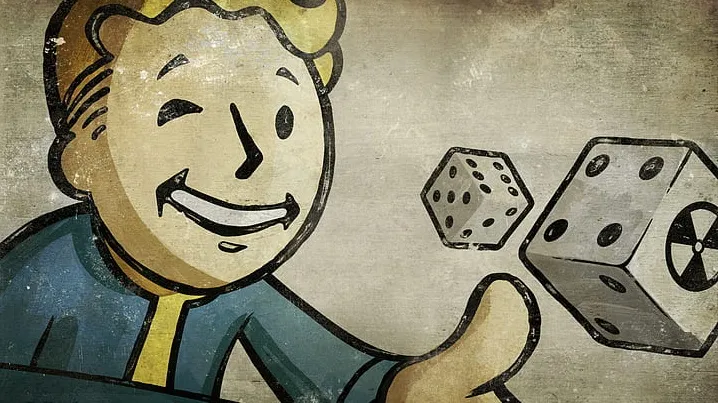
"House was inspired by this early phase of research that I did when I was on the project, where we didn't have money for a research trip or anything like that, so I just dove into some books," says Gonzalez. "One of the fascinating stories of Vegas, of course, is the involvement of Howard Hughes. And then Howard Hughes kind of morphed into this more Fallout version of a tech magnate.
"He is genuinely brilliant. I think this kind of ethical paralysis that you describe is one of the very best things about the game. I remember being delighted that there were early conversations and forums about, 'Wait a minute, who are the good guys?' This is another thing I would just credit to Josh Sawyer. I think I was very simpatico with this, I didn't need to be convinced."
Hughes' history with Las Vegas is a book unto itself, but was in short transformational for the city and full of amusing asides: such as the fact that he first moved into the Desert Inn hotel and, rather than leave his room, just bought the hotel outright. He ended up owning huge swathes of Las Vegas, including some of its most iconic buildings, and by the time of his death was the single largest employer in the state of Nevada. In other words, and much like Mr. House, Hughes was probably the single most powerful and influential individual in Las Vegas.
"Mr. House, I think what's attractive about him is that he does seem to have a kind of preternatural intelligence," says Gonzalez. "Could he actually be somebody that, if you follow this guy in a century or two, we've got stations in orbit again? He seems to have this plan, and he does. He's not interested in totalitarian rule, he doesn't really care. He's very immoral. He doesn't care about people [on the] Strip, or there's prostitution, there's gambling, there's all this stuff. He doesn't care. He just cares about the bottom line fueling this technological vision he has."
The difference between Mr. House and some of the more contemporary parallels being, in Gonzalez's eyes, that he might've been able to change things.
"The question is does he actually have the chops to make it happen? And there's some indications that he does. The interesting thing to me is, people fall away from Mr. House on the basis of his ruthlessness. [For] a lot of them it's like, 'I think I can work out something with the Brotherhood.' And he's like, 'No, you cannot.'"


You must confirm your public display name before commenting
Please logout and then login again, you will then be prompted to enter your display name.