

The US seeks further restrictions on China's access to advanced chipmaking equipment
You can't have my toys.
Keep up to date with the most important stories and the best deals, as picked by the PC Gamer team.
You are now subscribed
Your newsletter sign-up was successful
Want to add more newsletters?
Every Friday
GamesRadar+
Your weekly update on everything you could ever want to know about the games you already love, games we know you're going to love in the near future, and tales from the communities that surround them.
Every Thursday
GTA 6 O'clock
Our special GTA 6 newsletter, with breaking news, insider info, and rumor analysis from the award-winning GTA 6 O'clock experts.
Every Friday
Knowledge
From the creators of Edge: A weekly videogame industry newsletter with analysis from expert writers, guidance from professionals, and insight into what's on the horizon.
Every Thursday
The Setup
Hardware nerds unite, sign up to our free tech newsletter for a weekly digest of the hottest new tech, the latest gadgets on the test bench, and much more.
Every Wednesday
Switch 2 Spotlight
Sign up to our new Switch 2 newsletter, where we bring you the latest talking points on Nintendo's new console each week, bring you up to date on the news, and recommend what games to play.
Every Saturday
The Watchlist
Subscribe for a weekly digest of the movie and TV news that matters, direct to your inbox. From first-look trailers, interviews, reviews and explainers, we've got you covered.
Once a month
SFX
Get sneak previews, exclusive competitions and details of special events each month!
China, despite its growing economic status and political influence, remains behind the likes of the USA, Taiwan, Japan, and Korea when it comes to its chip sector, and the US would like to keep it that way. According to Bloomberg, The US is pushing Dutch chipmaking technology firm ASML to stop selling China essential tech that's needed to grow its chipmaking sector.
ASML is the world's largest supplier of lithography equipment, which is essential for chip production. ASML is already barred from selling its most advanced Extreme Ultraviolet (EUV) tools to China, but now the US wants to go further and block it from selling Deep Ultraviolet (DUV) tools as well.
These less advanced tools are still essential for the production of application-specific chips found in everyday devices, from household electronics, to cars, to our PCs. Most relevant to the current situation, these chips are vital for automation and robotics applications and manufacturing, which is critical for China. If ASML does go ahead with the ban, it won't do much to ease ongoing chip shortage issues that still affect many types of chips.
The US government's move is definitely an escalation in the ongoing trade war between the two powers. Despite the Biden administration's moves to ease some of the Trump-era trade tariffs, it shows no signs of easing restrictions on advanced technology, even though ASML is a Dutch company.
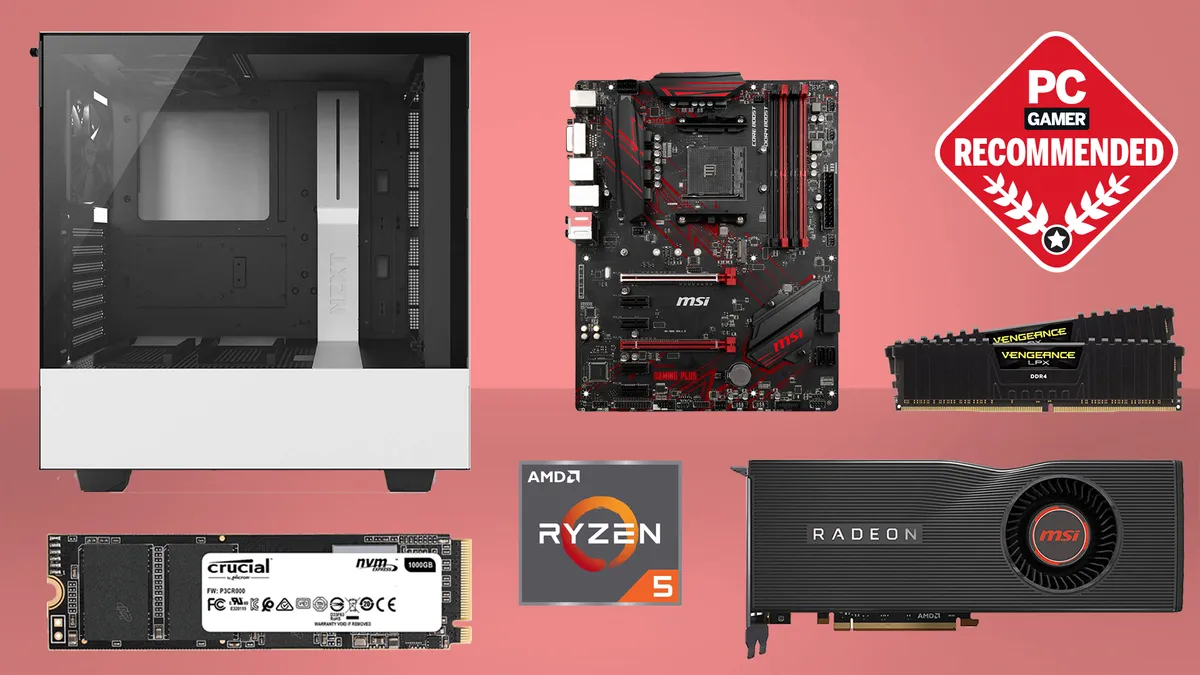
Best CPU for gaming: The top chips from Intel and AMD
Best gaming motherboard: The right boards
Best graphics card: Your perfect pixel-pusher awaits
Best SSD for gaming: Get into the game ahead of the rest
Chinese Foreign Ministry spokesperson Zhao Lijian labelled the move an example of "technological terrorism." Zhao went on to say, "The US continues to link technological and trade issues with politics and ideology and uses them as tools to push forward its technological blockade and decoupling in an attempt to block others' path, but it will only isolate itself in the end."
China and the US's heated rhetoric and tit-for-tat trade disputes don't look like they'll be slowing down any time soon. Let's hope that a tech cold war doesn't lead to a real cold war: China does always have its eyes on Taiwan and its chipmaking prowess.
Keep up to date with the most important stories and the best deals, as picked by the PC Gamer team.

Chris' gaming experiences go back to the mid-nineties when he conned his parents into buying an 'educational PC' that was conveniently overpowered to play Doom and Tie Fighter. He developed a love of extreme overclocking that destroyed his savings despite the cheaper hardware on offer via his job at a PC store. To afford more LN2 he began moonlighting as a reviewer for VR-Zone before jumping the fence to work for MSI Australia. Since then, he's gone back to journalism, enthusiastically reviewing the latest and greatest components for PC & Tech Authority, PC Powerplay and currently Australian Personal Computer magazine and PC Gamer. Chris still puts far too many hours into Borderlands 3, always striving to become a more efficient killer.

