Fallout: New Vegas lead writer inconveniently points out that Fallout season 2 is all about New Vegas but 'there's no credit for that, there's no residuals for that'
"In some ways, I think doing narrative in video games is a little akin to doing comic book work."
The Fallout TV show returns for Season 2 next week, with the series opting for a weekly cadence that goes on till February. Season 2 takes us to the setting of Fallout: New Vegas, and PCG's Ted Litchfield recently had the opportunity to speak to one very interested party: the lead writer of Fallout: New Vegas, John Gonzalez.
Gonzalez began by going into some detail on the elements he admired in the show's writing, before things took a rather more interesting turn.
"I really enjoyed the first season of the show," says Gonzalez. "I thought there was some really admirable complexity in the way that they explored the world. I mean, I thought that the Maximus character is a fascinating creation, a fascinating slant to take you into the Brotherhood of Steel. I'm fascinated to see where it goes."
Gonzalez then makes the dangerous decision to mention the topic of credit and residuals, comparing it to how many early comic book creators were treated: the likes of Bill Finger or Jack Kirby or Steve Ditko.
"It is very odd to see characters that I created showing up in other media," says Gonzalez. "It's also something where there's no credit for that, there's no residuals for that. And that's something that I understood doing the work early on. In some ways, I think doing narrative in video games is a little akin to doing comic book work.
"In the '60s or '70s, it's like, 'Oh, you created Spider-Man? Good for you.' I mean, at least we know who Steve Ditko is, right? But it doesn't belong to you. That's not the terms under which you do the work. So it's weird. To me, it just shows that when Leonard Boyarsky and Tim Cain first imagined this world, I think that they did something that was a master stroke."
Few would dispute that: though props to Gonzalez for turning his very valid point back onto the original co-creators. Comics have grappled with questions of credit and compensation for the medium's entire existence, and despite the popularity of imprints like Image (where everything is creator owned) it remains largely a work-for-hire industry. You can certainly see where Gonzalez is coming from: the Fallout show is bankrolled by Amazon, a massive success, and season 2's about to kick off with a take on stuff he created.
Keep up to date with the most important stories and the best deals, as picked by the PC Gamer team.
Incidentally, Fallout co-creator Tim Cain has for the last few years been making excellent shortform YouTube videos about his memories of working on the series, and why certain things are the way they are. I cannot recommend taking a ride on the Cain Train highly enough. Gonzalez ends by zeroing in on the aspect of the setting that the original co-creators got so right.
"I was watching the show with my wife," continues Gonzalez, "and she was saying, 'Oh, so this is really cool. It feels like the 50s, but it's actually like, 100 years later.' This is one of the most brilliant things that those guys did: They defamiliarized the '50s a little bit. They took it out of the historical Cold War. They shifted it into this retro '50s thing that let them do all this other stuff that's really weird and cool. I think that they created something that had this room to grow.
"I'm going to be fascinated to see how New Vegas is interpreted in the second season. Obviously, I'll be watching that with great interest."
But his accountant, presumably, will not. Fallout season 2's first episode airs on December 17.
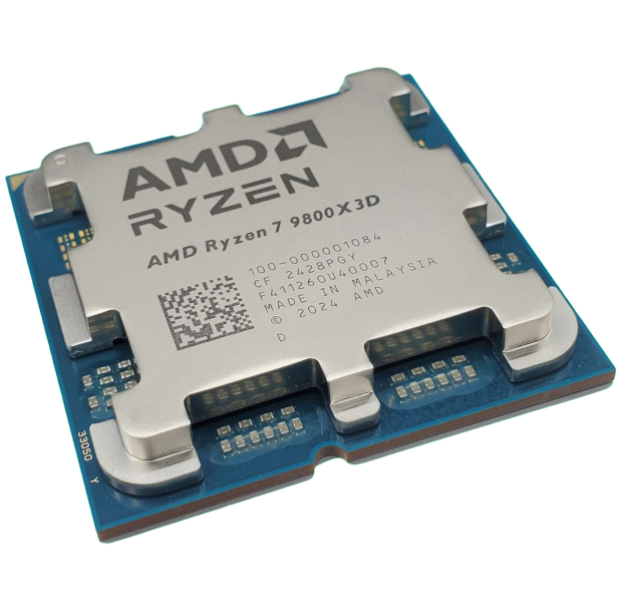
1. Best CPU: AMD Ryzen 7 9800X3D
2. Best motherboard: MSI MAG X870 Tomahawk WiFi
3. Best RAM: G.Skill Trident Z5 RGB 32 GB DDR5-7200
4. Best SSD: WD_Black SN7100
5. Best graphics card: AMD Radeon RX 9070

Rich is a games journalist with 15 years' experience, beginning his career on Edge magazine before working for a wide range of outlets, including Ars Technica, Eurogamer, GamesRadar+, Gamespot, the Guardian, IGN, the New Statesman, Polygon, and Vice. He was the editor of Kotaku UK, the UK arm of Kotaku, for three years before joining PC Gamer. He is the author of a Brief History of Video Games, a full history of the medium, which the Midwest Book Review described as "[a] must-read for serious minded game historians and curious video game connoisseurs alike."
- Ted LitchfieldAssociate Editor
You must confirm your public display name before commenting
Please logout and then login again, you will then be prompted to enter your display name.