At this year's CES event, AMD hasn't really introduced anything completely new in its consumer CPU portfolio. They've either rebadged old chips or just expanded current ranges with a few more models. However, the Ryzen AI Max series of APUs has picked up two extra processors, and one of them could well be the best chip to fit into any top-tier handheld gaming PC.
As a quick refresher, Ryzen AI Max processors (aka Strix Halo) comprise one or two core chiplets (CCDs) plus a huge input/output chiplet (IOD) that houses a pretty beefy GPU. It has 40 RDNA 3.5 compute units (2560 shaders), with 64 MB of Level 3 cache, and a unified memory bus that's 256-bits wide.

Up until now, the only entry in the series that sported the full 40 CUs was the very expensive Ryzen AI Max+ 395. That all changes with the two new chips: the Max+ 392 and Max+ 388. The former has two CCDs for 12 cores, 24 threads in total, whereas the latter uses a single CCD sporting 8 cores, 16 threads.
Article continues belowThe current Ryzen AI Max 385 is also a single CCD chip, but its GPU only houses 32 CUs. With the Max+ 388, you're getting the best Strix Halo processor for gaming: 8 CPU cores, 40 GPU cores/CUs. Why is it the best? Despite AMD's efforts, some games still don't play ball nicely on dual CCD processors, unless you use a program to force all of the game's threads onto one chiplet.
By removing one CCD but retaining all the cores and CUs, the Ryzen AI Max+ 388 offers the ideal combination of CPU and GPU for gaming. Sure, it has a marginally lower CPU boost clock than the Max+ 395 (5.0 vs 5.1 GHz), but you're unlikely to notice this in gameplay.
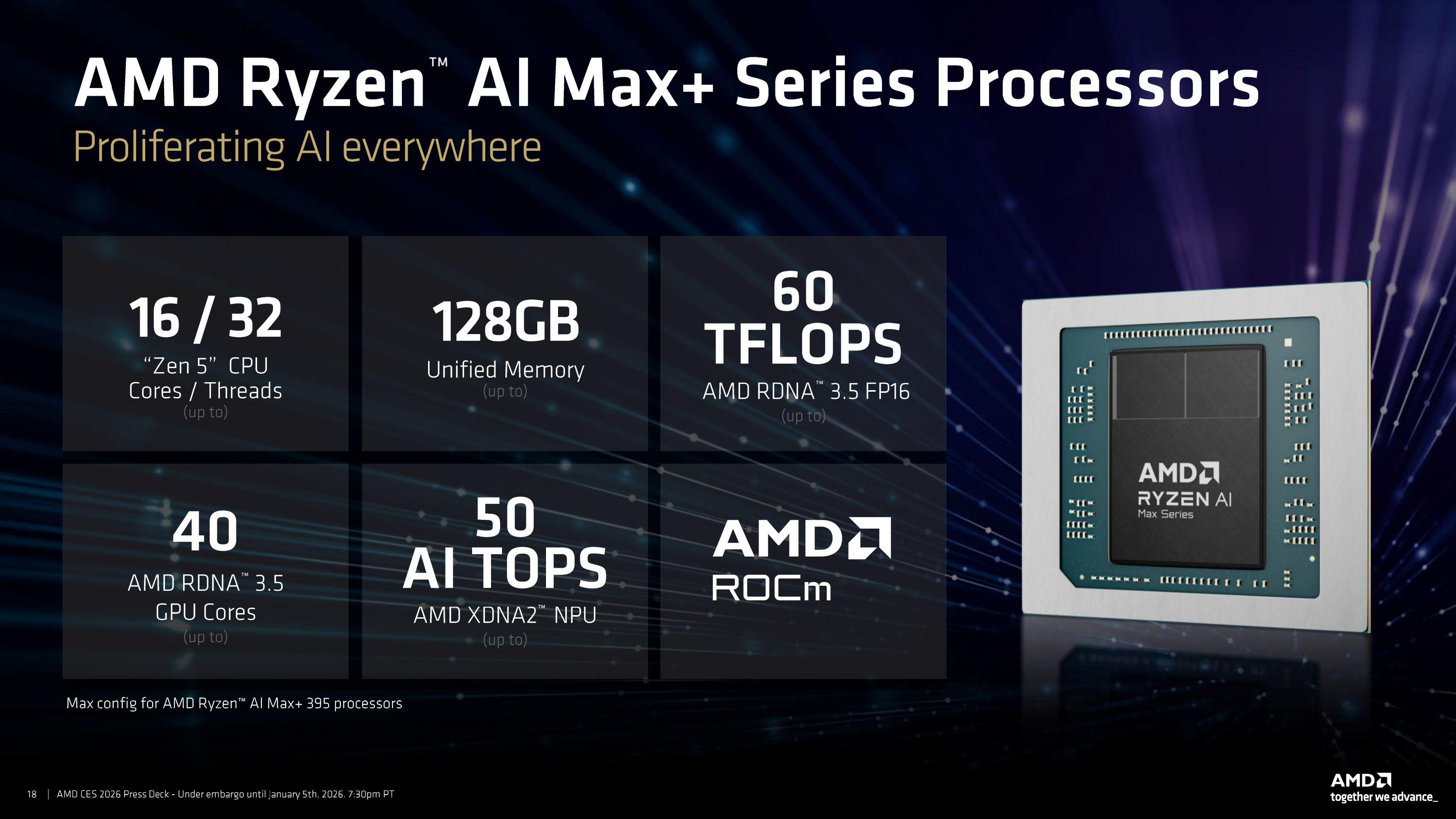
All Strix Halo chips have a maximum TDP of 120 W (with a default limit of 55 W) and up to 128 MB of unified memory. Third-party hardware vendors don't have to stick to those figures, of course. For example, GPD's Win 5 can be shipped with 32, 64, or 128 GB of RAM, and the max power limit is around 80 W.
At the moment, the Win 5 comes with either the Max 385 or the Max+ 395, but I reckon GPD will probably update the options with the Max+ 388, because with 25% more shaders than the 385, it'll be decently quick for gaming.

Catch up with CES 2026: We're on the ground in sunny Las Vegas covering all the latest announcements from some of the biggest names in tech, including Nvidia, AMD, Intel, Asus, Razer, MSI and more.
It'll certainly be better in games than AMD's other new APUs, the Ryzen AI 400 series. If you just go by the name, it would appear that Team Red has churned out a whole new processor design, but that's not the case at all: the 400 series is just the 300 series (aka Strix Point) underneath the label, albeit with a very minor clock bump in a few cases, thanks to an updated power management system.
Don't get me wrong, though—they're still very good APUs, and for the most part, they're a better fit for portable PCs, due to their low power consumption. But when it comes to gaming, the biggest limit isn't the CPU part of the chip, or perhaps even the power consumption, but the fact that the GPU tops out at 16 RDNA 3.5 CUs.
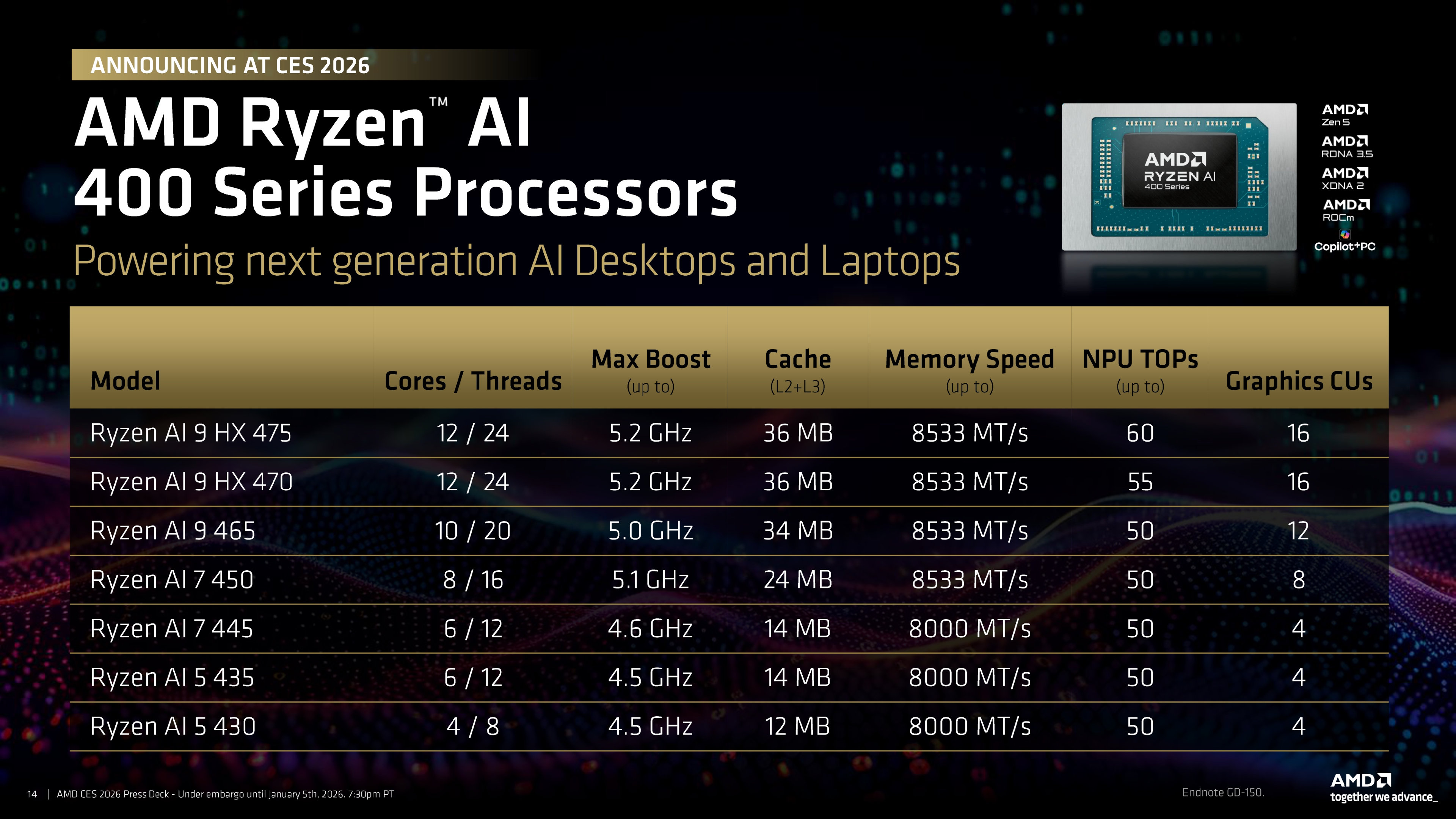
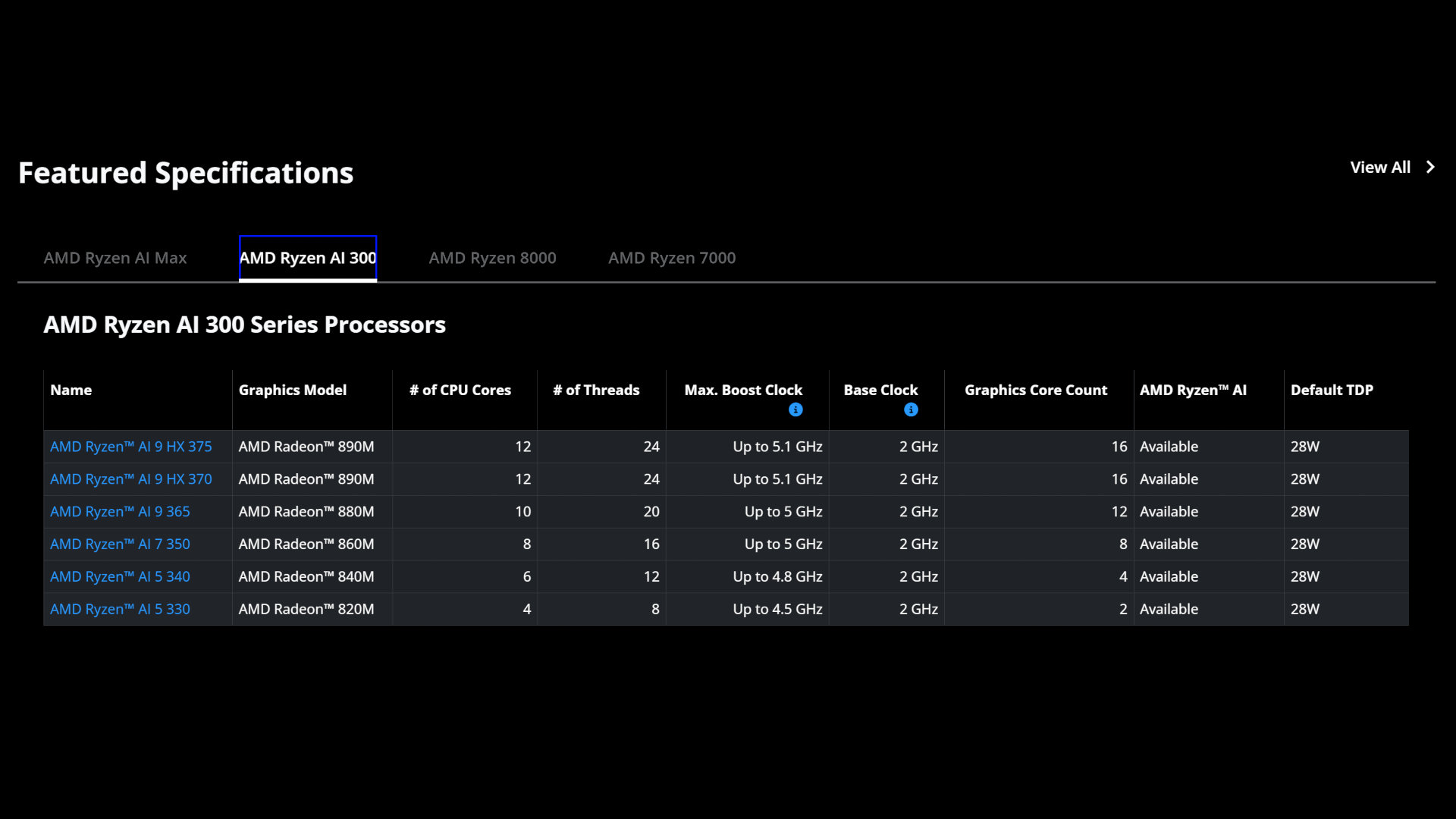
The memory bus is also half the width of that in Strix Halo, so the performance of games is nearly always limited by the GPU and memory bandwidth. Fine if you don't mind turning down the graphics settings, but not so great if you want all the visual bells and whistles in your hands.
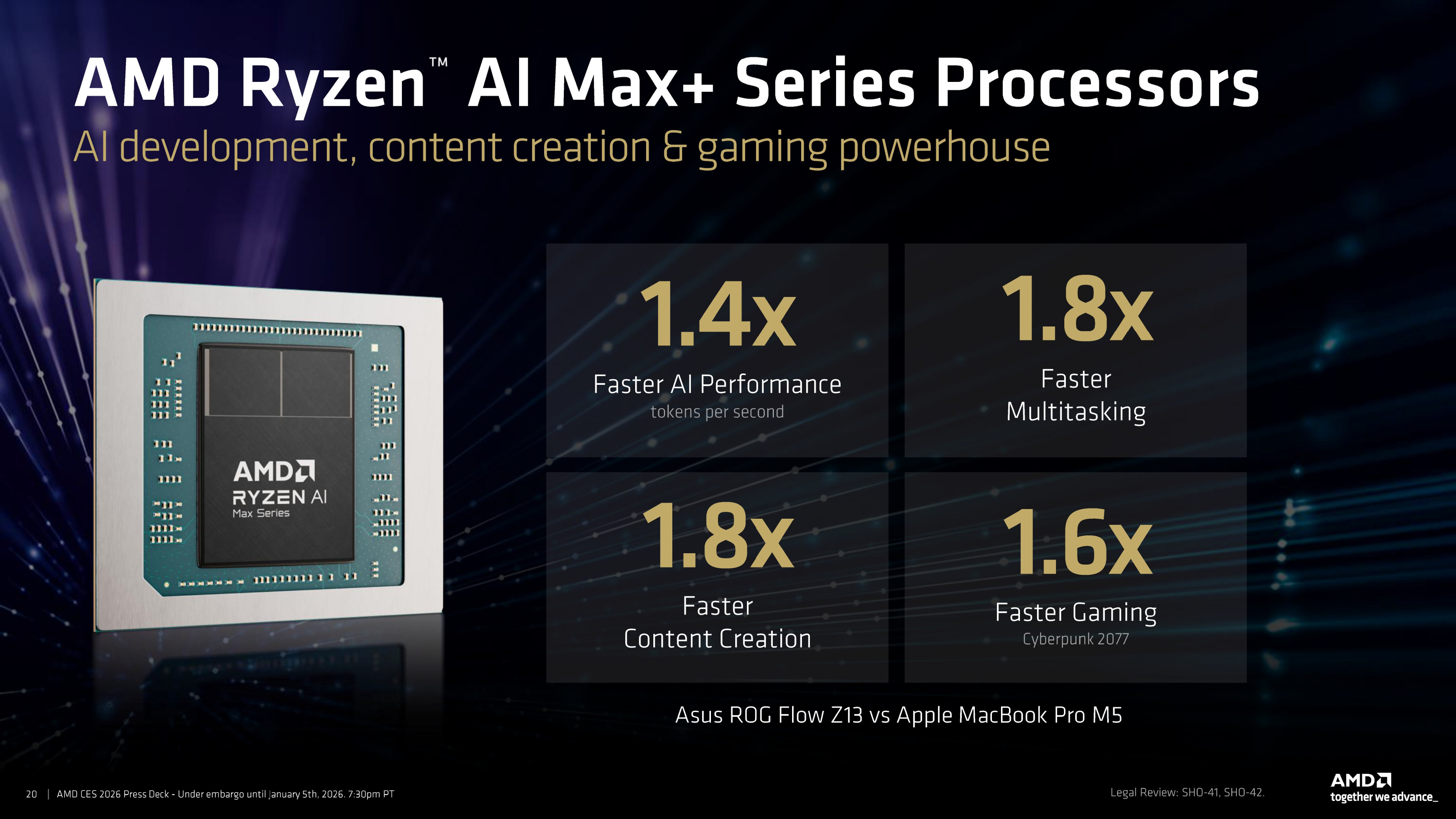
At CES, AMD is unsurprisingly leaning far more on the AI capabilities of its new processors than on outright gaming, but that's okay. Whether it's the 'new' series of Ryzen AI 400 APUs or the additions to the Ryzen AI Max family, AMD is still the best choice for gaming without a dedicated graphics card. Whether Intel's Panther Lake chips (those Core Ultra 300 laptop processors) have anything to say about that, well, we'll just have to wait and see.
1. Best overall:
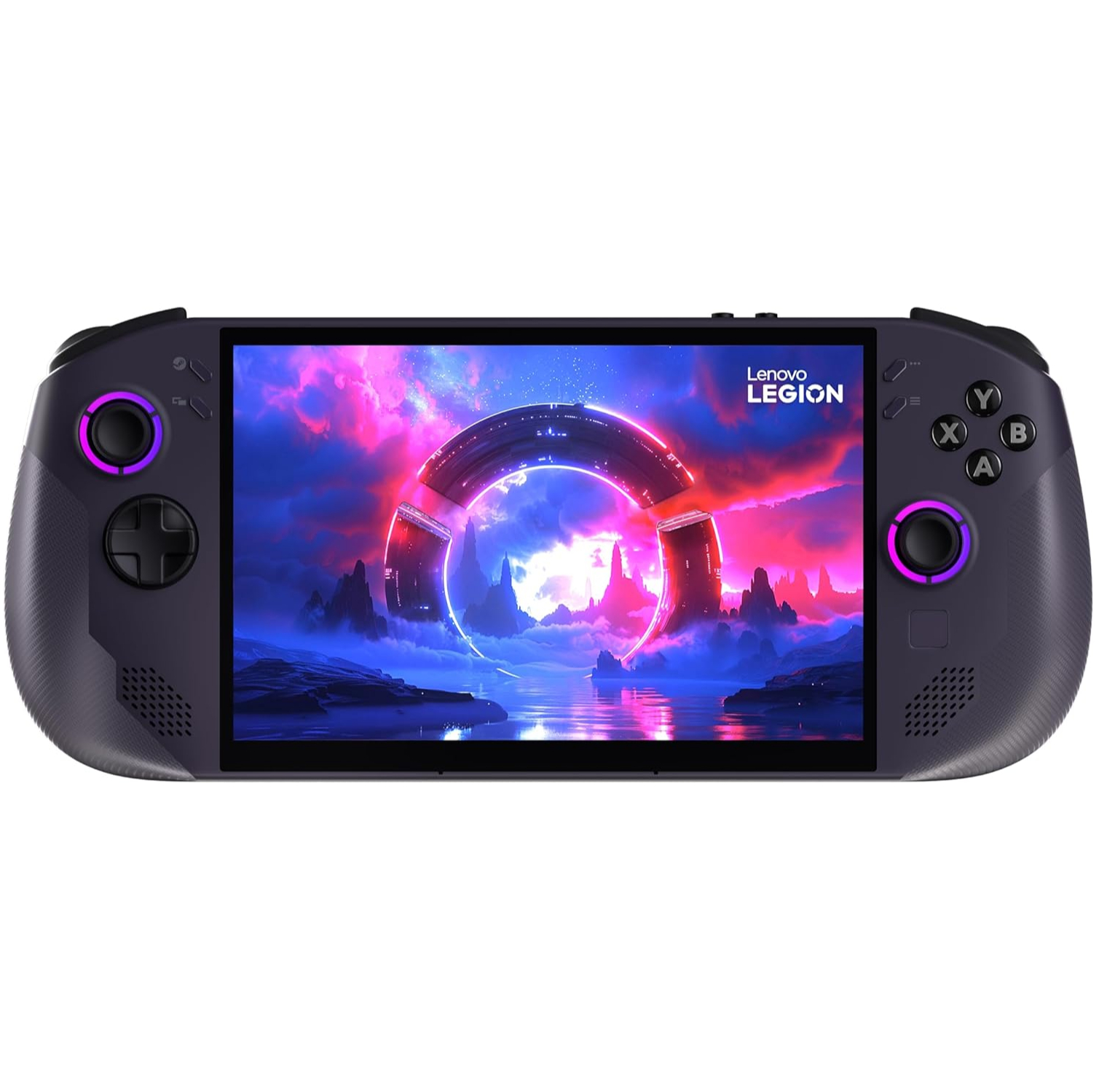
Lenovo Legion Go S SteamOS
2. Best budget:
Steam Deck
3. Best Windows:
Asus ROG Xbox Ally X
4. Best big screen:
Lenovo Legion Go
5. Best compact:
Ayaneo Flip DS

You must confirm your public display name before commenting
Please logout and then login again, you will then be prompted to enter your display name.