Our Verdict
With only 1,000 MEG X870E Godlike X Editions being made by MSI, you might feel that this is a motherboard that could never grace your PC. Fortunately, it's practically identical to the standard X870E Godlike. Whether it's worth spending over one thousand dollars on a motherboard is a question only you can answer, but drooling over one costs nothing.
For
- 13 rear USB 10 Gbps ports
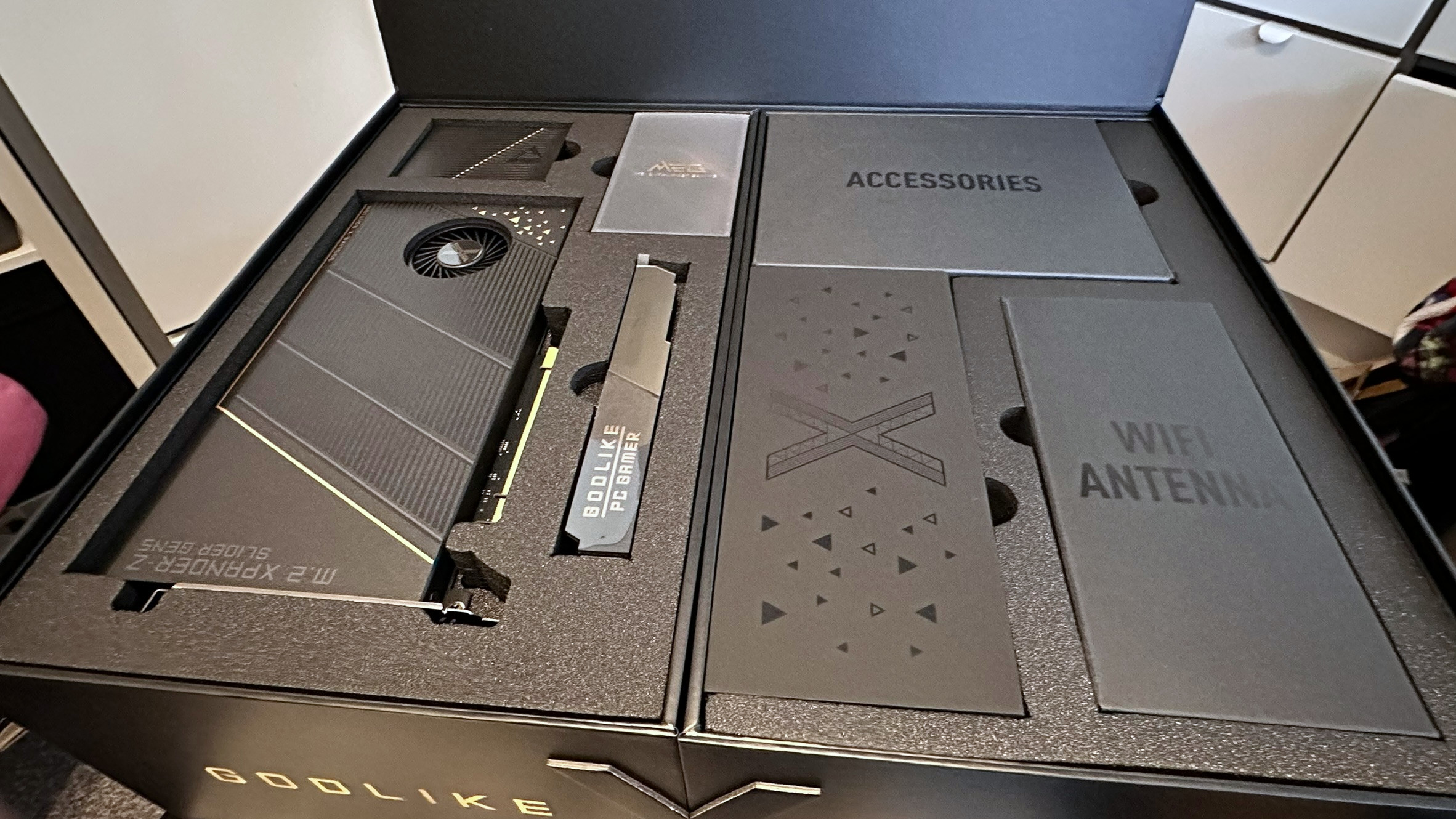
- 5 M.2 slots, plus an included dual M.2 adapter card
- Exquisite build quality
- Beautiful twin displays
- Imbues a sense of PC superiority
Against
- No faster than X870 boards that are a quarter of the price
- SSDs in the primary M.2 slot run quite hot
- No differences of worth from the standard Godlike
- Outrageous price tag and scant availability
PC Gamer's got your back Our experienced team dedicates many hours to every review, to really get to the heart of what matters most to you. Find out more about how we evaluate games and hardware.
As hardware reviews go, this one has probably been the most challenging one I've ever undertaken in my three decades of testing and rating PC hardware. Not because the product is incredibly complex or difficult to use; far from it, in fact. And not because it was a bug-ridden, early-release mess either. Indeed not, as the MSI MEG X870E Godlike X Edition is probably the most stable, easy-to-use, and feature-rich desktop PC motherboard I have ever tested.
The problem is in its name: X Edition. This is a limited release model, created by MSI to celebrate the tenth anniversary of its Godlike series of motherboards. Only 1,000 units will be made available, and restricted to Micro Center and Newegg in the US, and Scan in the UK. So the chances of an average PC enthusiast being able to buy one are astonishingly remote, even if you have a wallet capacious enough to afford the Godlike X Edition.
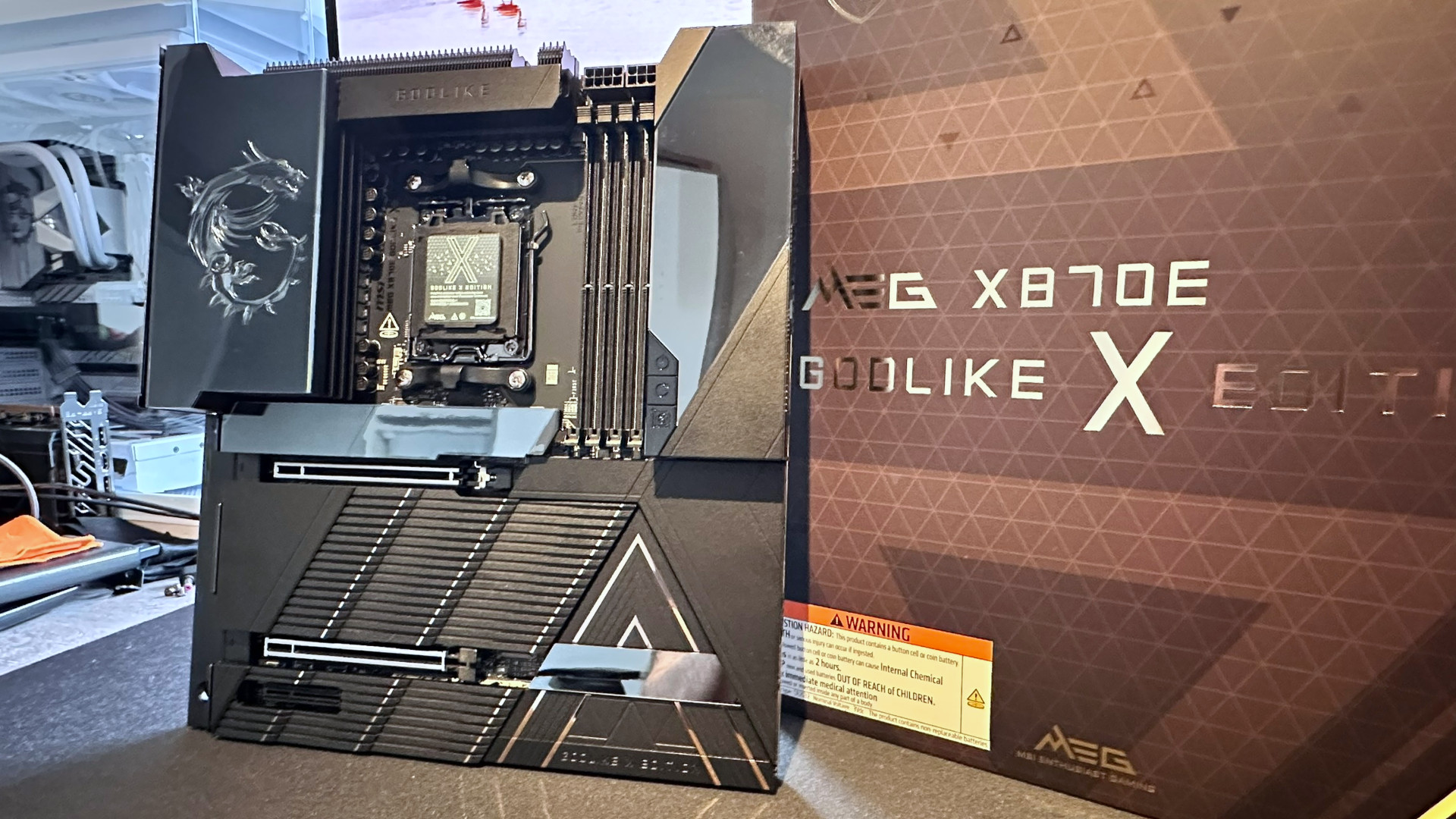

Socket: AMD AM5
Chipset: AMD X870E
CPU compatibility: AMD Ryzen 7000/8000/9000 desktop
Form factor: E-ATX
Memory support: DDR5-4800 to DDR5-9000 (OC), up to 256 GB
Storage: 5x M.2, 2x M.2 via adapter card, 4x SATA
USB (rear): 2x USB4 Type-C 40 Gbps, 5x USB 3.2 Type-C 10 Gbps, 8x USB 3.2 Type-A 10 Gbps
Display: 2x DisplayPort v1.4 via USB4
Networking: Marvel AQC113CS 10G LAN, Realtek 8126 5G LAN, MediaTek MT7927 Wi-Fi 7
Audio: Realtek ALC4082 Codec + ESS9219Q Combo DAC/HPA
Price: $1299.99/£1249.99
There are also some minor tweaks to the look of the UEFI/BIOS, and the polychromic display over the rear IO panel shroud sports a different colour, but that's pretty much it. As far as hardware and operational features are concerned, you're not missing anything by picking up a normal Godlike.
Of course, that particular motherboard is just completely over-the-top anyway, and it's really not suitable for the vast majority of PC gamers or overclocking enthusiasts. It is an astonishingly well-equipped and comprehensively specified motherboard, but unless you absolutely must have 15 USB rear ports, all rated to 10 Gbps or faster, up to 7 M.2 slots, and all the visual bling possible, the standard Godlike is going to be an excessive purchase for anyone.
That said, while I can't afford an MSI MEG X870 Godlike, let alone the Godlike X Edition, for my gaming rig, I would buy one in a flash if money were no object whatsoever. Not because it's the best AM5 motherboard you can buy, but simply because I use a lot of USB devices and SSDs. If I could host them all on one motherboard, with next to no compromises, I'd be very happy.
If I had to rank the Godlike X Edition's features, expansion and connectivity options would easily come top of the pile. Starting with PCIe slots, there are only three of them, and while two are physically x16 in size, only the top slot is electrically x16 Gen 5. The second PCIe slot is x8 Gen 5, with the little one at the bottom being x4 Gen 4. The latter will be forced to run at x2, though, if you fill the fourth M.2 slot with any kind of SSD.
That's the only bad news, because when it comes to M.2 slots, it's a smorgasbord of connectivity. You get two x4 Gen 5, two x4 Gen 4, and one x2/x4 Gen 4 SSD slots, but if that's not enough storage options, you also get MSI's M.2 Xpander-Z Slider adapter card, which can house two hot-swappable Gen 5 SSDs.
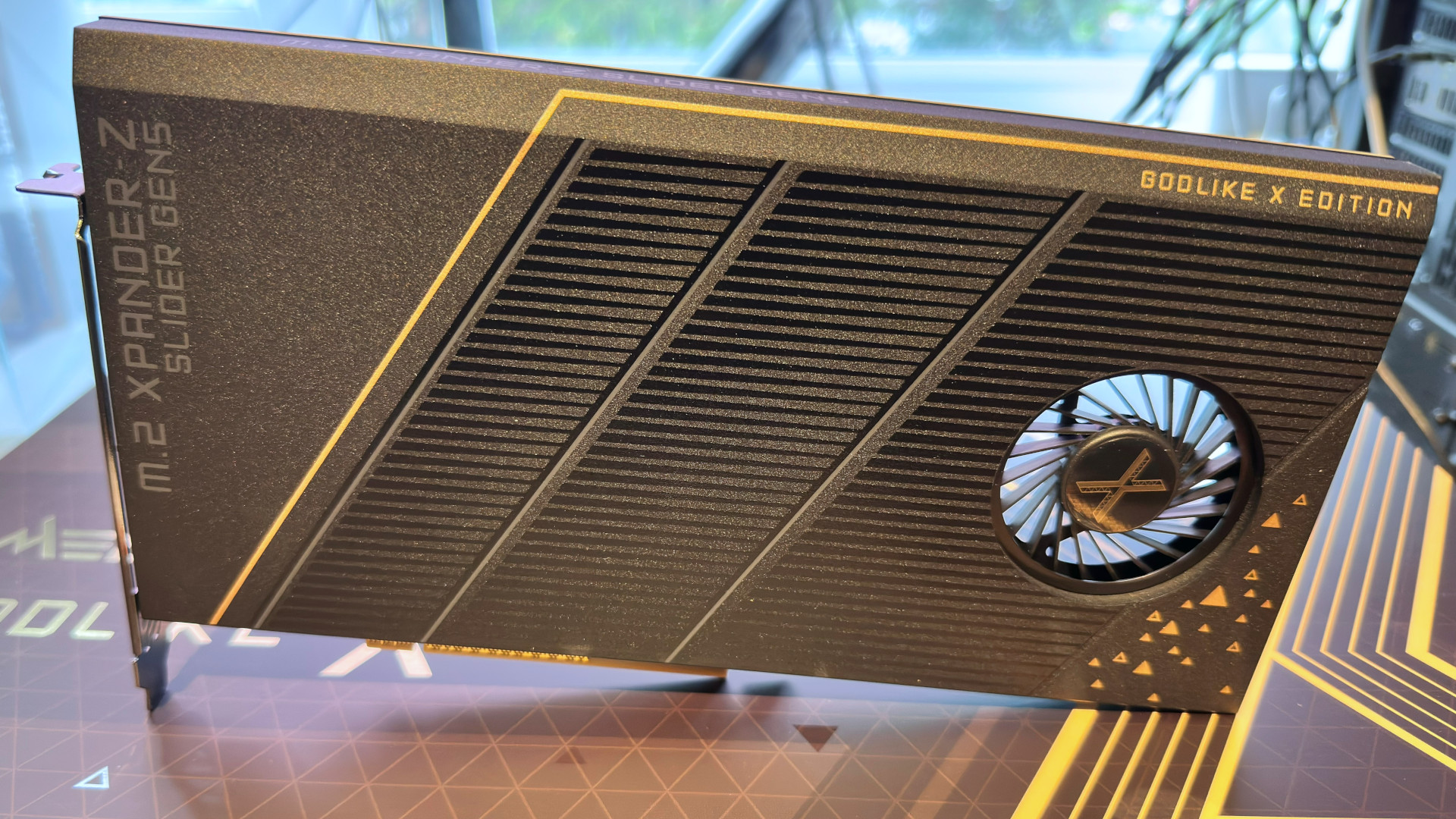
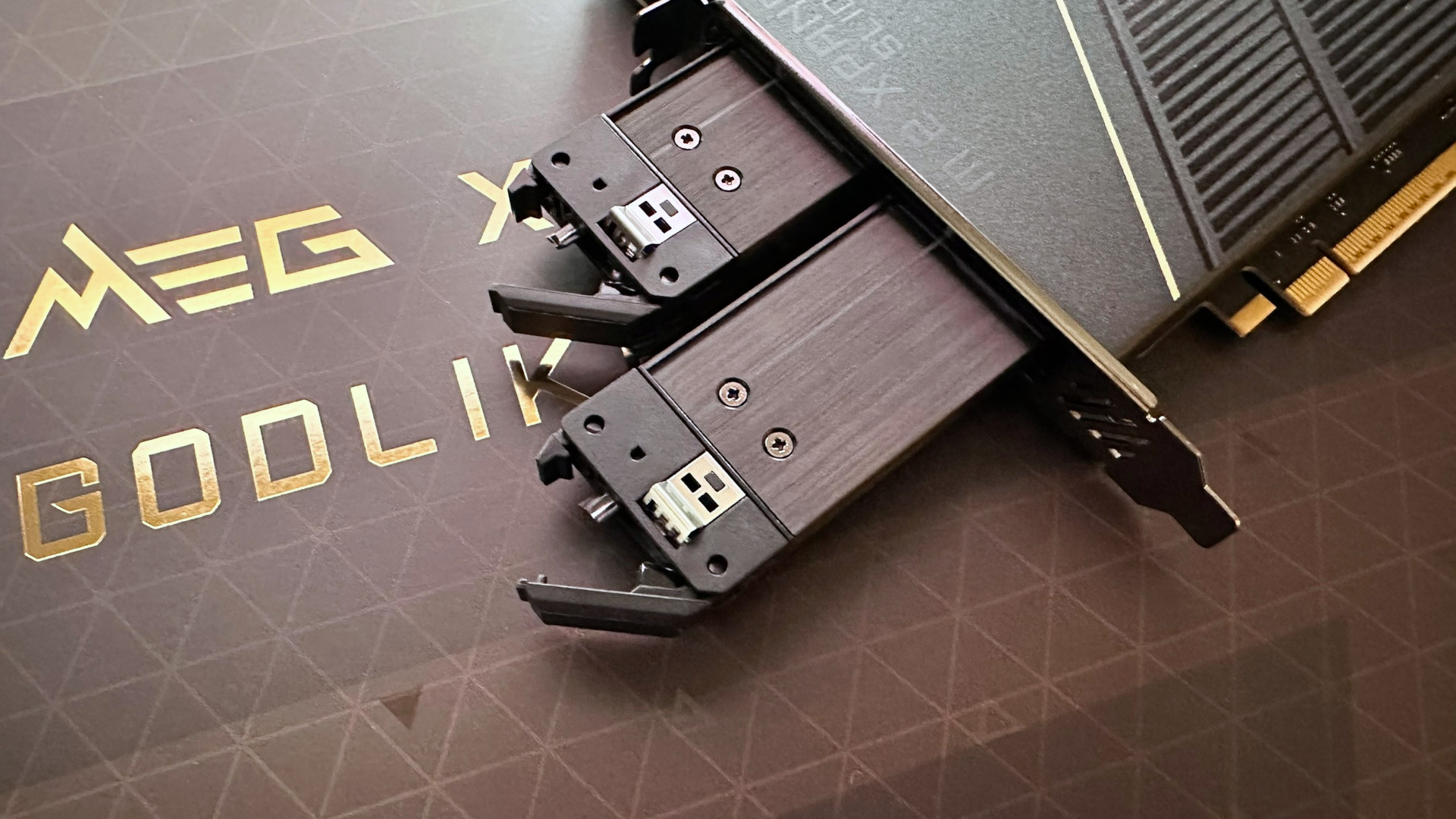
While the M.2 card is very slim, taking up just one PCI slot in the PC's chassis, it's surprisingly tall and long. There's a single 60 mm fan to keep things cool when fully loaded with hot Gen 5 drives, but it's quite noisy under load. It also blocks airflow to very thick graphics cards (think monster-size RTX 5090s), but I guess if you've just bought a Godlike or Godlike X Edition motherboard, there's a strong chance you'll be watercooling your GPU anyway.
The rear IO panel on the MSI MEG X870 Godlike X Edition is the same as the normal Godlike, and it's like a small slice of paradise for any USB hoarder. Where the vast majority of motherboards offer a range of USB ports at various speeds, MSI has gone all out here. You get eight USB 3.2 Type-A and five USB 3.2 Type-C, all rated to 10 Gbps, and as per AMD's X870 requirements, there are two USB4 Type-C ports that are good for 40 Gbps.
That's fifteen USB ports on the rear panel alone. However, if you go ham with SSDs and fill the second M.2 slot, then the USB4 ports will be limited to 20 Gbps, and the drive will go from x4 to x2. That's because the motherboard's USB4 board-mounted controller shares PCIe lanes with that second M.2 slot.

If you've spent all that money on a Godlike motherboard, you might be disappointed to find such compromises, but all AMD AM5 boards have them, because desktop Ryzen processors and the X870E chipset just don't have enough PCI Express lanes to go around. Should that be a deal-breaker for you, then you'll either have to go down an Intel Core Ultra 200S route or blow your budget clean out of the water with an AMD Threadripper build.
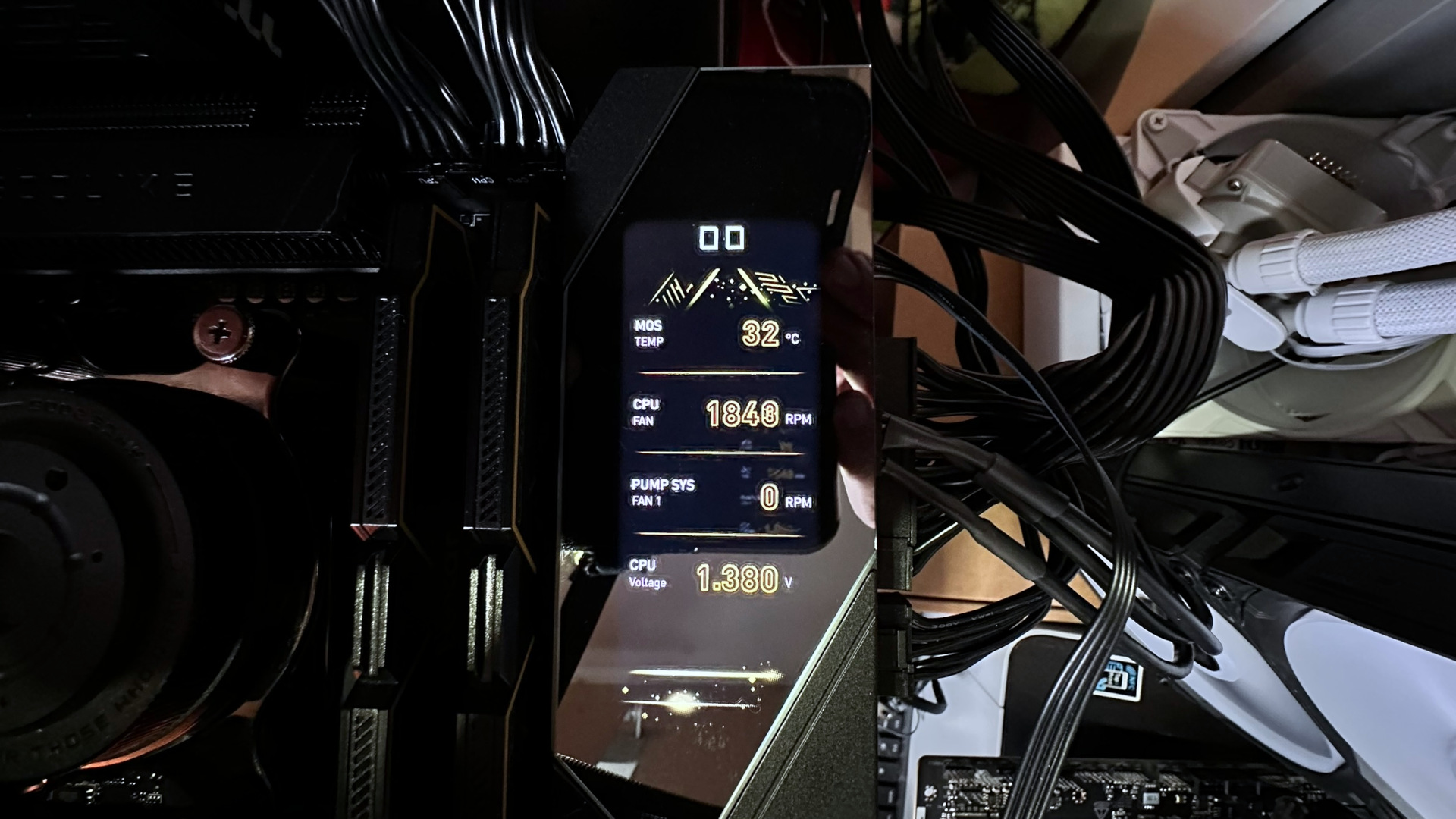
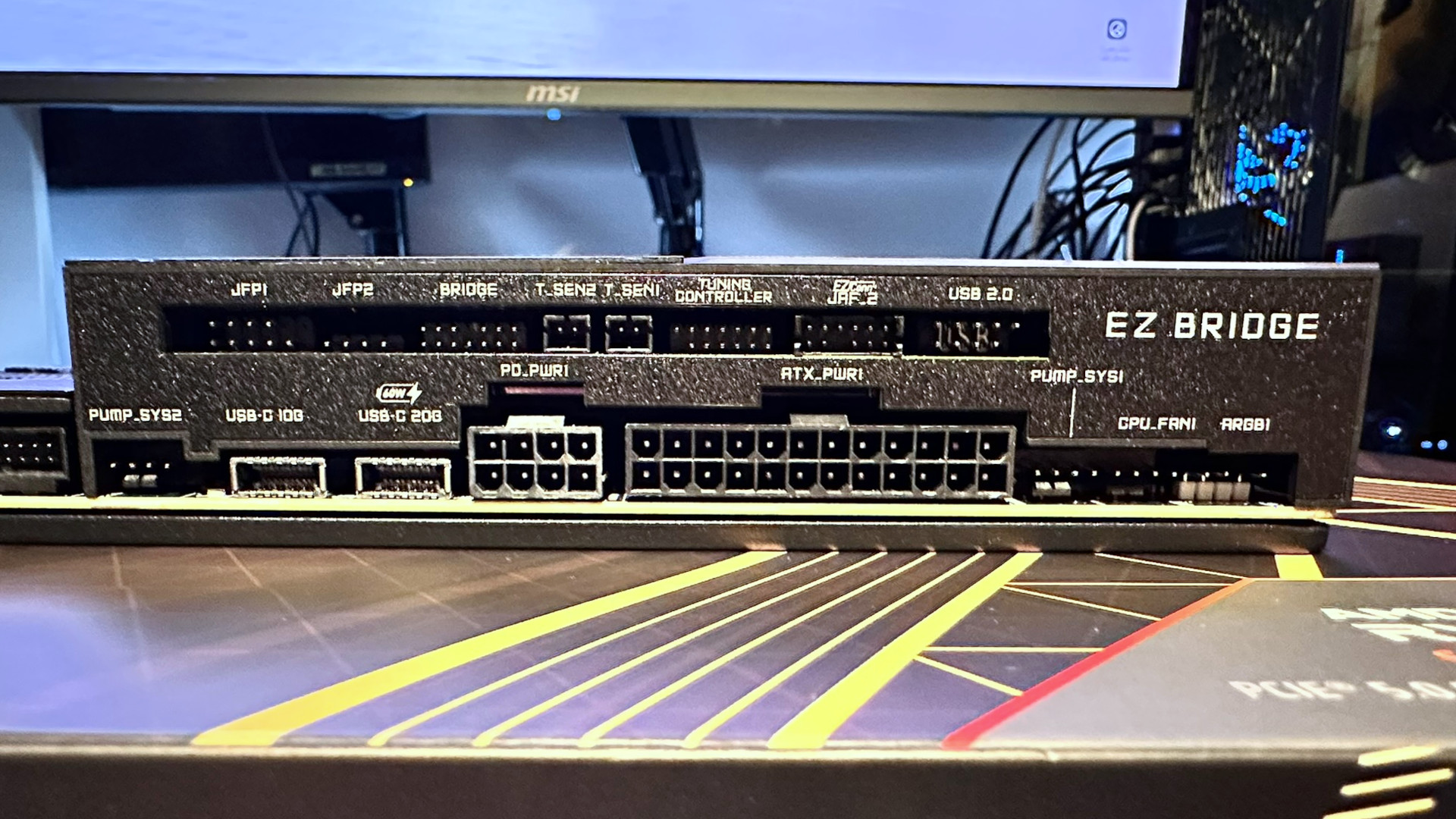
Continuing the theme of excess, the Godlike and Godlike X Edition both sport two displays: a polychromic one on the rear IO panel shroud, and the other is MSI's Dynamic Dashboard III. The latter is built into the EZ Bridge, a unit that magnetically attaches to the motherboard, and as well as being home to a configurable four-inch LCD display, it also houses power and reset buttons, a release mechanism for the main PCIe slot, as well as a host of headers.
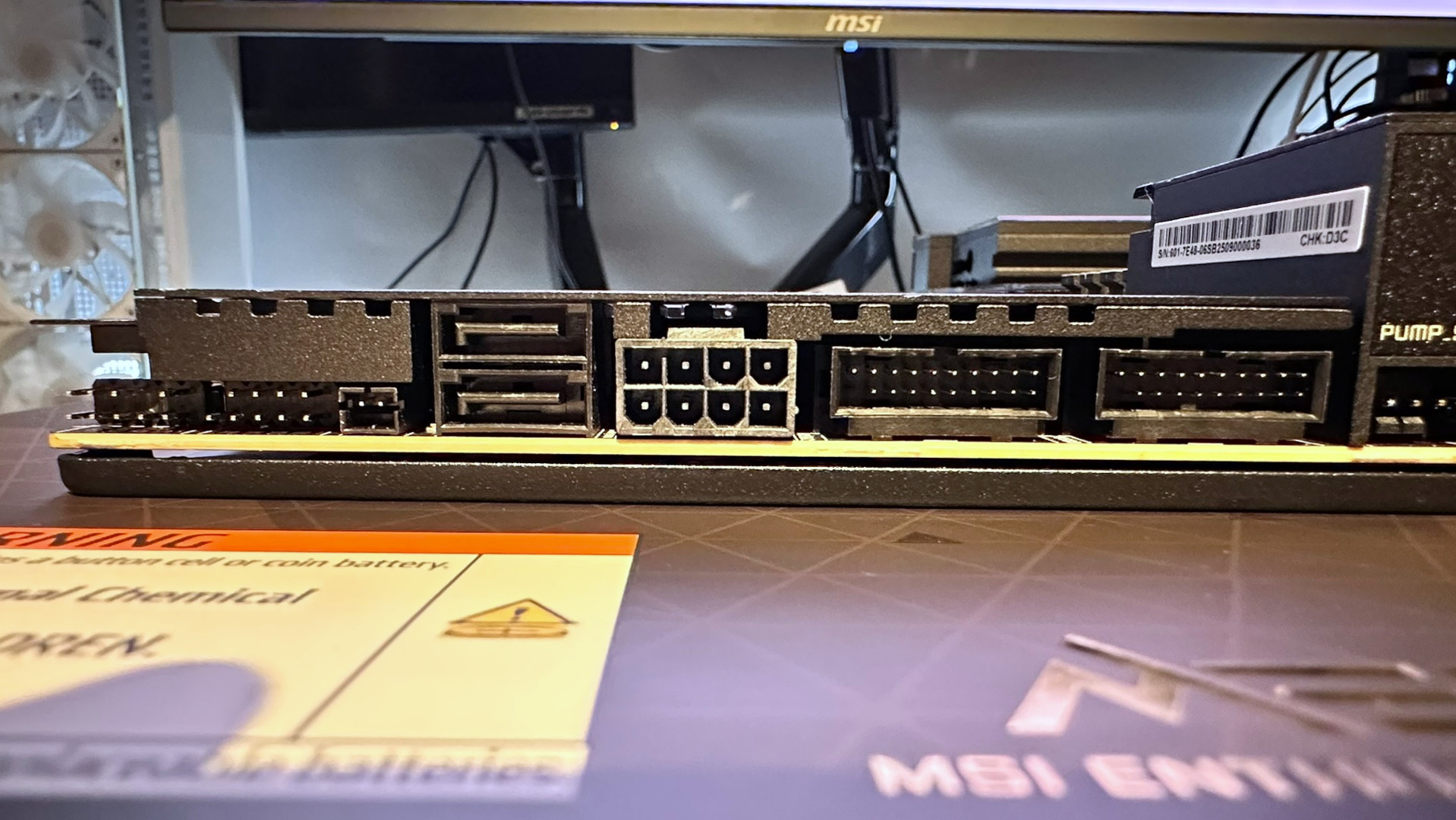
These are all mounted horizontally, making it much easier to have a neater-looking build in terms of cables. This is where you can connect the included fan hub to the motherboard, with dedicated headers for its SATA power and control, along with headers for thermocouple sensors (also included), front panel chassis connectors, MSI's special all-in-one fan/USB/ARGB cable header, and more.
To be honest, there are so many headers and sockets for power, fans, lights, and sensing that it's somewhat overwhelming. If you're a PC novice, no matter how wealthy you are, it's likely to be far too daunting to use in a first-ever build.
Experienced builders, especially those who are keen on overclocking, will no doubt relish all these options to expand, cool, and monitor the motherboard. And speaking of cooling, MSI has naturally plastered the whole motherboard with swathes of metal, front and back, to prevent excessive thermals from ruining anyone's day.
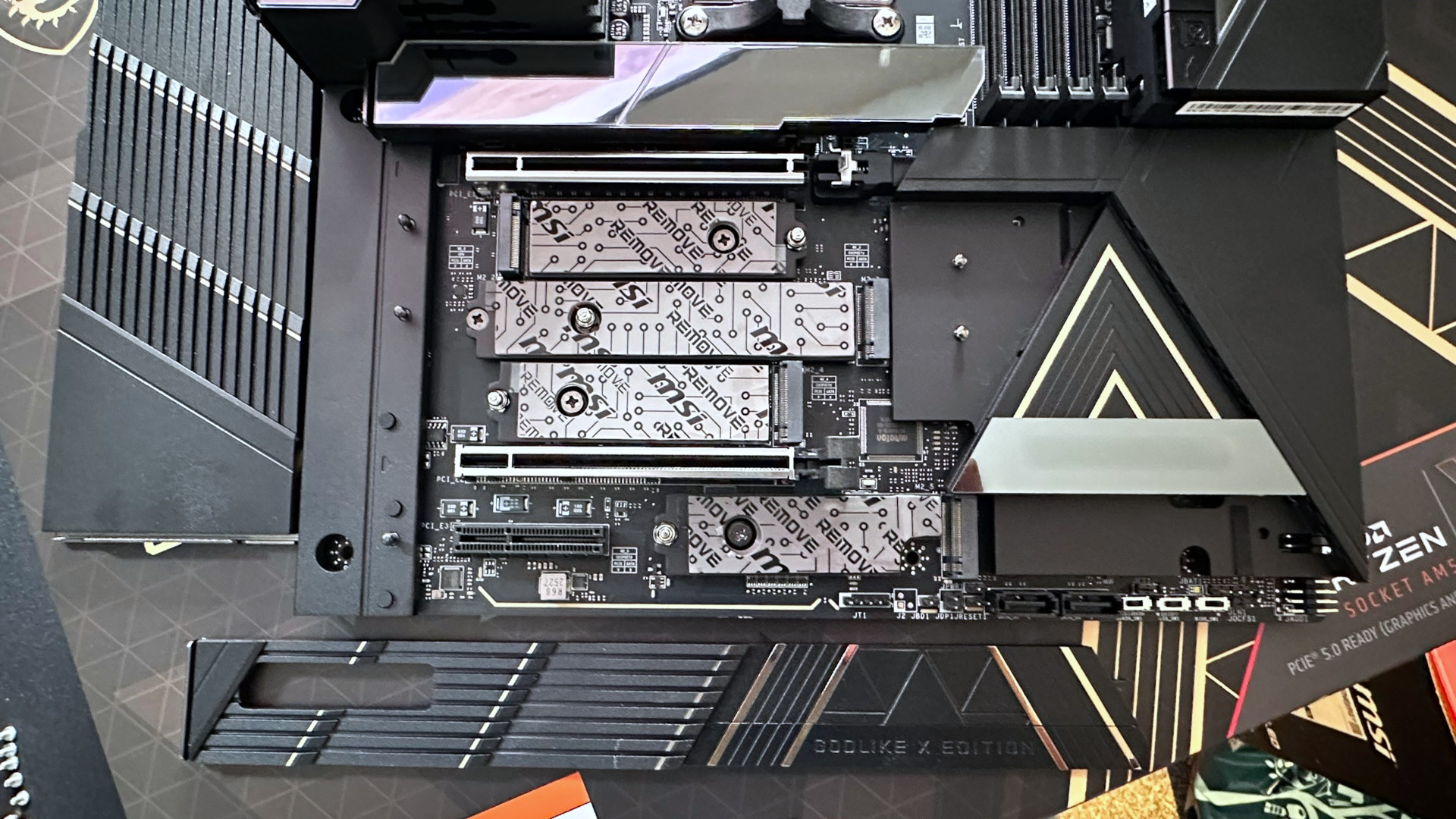
The heatsink covering the CPU VRMs, for example, is one of the largest I've ever seen. That doesn't automatically mean it's very good, of course, but we'll see just how capable it is when we dig into the benchmarks shortly. The same goes for the M.2 heatsinks: they're dense and large, but the one covering the primary SSD slot does have some issues.
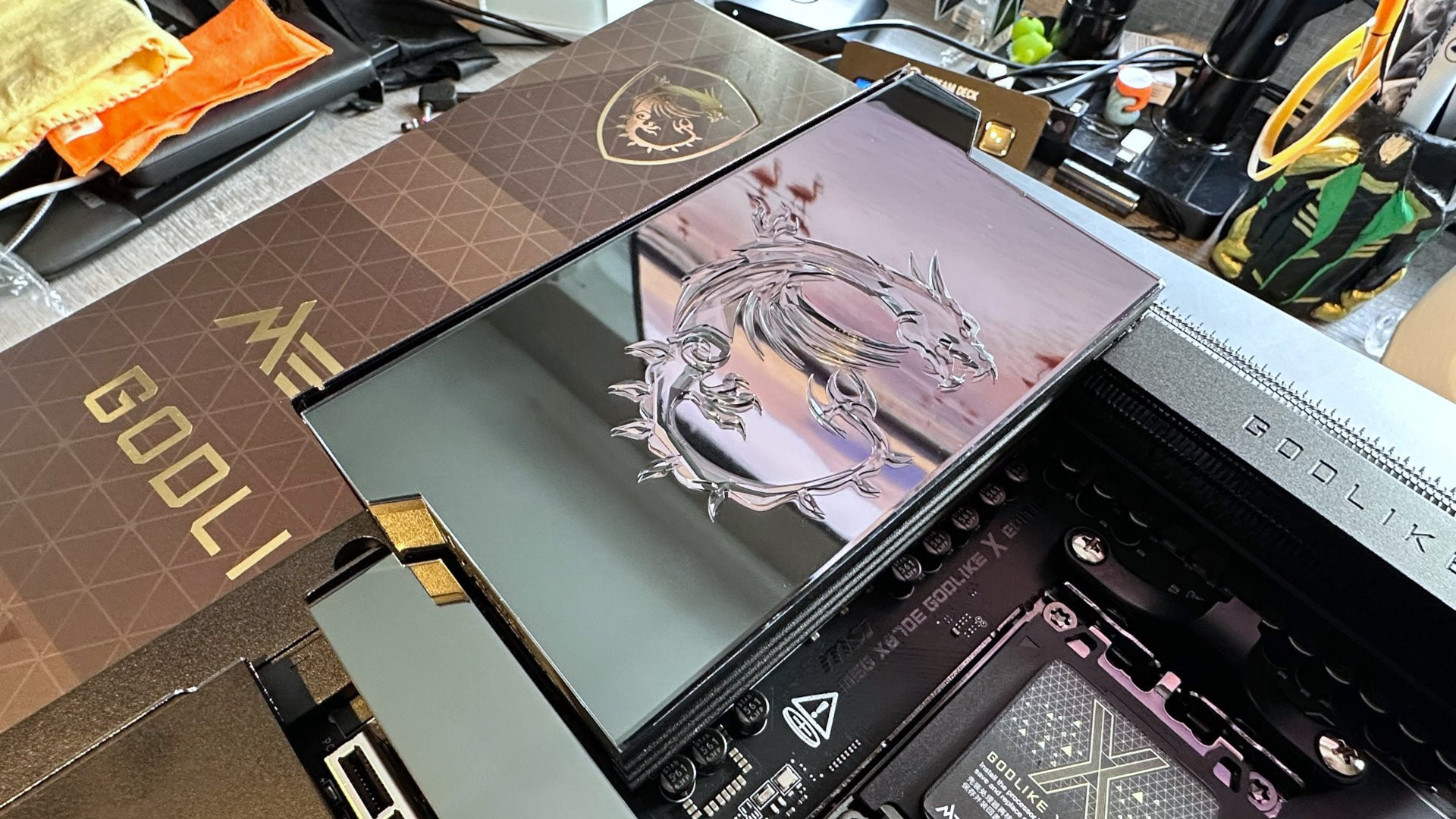
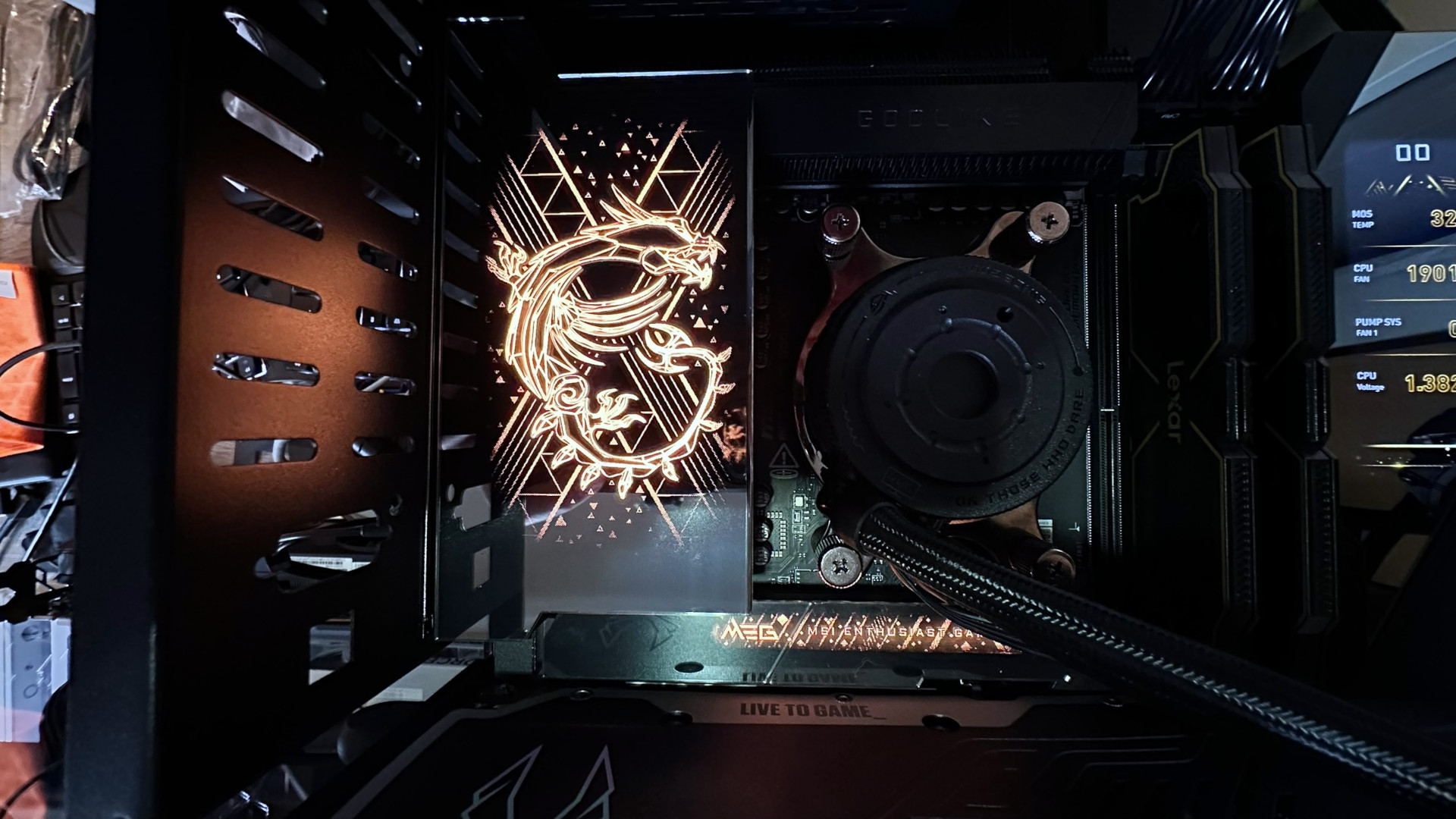
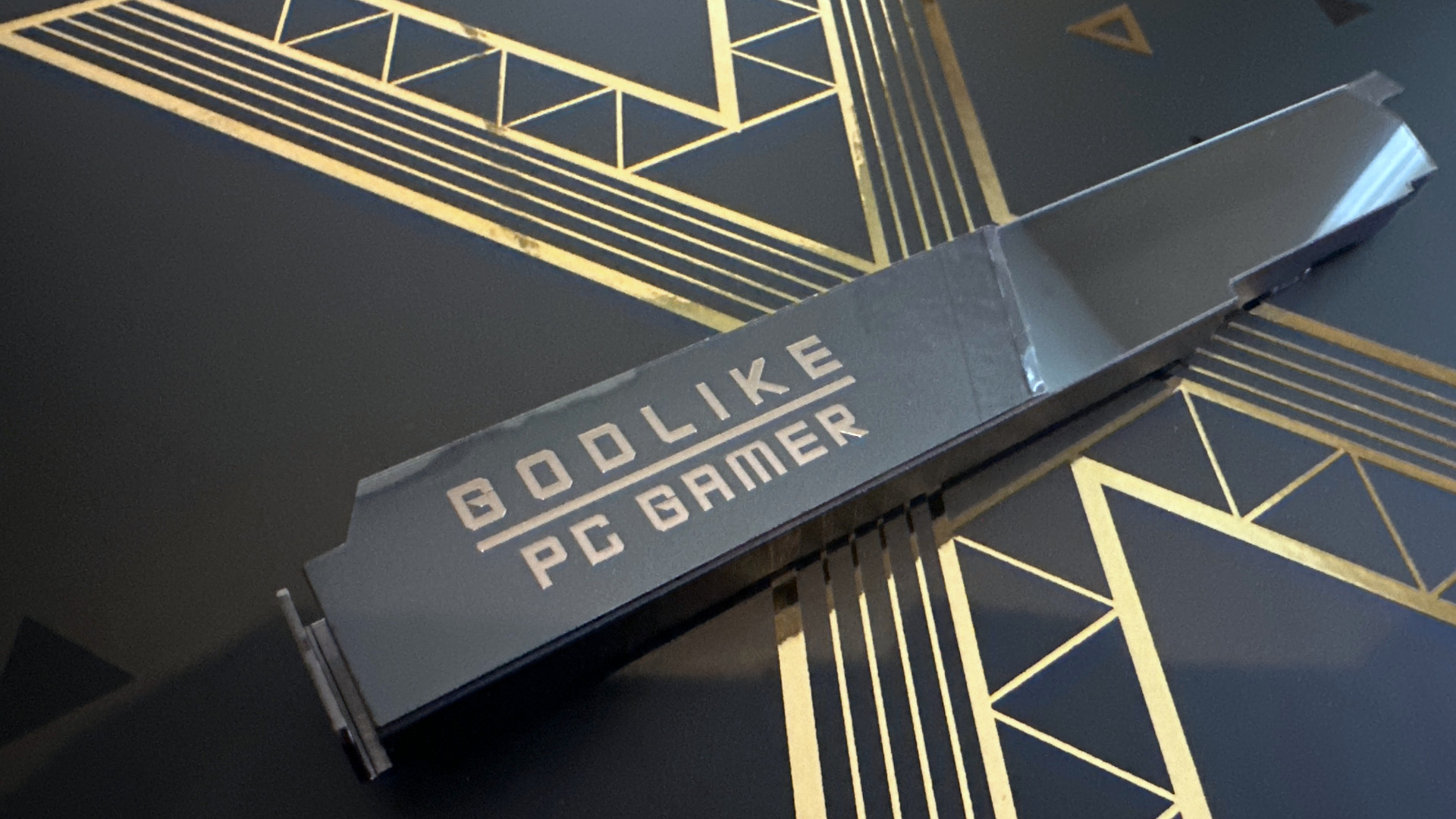
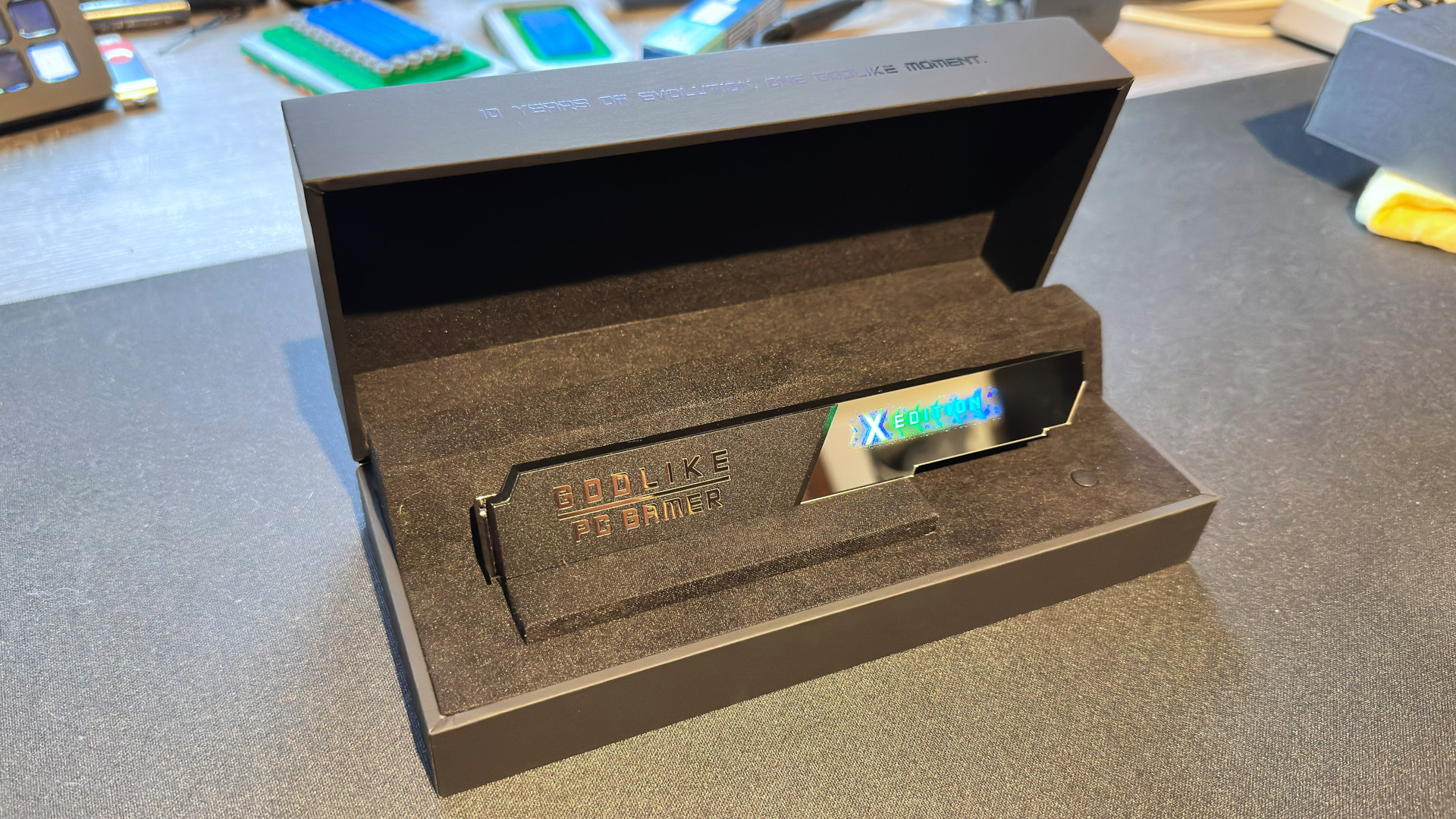
Rather than it being an enormous slab of steel, it's actually quite slim, and it's topped by a very smooth and reflective surface, plus there's a small display embedded in it. Neither aspect is a good thing for heat dissipation, as we'll see soon enough. You actually get two of these heatsinks, one that you can use all the time, and another (unique to the Godlike X Edition) that you can either fit to the motherboard or mount in a special display box.
This has a USB Type-C port on the rear for powering the heatsink's display, and a small button at the front of the box cycles through various preset modes for the screen. It all looks very pretty when running, but it doesn't quite feel 'special' enough for an anniversary, limited-run product.
Benchmarks and performance
PC Gamer test rig: AMD Ryzen 9 9900X | Asus ROG Strix LC III 360 AIO cooler | 32 GB Lexar Thor OC DDR5-6000 | Zotac GeForce RTX 4070 | 2 TB Corsair MP700 SSD | Thermaltake ToughPower PF3 1000 W PSU | Thermal Grizzly Der8enchtable chassis | Acer XB280KH monitor | Windows 11 25H2
Something else that doesn't feel all that amazing is the performance of the MSI MEG X870E Godlike X Edition. It's certainly not bad, but as you can see below, you're not getting anything better from it than you would from a motherboard that's a quarter of the cost of a standard Godlike.
While some of the differences in gaming performance between the boards can be explained by changes in BIOS, CPU microcode, Windows updates, and game patches, the fact remains that you're not going to magically get a higher frame rate just because you've bought one of the most expensive desktop motherboards around.
Through my various tests of MSI's latest boards, both AMD and Intel, I get the feeling that it uses quite conservative CPU and memory settings by default, to maximise stability and compatibility. You can bypass some of these by jumping into the UEFI and enabling things like Enhanced PBO or Game Mode, but they don't automatically result in a significant gaming boost.
It's a similar story in our productivity/content creation benchmark results. The MSI MEG X870E Godlike X Edition is pretty on par with the other motherboards, and for the same reasons as in the gaming benchmarks. If you want more performance than this, you'll just have to spend a lot of time working through and testing each UEFI option that relates to the CPU and RAM.
I did explore this briefly, but the Ryzen 9 9900X isn't AMD's best processor for overclocking and our choice of RAM kit is based on stability and compatibility, not outright performance. In other words, I didn't get much more out of our test rig with the Godlike X Edition, or at the very least, nothing more than I've got from other AM5 motherboards.
While the gaming and CPU test results are perhaps a little disappointing, they're completely understandable. However, the one aspect of the MSI MEG X870E Godlike X Edition that you might be surprised about is just how average the thermal performance seems to be.
It's best to ignore the CPU temperatures, as these are far more affected by the cooler and test environment than the motherboard itself. This is also true for other temperatures, of course, but as the VRMs and primary SSD were being cooled entirely by the host's heatsinks (i.e. no active fans), the above results are a good indication of how well each motherboard handles heat.
Despite the enormous VRM heatsink, the Godlike X Edition's voltage regulators appear to run hotter than almost any other board in the test group. However, I have noticed that there is a distinct lack of information provided by any vendor as to where and how this temperature is reported. That means the differences in reported temperatures could be entirely down to the placement of the thermal sensor.
To see how well the X870E Godlike X Edition coped with more extreme power loads, I enabled PBO Enhanced Mode 3 in the UEFI and ran the Baldur's Gate 3 and Cinebench tests again. It made not a jot of difference in BG3, neither performance nor temperatures, but it caused havoc in Cinebench.
With a peak CPU package power of 208 W (24% higher than when using the default configuration), the extra energy drove the CPU temperature up to 97 °C, but produced a score no different from before. Interestingly, though, the VRM temperatures were no higher (they were actually a little lower), which shows that MSI's heatsink is a lot better than the test results suggest.
I do wish MSI had a better heatsink for the main SSD slot, though, because while it looks very nice, the combination of the reflective surface and active display does little to help thermals. A peak temperature of 76 °C isn't catastrophic for a Gen 5 SSD, but it's not exactly great, either.
Conclusion

At this point in a motherboard review, I normally move on to discussing whether the item in question is worth buying or not, weighing up its relative merits and failings against the competition at its price point. There's no point in doing that here, partly because there are very few other desktop AM5 motherboards that cost this much.
✅ You want everything in your AMD PC, whatever the cost: The sheer amount of connectivity and expansion options, plus all the other features and tools, make the Godlike X Edition a motherboard like no other. Apart from the normal Godlike, of course, which has them all, too.
❌ You're not one of the chosen few: MSI has only made 1,000 units, so the chances of being able to buy one, even if you can afford it, are incredibly slim.
❌ You want the very best gaming performance out of the box: The Godlike X Edition's default setup is pretty conservative, so you'll need to spend a lot of time tweaking and testing UEFI settings to max out your Ryzen processor.
The main reason, though, is that I suspect most people just won't be able to buy the MSI MEG X870E Godlike X Edition. With only 1,000 units available, they're likely to be snapped up the very second they reach the scant few retailers. You can buy the normal MSI MEG X870E Godlike, though.
Let's ignore the price ($1,100 at Amazon) of that particular board; forget about its enormous size and weight, too (E-ATX size and almost three kilograms). Think of the average default performance as simply being an invitation to experimenting with coolers and UEFI settings. What really matters is MSI's 'everything and the kitchen sink' approach to the Godlike.
You get truly exceptional levels of expansion and connectivity, more so than any other AM5 motherboard. The visual appearance is spectacular when everything is fully lit and displaying merrily away. As a centrepiece for building the ultimate Ryzen desktop PC, the MSI MEG X870 Godlike and Godlike X Edition imbue the kind of excess that many a PC enthusiast aspires to.
Sadly, even if you could afford the Godlike X Edition, you probably won't be lucky enough to actually get one. Best just get the MSI MEG X870E Godlike instead, then.
With only 1,000 MEG X870E Godlike X Editions being made by MSI, you might feel that this is a motherboard that could never grace your PC. Fortunately, it's practically identical to the standard X870E Godlike. Whether it's worth spending over one thousand dollars on a motherboard is a question only you can answer, but drooling over one costs nothing.

You must confirm your public display name before commenting
Please logout and then login again, you will then be prompted to enter your display name.