You are now subscribed
Your newsletter sign-up was successful
Want to add more newsletters?

Every Friday
GamesRadar+
Your weekly update on everything you could ever want to know about the games you already love, games we know you're going to love in the near future, and tales from the communities that surround them.

Every Thursday
GTA 6 O'clock
Our special GTA 6 newsletter, with breaking news, insider info, and rumor analysis from the award-winning GTA 6 O'clock experts.

Every Friday
Knowledge
From the creators of Edge: A weekly videogame industry newsletter with analysis from expert writers, guidance from professionals, and insight into what's on the horizon.

Every Thursday
The Setup
Hardware nerds unite, sign up to our free tech newsletter for a weekly digest of the hottest new tech, the latest gadgets on the test bench, and much more.

Every Wednesday
Switch 2 Spotlight
Sign up to our new Switch 2 newsletter, where we bring you the latest talking points on Nintendo's new console each week, bring you up to date on the news, and recommend what games to play.

Every Saturday
The Watchlist
Subscribe for a weekly digest of the movie and TV news that matters, direct to your inbox. From first-look trailers, interviews, reviews and explainers, we've got you covered.

Once a month
SFX
Get sneak previews, exclusive competitions and details of special events each month!

ASRock's motherboard saga has been an ongoing story for months now, with CPUs appearing to fail, ASRock finding debris at fault for one problem, and then over 100 cases of AMD 9800X3D chips dying in just a few short weeks. Just days ago, ASRock acknowledged problems with its board, with an accompanying BIOS fix, and an interview with the company may suggest this saga isn't quite done.
The first, which is said to be a "small percentage", was simply down to user error. Debris finding its way into the socket or getting thermal paste in the wrong place are just some of the cases where user damage can be attributed to.
In "a lot of cases", after sending CPUs to AMD, it was found out that the CPUs were actually still operational. The cause for this problem is reportedly a mixture of memory compatibility issues and a BIOS problem.
BIOS update 3.25 launched just a few weeks ago (and can be accessed via the ASRock site), and Lee claims this fixes a problem where the Thermal Design Current (TDC) and Electric Design Current (EDC) were set too high for some AMD chips. The memory compatibility issue was reportedly fixed with the previous BIOS update, 3.20.
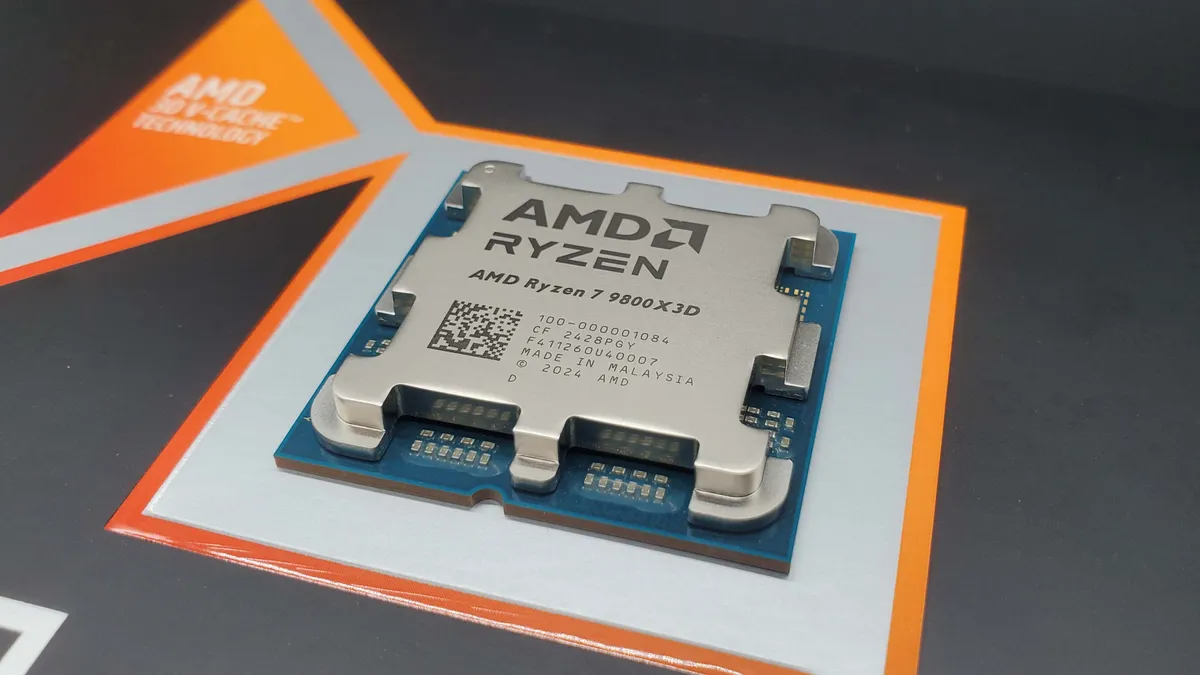
This was explained a few days ago as a PBO (Precision Booster Overdrive) issue, as the two currents are linked to that mode, but it wasn't made clear which company was actually responsible. In the latest video, ASRock notably states it is not AMD's fault.
However, this does not account for users who don't have PBO active running into those problems, or claims that some users with the recommended BIOS update are still running into the same problem. As it's all still developing, those cases could be outliers, but users will need time with the new BIOS to see what issues it fixes. Notably, this update will be present on motherboards manufactured in the future, but not those that are already at retail. If you have an ASRock motherboard, make sure you're on the latest version of the BIOS.
Lee tells Gamers Nexus that if there's a problem with the CPU, ASRock will send it back to the user to go through the RMA process with their retailer. ASRock can't replace failing chips, but it could function as a middleman to retailers, which it is currently refusing to do. Notably, though, Lee says this is the case with defective CPUs, so there's a chance he could have misunderstood Gamers Nexus' question as one pertaining to already failing CPUs.
In the interview, Lee claims that ASRock did manage to get its hands on a CPU with scorch marks (indicating faults due to voltage shortage), and it has been sent off to AMD, but analysis has not yet come back.
Despite months of back and forth, it seems this story isn't quite complete, but either way, now is a good time to get that BIOS update, if you have a Ryzen X3D chip in an ASRock motherboard.

You must confirm your public display name before commenting
Please logout and then login again, you will then be prompted to enter your display name.