Every week, I check through all the prices for every current-gen graphics card from all the major retailers. When they all first launched, eight to 12 months ago, it was a depressing task because stocks were incredibly low for almost every model, forcing prices to go sky-high across the board. Eventually, towards the tail end of 2025, the situation resolved, and you could pick up all kinds of GPUs for considerably less than their MSRPs.
Now, thanks to the global memory supply crisis, graphics cards sporting 16 GB or more of VRAM are all shooting back up in price. In November of last year, you could bag yourself a 16 GB RTX 5060 Ti, RTX 5070 Ti, or RTX 5080 for $400, $745, or $990, respectively. Today, those same graphics cards are, at best, $450, $829, and $1,268.

I know that there will be some stocks of every graphics card somewhere, and they may even have sensible price tags. But unless I give up doing everything else, there's no way I can check through every physical store and website each week. I'm also aware that this is all very dependent on one's geographical location, as the GPU situation in the UK is nowhere near as bad as it is in the US.
Even if I take all of that into account, though, there is still a clear trend of significant price increases and stock reduction for 16 GB graphics cards every week. It won't be long before they'll either be too expensive to consider buying or simply unavailable.
If you're willing to sacrifice 4 GB of VRAM, then the RTX 5070 remains at its MSRP ($549 at Walmart), though it's more expensive at some retailers. Alas, Intel's 12 GB Arc B580 has been slowly creeping up in price, and it's now $260 at B&H, and surprisingly hard to find.
All of which means the only graphics cards that still have sensible price tags are those with 8 GB of VRAM. There's nothing really wrong with that but only if you're not paying over the odds for it, and the GPU itself isn't going to be limited in some games, such as the RTX 5050 or RTX 5060.

However, the RX 9060 XT and RTX 5060 Ti can make better use of more VRAM in certain cases, especially when ray tracing, upscaling and frame generation are all being used. And I'm only talking about 1080p or 1440p gaming here: at 4K, having just 8 GB can be a serious performance bottleneck in the latest games.
With DRAM shortages expected to last into 2027, it's obvious that graphics cards aren't going to suddenly become sensibly priced again any time soon. What matters for this year is (a) what cards are available and (b) how overpriced they are. Throw 16 GB of VRAM into the mix and all bets are off, I'm afraid.
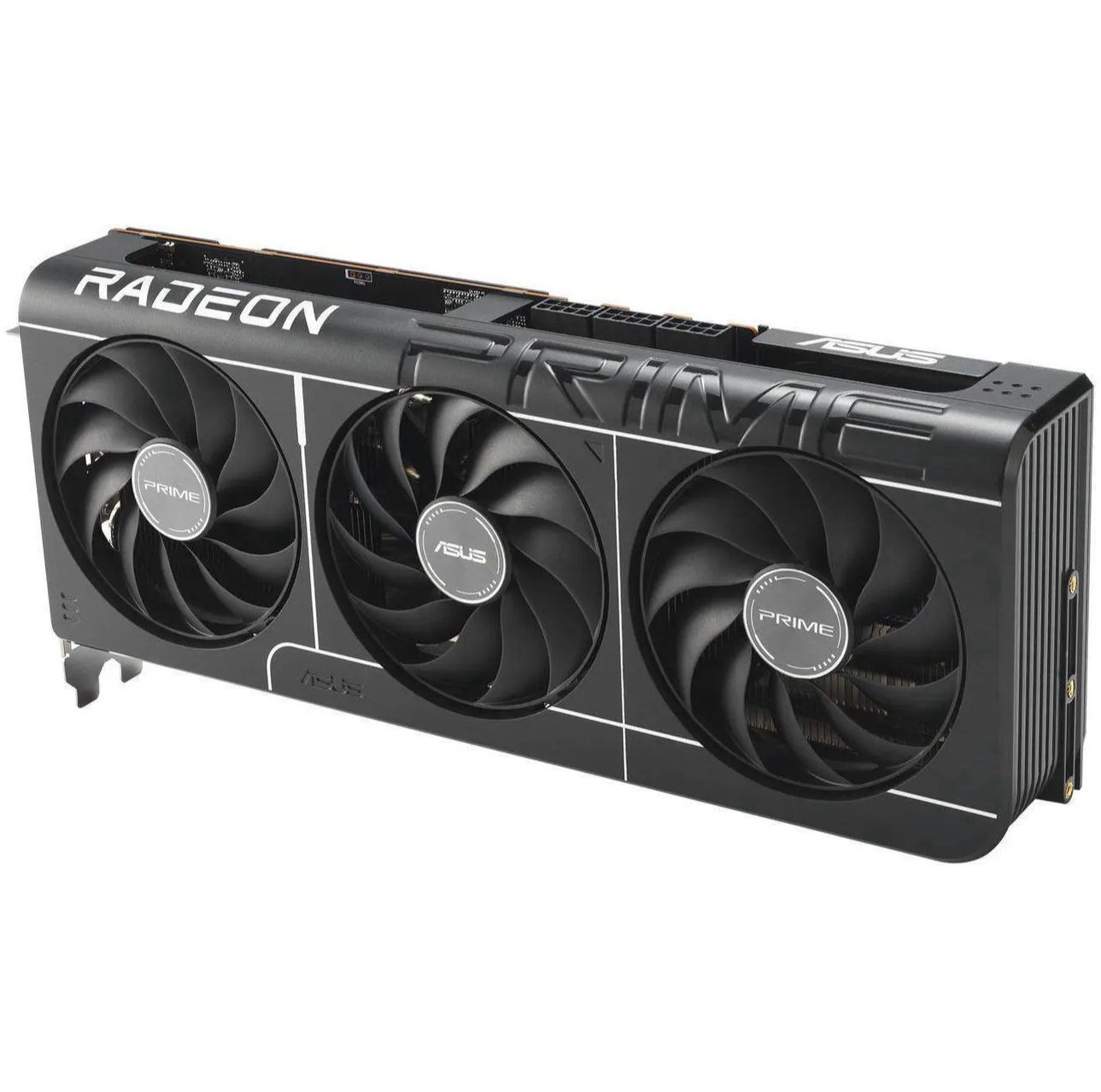
1. Best overall: AMD Radeon RX 9070
2. Best value: AMD Radeon RX 9060 XT 16 GB
3. Best budget: Intel Arc B570
4. Best mid-range: Nvidia GeForce RTX 5070 Ti
5. Best high-end: Nvidia GeForce RTX 5090

You must confirm your public display name before commenting
Please logout and then login again, you will then be prompted to enter your display name.