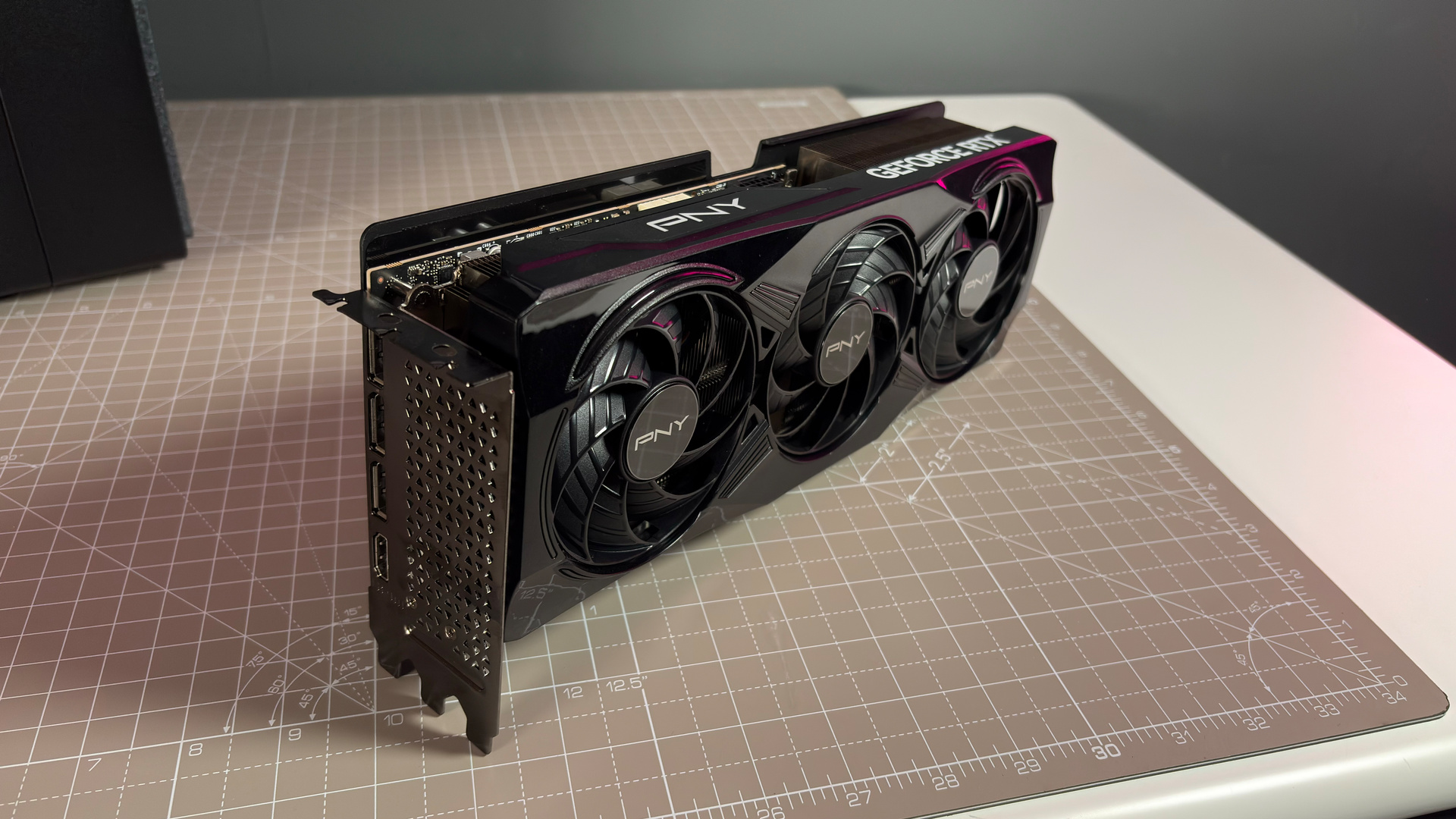
Our Verdict
The otherworldly price tag inherently limits the Player Three Prime's audience, but assuming money is no object, what you're getting is an attractive build with an RTX 5090 and the best CPU for gaming. You don't have to wonder if it can run a game well: it very much can. But it still feels a little odd having to make last-gen motherboard and storage compromises on a $5K build.
For
- Classy, understated look
- Unbeatable performance
- Nice build quality
- Quiet
Against
- Average supporting cast for the top-tier GPU and CPU
- Fiddly PSU placement
PC Gamer's got your back Our experienced team dedicates many hours to every review, to really get to the heart of what matters most to you. Find out more about how we evaluate games and hardware.
Resting on this desk is a behemoth: A classy, matte white box containing such ludicrous hardware that it answers all questions of its capabilities before they're asked. Yes, it can.
The NZXT Player Three Prime scoffs at compromise and laughs in the face of benchmarks, outperforming or matching top-performing machines in recent history. And you would darn well hope so, considering the asking price. Oof, the price.

CPU | AMD Ryzen 7 9800X3D |
Motherboard | Gigabyte B650 Aorus Elite AX V2 |
RAM | 64 GB (2x 32 GB) DDR5-6000 |
Storage | 4TB WD Blue SN5000 |
GPU | Nvidia RTX 5090 |
PSU | 1000 W A1000GS PCIE5 |
Dimensions | 470 x 292 x 470 mm (18.5 x 11.5 x 18.5 in) |
Weight | 18.5 kg (41 lbs) |
Price |
✅You want a seriously absurd gaming PC and money is no object: There's no getting around that $4,999 price tag here. You're either all-in on getting the best GPU/CPU combo of the moment or you can settle for just "really good."
✅You appreciate minimalist builds: Other than the size of the rig (which is huge), the Player Three Prime is an understated, classy white box with a pleasant white glow and minimal rainbow RGB.
❌ You don't run at 4K: Unless you're all in on 4K gaming, I'm not sure you need to spring for an RTX 5090 to get the performance you're looking for. The jump in price is staggering and other 50-series cards will get the job done at 1440p.
❌ You want the absolute best: Sure, the CPU/GPU combo is right up there, but the supporting cast is surprisingly weak, with a motherboard that doesn't offer PCIe 5.0 GPU support or even a fast PCIe 4.0 SSD ruling the storage duties.
❌ You want future-proof components: The Player Three Prime won't beg for a significant upgrade for a long time, but the PCIe 4.0 limitation of the included motherboard means you'll someday hit snag with hardware that needs 5.0.
The grim reality of PC gaming economics in 2025 inherently limits who can or should be considering a prebuilt of this stature, but at least what you're buying is a turnkey solution to running any game you please as fast and effortlessly as can be achieved in 2025 (especially if you're gaming at 1440p). Unfortunately, you won't find a better deal by building this machine piecemeal for approximately $5,800—that is, unless you already have the RAM lying around to offset its $760 going price as of December 2025.
Against other RTX 5090 machines we've tested, such as the Intel-powered Alienware Area 51 Dave reviewed in July (currently going for a few hundred bucks more), the Player Three Prime matches and often exceeds in our gaming gauntlet. Watching the Player Three Prime absolutely demolish Avatar: Frontiers of Pandra—a game that made my poor, aging RTX 2080 Super crave death back in 2023—with a 146 fps average (zero upscaling) is enough to make you believe miracles are possible. And its gains over the Alienware is in large part thanks to the 9800X3D chip, still our reigning champ as the best CPU for gaming.
It's a gaming-first chip (really gaming-only chip) whose 3D V-Cache gives it an upper hand in the CPU-intensive Baldur's Gate 3, but consistent with other machines packing the 9800X3D, those gains in gaming performance don't translate to professional productivity use. Given the resolutely eight-core nature of the processor, 3D rendering and such is not the chip's strong suit in comparison with other many core CPUs.
| Header Cell - Column 0 | Avatar: Frontiers of Pandora (Ultra) | Cyberpunk 2077 (RT Medium) | Baldur's Gate 3 (Ultra) |
|---|---|---|---|
NZXT Player Three Prime | RTX 5090 | Ryzen 7 9800X3D | 151 Avg | 68 1% Low | 124 Avg | 54 1% Low | 151 Avg | 68 1% Low |
Alienware Area 51 | RTX 5090 | Core Ultra 9 285K | 92 Avg | 60 1% Low | 120 Avg | 83 1% Low | 92 Avg | 60 1% Low |
Corsair Vengeance A7500 | RTX 5080 | Ryzen 7 9800X3D | 158 Avg | 83 1% Low | 122 Avg | 99 1% Low | 158 Avg | 83 1% Low |
| Header Cell - Column 0 | CPU Rendering | Cinebench 2024 | Rendering | Blender 4.2.0 | Junkshop | 7Zip | File Manipulation | Handbrake 1.8.1 | UHD to 1080p |
|---|---|---|---|---|
NZXT Player Three Prime | RTX 5090 | Ryzen 7 9800X3D | 129 Single core | 1293 Multi-core | 99 CPU Samples | 3873 GPU Samples | 121 Compressing | 138 Decompressing | 83 Avg FPS |
Alienware Area 51 | RTX 5090 | Core Ultra 9 285K | 132 Single core | 2182 Multi-core | 155 CPU Samples | 3783 GPU Samples | 168 Compressing | 187 Decompressing | 116 Avg FPS |
Corsair Vengeance A7500 | RTX 5080 | Ryzen 7 9800X3D | 131 Single core | 1337 Multi-core | 101 CPU Samples | 2252 GPU Samples | 132 Compressing | 142 Decompressing | 91 Avg FPS |
In thermal tests, the Player Three Prime aligned with similar machines. As expected, that 5090 runs hotter than less powerful cards, but NZXT's setup does a good job of cooling hardware that should be capable of heating a small home to the point that I barely register its presence in my enclosed office. It's also significantly quieter than other machines I've owned—it certainly hums, but it's a comfortable hum more akin to a distant refrigerator than a rattly floor fan.
| Header Cell - Column 0 | Gaming CPU temps (°C) | Gaming GPU temps (°C) |
|---|---|---|
NZXT Player Three Prime | RTX 5090 | Ryzen 7 9800X3D | 63 Avg | 64 Max | 56 Avg | 59 Max |
Alienware Area 51 | RTX 5090 | Core Ultra 9 285K | 52 Avg | 59Max | 65 Avg | 71 Max |
Corsair Vengeance A7500 | RTX 5080 | Ryzen 7 9800X3D | 57 Avg | 64 Max | 65 Avg | 70 Max |
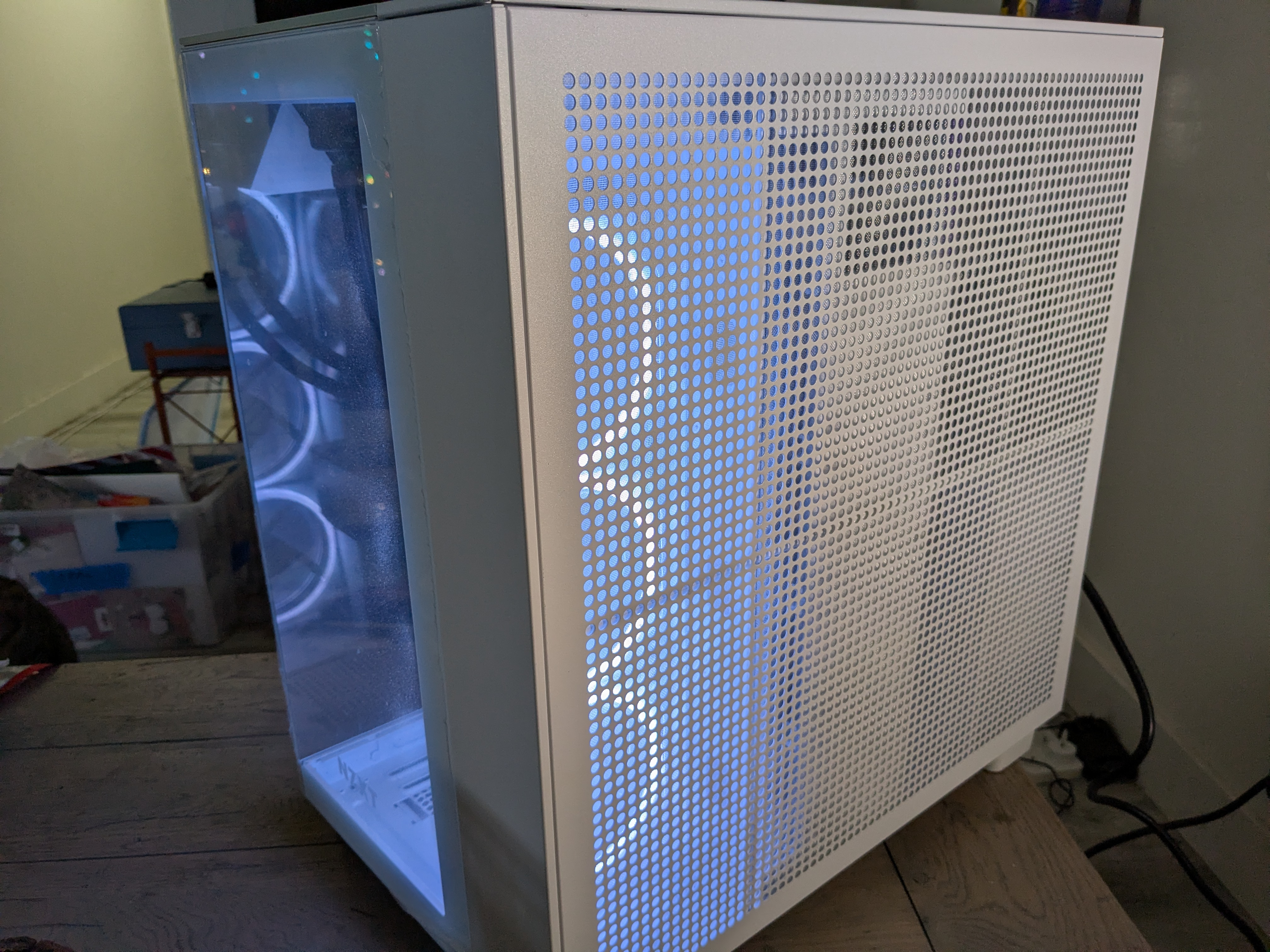
And I don't hate looking at the machine doing all the work either, which is more than I can say as a past owner of numerous prebuilts laced with gaudy LED trim and sharp "gamer" accents. The Player Three Prime comes stock with the 2023 edition of NZXT's H9 Flow case in white. It's a quality tower with a half-glass front window and a glass side panel that comes off with a single thumbscrew. That's ditto for the metal mesh side.
LEDs line the circumference of six out of seven total fans, and other than the RGB glow of two Teamgroup RAM sticks, it's the only accent lighting in the machine. The included NZXT Cam software makes it easy to switch up the colors at a per-fan level, but I keep coming back to the cool white of the default configuration. It's a comforting, understated glow that's immediately attractive without screaming "look at me." This sort of light work that highlights individual components, rather than arbitrarily strewn lights along the inside edges, simply looks better.
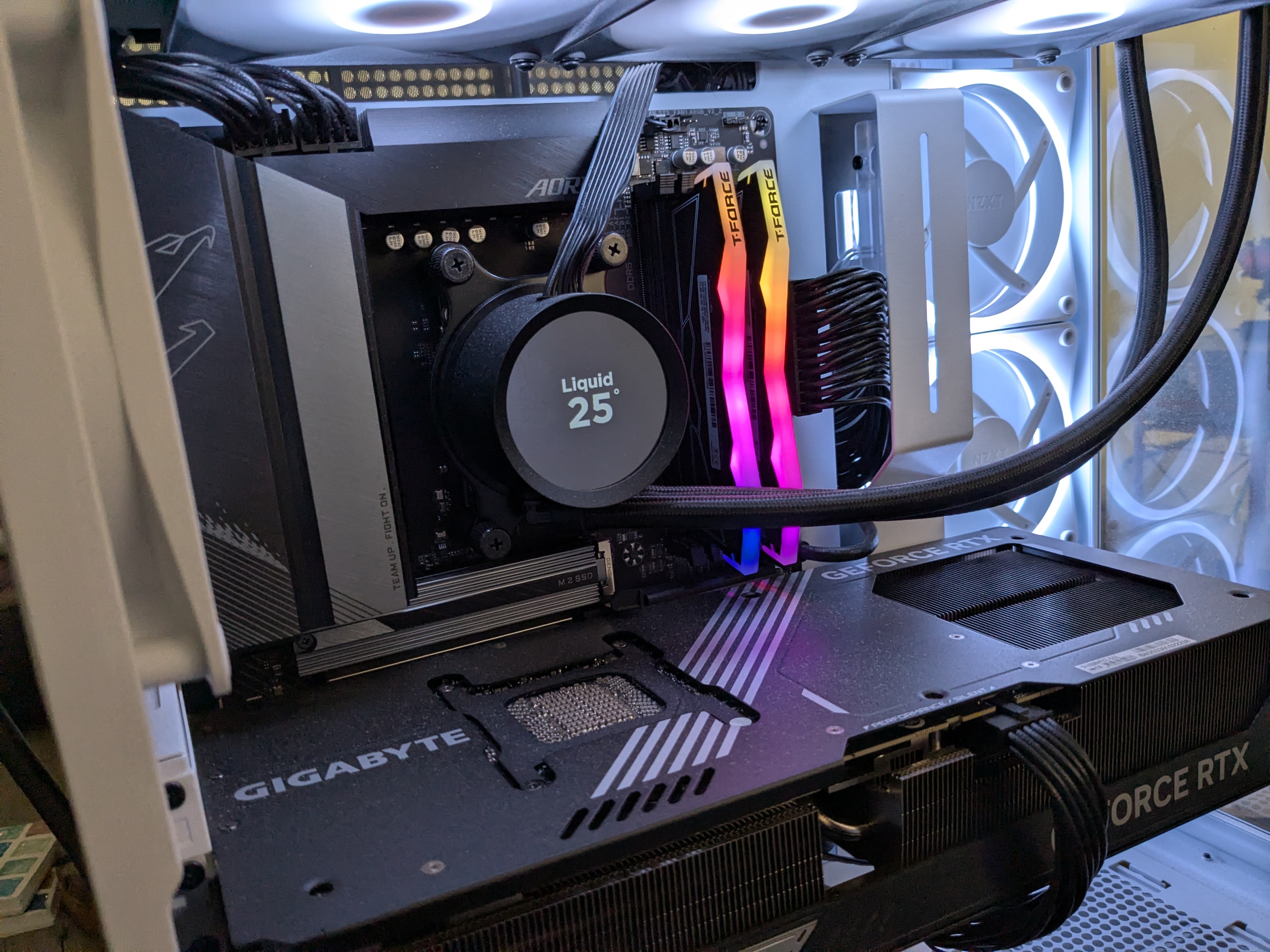
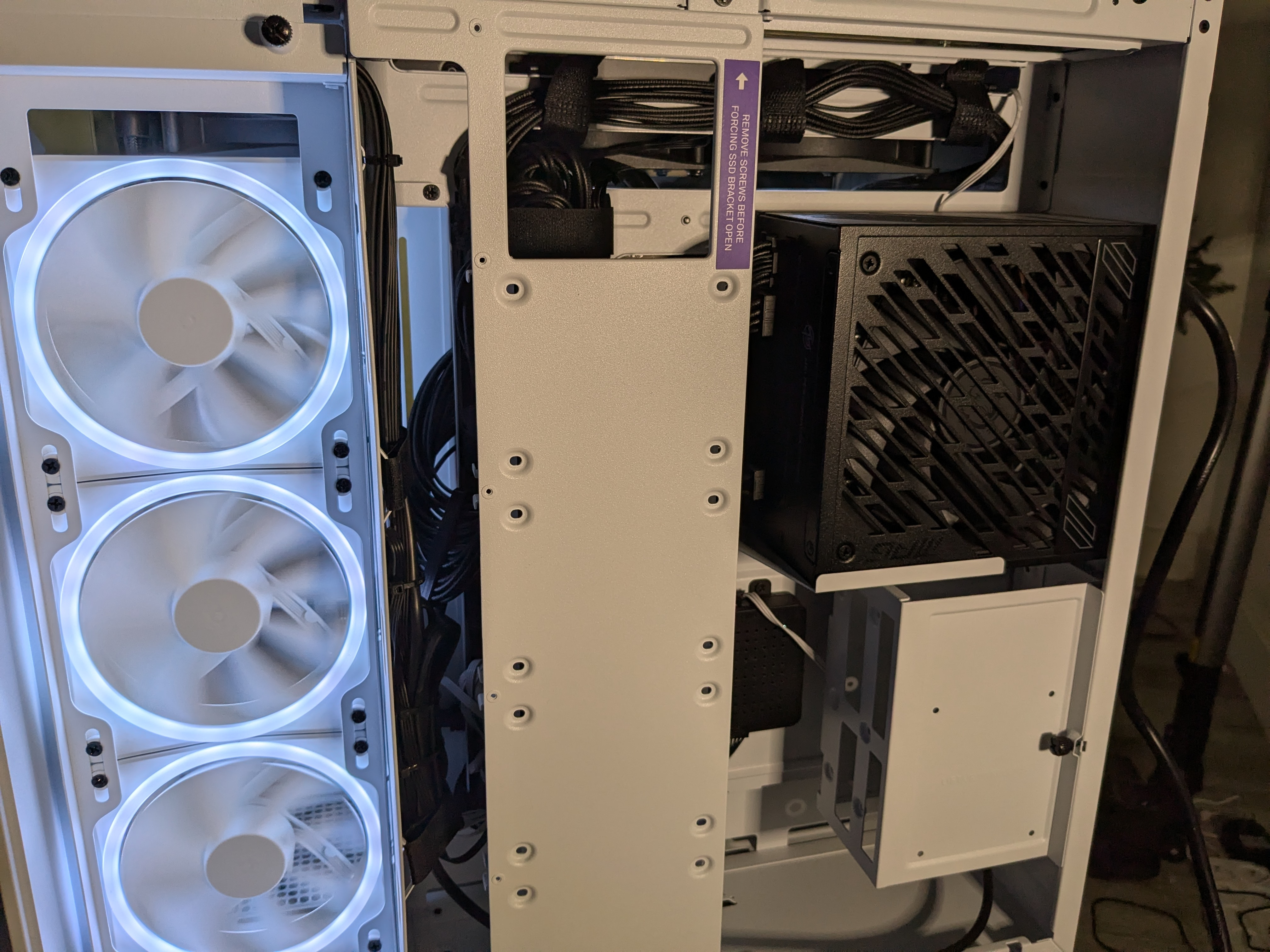
My only case gripe is that I couldn't immediately locate the PSU in this thing. That's because, as our review at the time also noted, the H9 has the PSU mounted in the middle of the back panel behind the motherboard, which adds some fuss when you wanna access the board from the mesh panel. Presumably that's less of a big deal for prebuilt buyers who have chosen this path for plug-and-play convenience, and it's not like the Player Three Prime needs any upgrades in the immediate future, but it's certainly a choice.

At least that neat and tidy back chamber isn't tied down in a way that modifications would be hell. NZXT's tidy cable management is largely accomplished with velcro straps and minimal cable ties, but you can't really do anything until you remove the large SSD bracket (a quick two screws, conveniently labeled).
The benefit of the H9's PSU placement in that back chamber is that all the cable-heavy components are tucked behind a metal wall, leaving a spacious front chamber that, even with the gargantuan 5090 protruding from its center, gives the Player Three Prime a minimal, pleasing interior. You get beauty in the front—the GPU, cool white fans, and LED temp monitor—and business in the back.

It's not the sort of supporting hardware that says "$5,000 PC"
While the Player Three Prime's price is technically "right" in our hellish PC landscape, NZXT didn't source every one of its components from the very top shelf. That 4TB WD Blue SN5000—while spacious enough to accommodate my chonky Fall 2025 rotation of Battlefield 6, Baldur's Gate 3, Call of Duty, Arc Raiders, Warhammer 40,000: Darktide, and dozens of other smaller games—is a slow PCIe 4.0 drive that doesn't utilize the PCIe 5.0 socket on the motherboard. It's a solid enough SSD, but there are quicker PCIe 4.0 drives, and much faster PCIe 5.0 SSDs. The machine still boots fast enough that I can't complain, but it does stick out in a machine with money-no-object sensibilities.
As does the motherboard itself: The Gigabyte B650 Aorus Elite AX V2 is the latest iteration of a good mid-range board, but it's limited to PCIe 4.0 and WiFi 6E. It's a last-gen AMD minastream chipset that doesn't have all the modern feature finery. That's perfectly okay for my use, but it's not the sort of supporting hardware that says "$5,000 PC."
The BIOS was also a few versions behind when I first received it, and if you're playing the latest multiplayer shooters that require Secure Boot, you'll have to activate that manually as well or get the door slammed in your face.
At least the board is packed to the nosebleeds with USB ports: 5x USB 3.2 Gen 1, 2x USB 3.2 Gen 2, 4x USB 2.0, and a single USB-C 10 GB/s. What people could possibly need to plug into that many ports at once is none of my business, but I'll take the room.
Still, those quibbles are hard to hold onto when I actually fire up games on this machine and get nothing short of an excellent experience. That is the power of dropping a serious pile of cheddar on the best CPU and GPU of the moment: the Player Three Prime flies, and it looks good doing it.
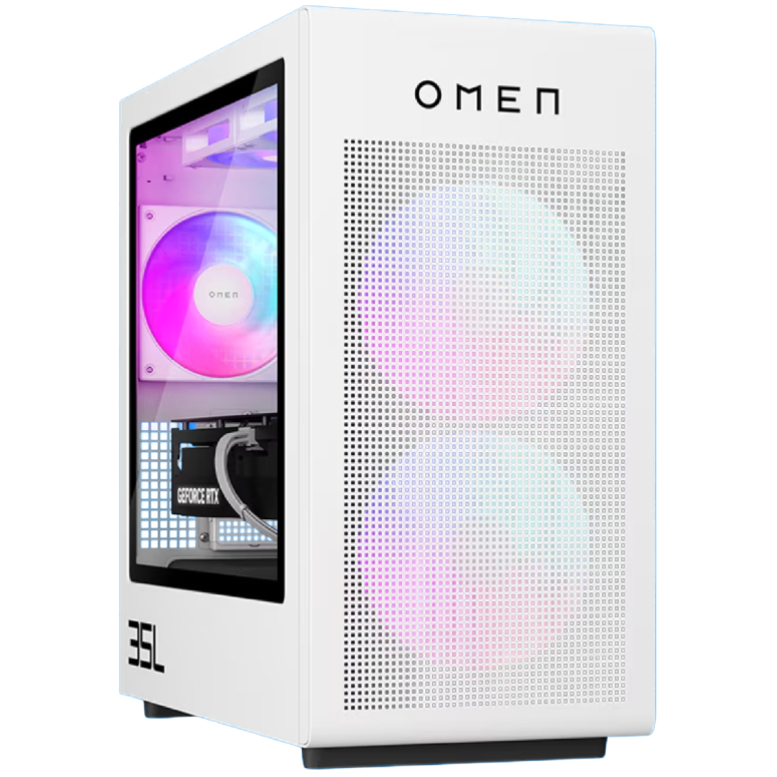
1. Best overall:
HP Omen 35L
2. Best budget:
Lenovo Legion Tower 5i
3. Best high-end:
Corsair Vengeance A7500
4. Best compact:
Velocity Micro Raptor ES40
5. Alienware:
Alienware Area-51
6. Best mini PC:
Minisforum AtomMan G7 PT
The otherworldly price tag inherently limits the Player Three Prime's audience, but assuming money is no object, what you're getting is an attractive build with an RTX 5090 and the best CPU for gaming. You don't have to wonder if it can run a game well: it very much can. But it still feels a little odd having to make last-gen motherboard and storage compromises on a $5K build.

You must confirm your public display name before commenting
Please logout and then login again, you will then be prompted to enter your display name.