You are now subscribed
Your newsletter sign-up was successful
Want to add more newsletters?

Every Friday
GamesRadar+
Your weekly update on everything you could ever want to know about the games you already love, games we know you're going to love in the near future, and tales from the communities that surround them.

Every Thursday
GTA 6 O'clock
Our special GTA 6 newsletter, with breaking news, insider info, and rumor analysis from the award-winning GTA 6 O'clock experts.

Every Friday
Knowledge
From the creators of Edge: A weekly videogame industry newsletter with analysis from expert writers, guidance from professionals, and insight into what's on the horizon.

Every Thursday
The Setup
Hardware nerds unite, sign up to our free tech newsletter for a weekly digest of the hottest new tech, the latest gadgets on the test bench, and much more.

Every Wednesday
Switch 2 Spotlight
Sign up to our new Switch 2 newsletter, where we bring you the latest talking points on Nintendo's new console each week, bring you up to date on the news, and recommend what games to play.

Every Saturday
The Watchlist
Subscribe for a weekly digest of the movie and TV news that matters, direct to your inbox. From first-look trailers, interviews, reviews and explainers, we've got you covered.

Once a month
SFX
Get sneak previews, exclusive competitions and details of special events each month!
Hideo Kojima recently went on a minor digression about Metal Gear Solid V: The Phantom Pain, interesting in its own right as part of the series creator talking a little more openly about the games in recent years—in the immediate aftermath of the Konami split, Kojima didn't talk much about Metal Gear. Before we go any further: spoilers, obviously.
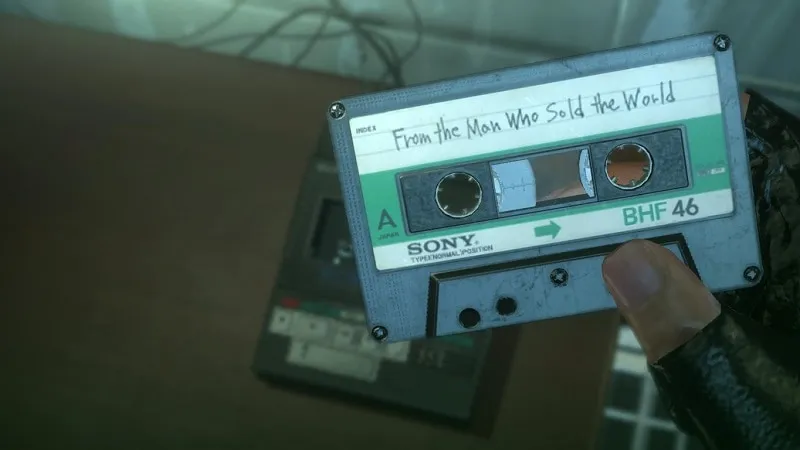
In MGSV's opening the music used is David Bowie's The Man Who Sold the World, specifically a cover version by the Scottish artist Midge Ure."If you listen deeply to the lyrics here, you can understand the structure of MGSV," says Kojima, before adding in a second tweet: "What is the background of Bowie's writing this song, and why is it a cover song? All the answers are clearly stated from the beginning."
1/2At the beginning of MGSV, "THE MAN WHO SOLD THE WORLD", a cover of David Bowie's famous song by Midge Ure, is played in the hospital in Cypros. If you listen deeply to the lyrics here, you can understand the structure of MGSV. pic.twitter.com/wQks4gCmgGMarch 2, 2022
The 'answers' Kojima is referring to here are the game's big questions around identity, and the relationship between Venom Snake and Big Boss. For those who haven't played the game, you essentially build an army as Venom Snake, who you think is Big Boss and everyone else thinks is Big Boss, then find out at the end you're not him. You've been used as a decoy, building the real man's legend, your own identity plastered-over and lost in the process.
So: not that I'd posit this as any kind of answers, but a few notes about the song. Bowie wrote it in the pre-Ziggy Stardust era, and its ambiguous lyrics waver between the singer and the titular figure, who are heavily implied to be the same person. Lyrically the song is about retaining control over one's identity, and the 'sold the world' element can be interpreted as being more about the inner self than materialism: Bowie perhaps feeling that, in becoming such a huge success with songs about his fears and foibles, he was 'selling' that part of his inner life. Of course, it could mean the complete opposite!
What's interesting about the song, which is now one of the artist's most iconic, is that its prominence is arguably down to other artists. Though it was the title track of Bowie's own album, it only became a hit four years later when Lulu recorded a version (she later said she had no clue what the lyrics meant, which is reassuring). Midge Ure's version that features in the game was recorded in the 1980s, and then the song was revived in the 90s by Nirvana on the MTV Unplugged album. Of all these versions, Ure's is the most obscure despite being a wonderfully dream-like synthy take that suits the themes down to the ground.
(Metal Gear trivia: Kojima was no doubt also attracted by Ure's version because he was part of Magnavox, a band Kojima liked enough to call a boss in Metal Gear 2 Solid Snake Magnavox.)
The song plays as Venom wakes in a hospital bed, and again at the end of the game as Venom stares into a mirror, while elements of the scenery shift and change. What Venom sees in the mirror is, of course, the phantom identity that has replaced his own: the world he lost and what it was replaced with. It's notable how this somewhat parallels the song's journey of being 'highlighted' by other artists' covers (Bowie would later return to it and re-record new versions himself from the 90s onwards).
Ah, down the Kojima lore mines we go once more. If you can't get enough of this stuff, I recommend the below video, which is several years old now but I recall as being an excellent analysis that echoes most of the points Kojima's making.
This is one of the reasons people love Metal Gear: you could go on all day about this stuff. The series is built around clones and doppelgangers and different people operating under similar names: and it ends with the man who wants to control the world creating his own 'clone' to build a new identity and legend, before ultimately betraying him. Either way: great tune, and a great cover.


