Join The Club





Intel's past few series of desktop processors have somewhat of a bad reputation for being power-hungry beasts. Its current range of Arrow Lake chips has reversed this trend, fortunately, but with one top leaker claiming that the next generation, Nova Lake, will hit the 700 W mark, you'd be forgiven for thinking that Intel has gone backwards again. However, for PC gaming, you've got nothing to worry about.
That power figure is from kopite7kimi who posted on X that the "power consumption of a full-load NVL-K is over 700 watts." Since they're considered to be a reliable source of hardware leaks and rumours, there have been quite a few eyebrows raised over the purported power level.
The power consumption of a full-load NVL-K is over 700 watts.February 10, 2026
The leaker goes on to clarify that this is for the "dual compute tile" version of Nova Lake, i.e. the one sporting 52 cores (two sets of eight P-cores and 16 E-cores, with an additional four low-power E-cores). If we assume that Intel really is making a dual tile version of Nova Lake, with that many cores, then 700 W is pretty much what I'd expect.


For example, the Core Ultra 9 285K (Arrow Lake, ARL-S) has eight P-cores and 16 E-cores, and when they're fully loaded to the hilt in Cinebench, that chip will happily consume up to 243 W of power. AMD's Ryzen 9 9950X, with 16 identical cores, tops 200 W in the same test.
If you scale the former up to a 52-core equivalent chip, you're going to be looking at over 480 W of power. Yes, that's still well short of 700 W, but Uniko's Hardware argues that the figure is most likely to be a PL4 value, and not the usual PL2. Intel defines these different power limits (PL1, PL2, etc) on the basis of time and usage, with the lowest being what the chip will happily consume all day long under load.
the full power profile of arrow lake s including the pl2 and pl4 was shared by media before.285k = 8p16e on a single compute tile.so it is not too off to think that the dual compute tile one got a pl2 of 500w and pl4 of 800w. i dont understand why ppl freaked out about these… pic.twitter.com/FrPmEjhFlPFebruary 10, 2026
The higher ratings effectively become more burst-like, and most Intel processors will only sustain a PL2 figure for a certain amount of time before dropping to PL1. The highest level is almost instantaneous, a very short blast only. Lots of motherboards won't even let the processor run at that level, too.
Not that it matters for gaming anyway, because there isn't a game on the market, nor will there be any time soon, that will max out 16 P-cores and 32 E-cores. Heck, today's games barely stress a handful at a time, and the Core Ultra 9 285K only uses around 80 to 100 W of power in gaming.
That won't double with the biggest Nova Lake just because it has twice as many cores, as they're not going to be used all that much. You can see this when you compare a Ryzen 9 9950X3D to a Ryzen 7 9850X3D—the former only uses 9% more power than the latter, despite having 100% more cores.
It's a much larger difference (61%) when you compare the 9950X3D to the 9800X3D, but that's because the best gaming chip around is clocked very conservatively. The 9950X3D and 9850X3D are a bit more juiced, which is why they suck up more energy.

Besides, the vast majority of Intel gaming PCs that appear when Nova Lake chips hit the market later this year aren't going to be 52-core monstrosities. Some will for sure, but the majority will just stick to a single compute tile, because it will be far more affordable and still be perfectly fine for gaming.
I suspect that Intel will pitch the big Core Ultra 400 processors in the HEDT (high-end desktop) market, to compete against AMD's Threadripper monsters. That sector is generally a little less concerned about power consumption than gaming, as long as you're getting the right level of performance-per-watt.
So don't worry about Nova Lake's power figures, no matter how high they may seem. You've got far more important things to be concerned about, namely, how on Earth are gamers supposed to upgrade their rigs when DRAM and SSDs cost the same as fifteen organs on the black market?
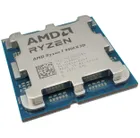
1. Best overall:
AMD Ryzen 7 9800X3D
2. Best budget:
AMD Ryzen 5 7600X
3. Best mid-range:
AMD Ryzen 7 9700X
4. Best high-end:
AMD Ryzen 9 9950X3D
5. Best AM4 upgrade:
AMD Ryzen 7 5700X3D
6. Best CPU graphics:
AMD Ryzen 7 8700G