Join The Club





Intel has finally taken the last wraps off its Panther Lake-based Core Ultra Series 3 range of mobile chips, and it's making some pretty impressive claims about their performance. Before the expected AI NPU TOPS figures, Intel's VP of PC products, Dan Rogers, dedicated a fair chunk of the company's CES 2026 presentation to the gaming chops of the 18A-based silicon.
Ah, it's nice to have a win over the endless AI guff, isn't it? Anyway, headline news is that Intel is claiming up to a 77% integrated graphics performance boost over the previous Lunar Lake-based Intel Core Ultra 9 288V with the top end chips. That's a pretty bold statement, given how impressed we were with Lunar Lake's gaming performance overall.

Intel has also promised much improvement in its GPU driver stack, which, if true, could make these mobile beasties a force to be reckoned with for slim and light gaming machines.
Article continues belowKey to the claimed performance figures are the architectural changes under the silicon hood. Next to some newly-redesigned P and E-cores lies what Intel calls a "massive GPU" for the high end Core Ultra X7 and X9 chips, complete with built-in ray tracing support.
The iGPU in question is called the Intel Arc B390, a Battlemage-branded (sort of) integrated graphics cruncher making use of Intel's new Xe3 cores, and don't even get me started on the naming schemes. There's also the Intel Arc B370 iGPU to contend with, along with a fair few Core Ultra 9, 7, and 5 chips with lower Xe-cored "Intel Graphics" denominations, which I'll go through in detail below.


Catch up with CES 2026: We're on the ground in sunny Las Vegas covering all the latest announcements from some of the biggest names in tech, including Nvidia, AMD, Intel, Asus, Razer, MSI and more.
Intel hasn't confirmed the exact core split yet for each SKU yet, which means we only have a total core count for each chip, not a full P-core, E-core, and LPE-core breakdown. I'll update this article when that information is confirmed.
And, if you'd like more of a deep dive into Panther Lake, including the different chip tile designs and the RibbonFET nanoscale switches, along with the PowerVia backside power delivery that makes Intel's impressive battery life claims (up to 27 hours of Netflix streaming, up to 60% more performance at similar power levels to Lunar Lake) possible, I highly recommend you check out our Nick's Panther Lake architectural break down
In the meantime, though, we've got a whole host of Intel mobile chips to sort through. 14 of them, to be exact. Best get started then, hadn't we?
Intel Core Ultra Series 3 mobile processors
The big guns here are the Intel Core Ultra X9 388H and the Core Ultra 9 386H. The X-variant CPU gets the Intel Arc B390 GPU—complete with 12 Xe3 cores—along with a 5.1 GHz P-core max turbo frequency .
It's the 16-core mega chip, which means it likely gets four Performance cores, eight Efficient cores, and four Low Power Efficient cores, as per Nick's breakdown of the different chip configuration options back in October of last year.
| Row 0 - Cell 0 | Intel Core Ultra X9 388H | Intel Core Ultra 9 386H |
Total cores | 16 | 16 |
P-Core Max Turbo Freq | 5.1 GHz | 4.9 GHz |
Intel Smart Cache (L3) | 18 | 18 |
NPU TOPS | 50 | 50 |
Graphics | Intel Arc B390 | Intel Graphics |
Xe cores | 12 | 4 |
PCIe lanes | 12 | 20 |
Maximum memory speed (MT/s) | LP5/X 9600 | LP5/X 8533, DDR5 7200 |
Maximum memory capacity | 96 GB | 96 GB (LP5/X), 128 GB (DDR5) |
Base power | 25 W | 25 W |
Maximum Turbo power | 65, 80 | 65, 80 |
The non-X Intel Core Ultra 9 386H has a slightly lower max P-core frequency at 4.9 GHz, although thanks to its weedy four Xe-core iGPU, it's got eight more PCIe lanes to play with—which will mean it's better suited to laptops with discrete GPUs, at least for gaming purposes.
One of the advantages of Intel's 18A tile-based chip building system is said to be its flexibility for different package requirements, and that's on display here. The Core Ultra 386H also has a lower max memory speed, although the same 96 GB maximum capacity and 65/80 W base and max Turbo power figures as its X-variant bigger brother.
| Row 0 - Cell 0 | Intel Core Ultra X7 368H | Intel Core Ultra 7 366H | Intel Core Ultra 7 365 |
Total cores | 16 | 16 | 8 |
P-Core Max Turbo Freq | 5.0 GHz | 4.8 GHz | 4.8 GHz |
Intel Smart Cache (L3) | 18 MB | 18 MB | 12 MB |
NPU TOPS | 50 | 50 | 49 |
Graphics | Intel Arc B390 | Intel Graphics | Intel Graphics |
Xe cores | 12 | 4 | 4 |
PCIe lanes | 12 | 20 | 12 |
Maximum memory speed (MT/s) | LP5/X 9600 | LP5/X 8533, DDR5 7200 | LP5/X 7467, DDR5 6400 |
Maximum memory capacity | 96 GB (LP5/X) | 96 GB (LP5/X), 128 GB (DDR5) | 96 GB (LP5/X), 128 GB (DDR5) |
Base power | 25 | 25 | 25 |
Maximum Turbo power | 65, 80 | 65, 80 | 55 |
Moving swiftly on, we've also got the Intel Core Ultra X7 368H and Core Ultra 366H processors. Once again, the X-variant gets the 12 Xe3-cored Arc B390 GPU, while the 366H makes do with four cores of Intel Graphics grunt.
Again, though, the lesser iGPU-ed chip gets more PCIe lanes to play with, although with a slightly lower max P-core frequency. Are we spotting a pattern yet?
The Core Ultra 7 366H sports 16 total cores and a 4.8 GHz max clock frequency, which is then followed in the stack by the eight-core Core Ultra 7 365, which is the first of our chips to drop to a 12 MB Smart (L3) cache figure. It's not the most exciting looking chip, and even its integrated NPU TOPs figure is 1 tippety-top off the pace. For shame.
| Row 0 - Cell 0 | Intel Core Ultra X7 358H | Intel Core Ultra 7 356H | Intel Core Ultra 7 355 |
Total cores | 16 | 16 | 8 |
P-Core Max Turbo Freq | 4.8 GHz | 4.7 GHz | 4.7 GHz |
Intel Smart Cache (L3) | 12 MB | 18 MB | 12 |
NPU TOPS | 50 | 50 | 49 |
Graphics | Intel Arc Pro B390 GPU | Intel Graphics | Intel Graphics |
Xe cores | 12 | 4 | 4 |
PCIe lanes | 12 | 20 | 12 |
Maximum memory speed (MT/s) | LP5/X 9600 | LP5/X 8533, DDR5 7200 | LP5/X 6800 DDR5 6400 |
Maximum memory capacity | 96 GB (LP5/X) | 96 GB (LP5/X), 128 GB (DDR5) | 96 GB (LP5/X), 128 GB (DDR5) |
Base power | 25 W | 25 W | 25 W |
Maximum Turbo power | 65, 80 W | 65, 80 W | 55 W |
Aha, now we have another Arc B390 GPU sporter, the Intel Core Ultra X7 358H. This is a 16 core, 4.8 GHz max boost frequency chip with 18 MB of Smart Cache and the now-proper contingent of 12 Xe cores. Smart money would bet on this one to be the most desirable chip in an ultra slim and light gaming laptop format, or indeed, a handheld. That's if you're not planning on spending top dollar, at the very least.
What else, what else. Oh yes, the Core Ultra 7 356H, along with the Core Ultra 7 355. The latter drops the L3 cache down to 12 MB, the PCIe lanes down to 12, and the maximum memory speed down to 6800 MT/s. On the plus side, it looks to be the most power-sipping of the chips we've seen at this end of the lineup, maxing out at a 55 W TDP.
Both of these chips, as you may have guessed by now, are mere Intel Graphics-havers—not the full fat, B-series GPU variants.
| Row 0 - Cell 0 | Intel Core Ultra 5 338H | Intel Core Ultra 5 336 H |
Total cores | 12 | 12 |
P-Core Max Turbo Freq | 4.7 GHz | 4.6 GHz |
Intel Smart Cache (L3) | 18 | 18 |
NPU TOPS | 47 | 47 |
Graphics | Intel Arc B370 | Intel Graphics |
Xe cores | 10 | 4 |
PCIe lanes | 12 | 20 |
Maximum memory speed (MT/s) | LP5/X 8533 | LP5/X 8533, DDR5 7200 |
Maximum memory capacity | 96 GB (LP5/X) | 96 GB (LP5/X), 128 GB (DDR5) |
Base power | 25 W | 25 W |
Maximum Turbo power | 65, 80 W | 65, 80 W |
Which brings me on to the Intel Core Ultra 5 338H, a chip without an X in the name, but with a brand-spanking-new Intel Arc B370 10-Xe3 core iGPU. I don't make the naming rules, and neither, apparently, does Intel.
It's a 12-core chip with a 4.7 GHz max P-core frequency, 18 MB of Smart Cache and the aforementioned super-intriguing iGPU, although Intel's official specs sheet lists it in the "Thermal Velocity Boost Frequency" section, just to make things fun.
And finally, we have the Core Ultra 5 336H, an eight-core chip with a 4.6 GHz max P-core figure, 18 MB of L3 cache, and your standard four Xe core Intel Graphics iGPU, along with the Core Ultra 5 335, 325, 332, and 322. The last two are eight core chips with twin Xe core iGPUs, and make up the bottom of the range we've been shown to date.
| Row 0 - Cell 0 | Intel Core Ultra 5 338H | Intel Core Ultra 5 336 H |
Total cores | 12 | 12 |
P-Core Max Turbo Freq | 4.7 GHz | 4.6 GHz |
Intel Smart Cache (L3) | 18 | 18 |
NPU TOPS | 47 | 47 |
Graphics | Intel Arc B370 | Intel Graphics |
Xe cores | 10 | 4 |
PCIe lanes | 12 | 20 |
Maximum memory speed (MT/s) | LP5/X 8533 | LP5/X 8533, DDR5 7200 |
Maximum memory capacity | 96 GB (LP5/X) | 96 GB (LP5/X), 128 GB (DDR5) |
Base power | 25 W | 25 W |
Maximum Turbo power | 65, 80 W | 65, 80 W |
| Row 0 - Cell 0 | Intel Core Ultra 5 335 | Intel Core Ultra 5 325 | Intel Core Ultra 5 332 | Intel Core Ultra 5 322 |
Total cores | 8 | 8 | 8 | 8 |
P-Core Max Turbo Freq | 4.6 GHz | 4.5 GHz | 4.4 GHz | 4.4 GHz |
Intel Smart Cache (L3) | 12 | 12 | 12 | 12 |
NPU TOPS | 47 | 47 | 46 | 46 |
Graphics | Intel Graphics | Intel Graphics | Intel Graphics | Intel Graphics |
Xe cores | 4 | 4 | 2 | 2 |
PCIe lanes | 12 | 12 | 12 | 12 |
Maximum memory speed (MT/s) | LP5/X 7467, DDR5 6400 | LP5/X 7467, DDR5 6400 | LP5/X 7467, DDR5 6400 | LP5/X 7467, DDR5 6400 |
Maximum memory capacity | 96 GB (LP5/X), 128 GB (DDR5) | 96 GB (LP5/X), 128 GB (DDR5) | 96 GB (LP5/X), 128 GB (DDR5) | 96 GB (LP5/X), 128 GB (DDR5) |
Base power | 25 W | 25 W | 25 W | 25 W |
Maximum Turbo power | 55 W | 55 W | 55 W | 55 W |
Phew. Quite frankly, it's a dizzying and somewhat confusing lineup. But the key takeaway is the claimed performance boost of those Arc B390 and B370 iGPUs compared to Lunar Lake—not to mention the major TDP improvements when compared to some of the previous generation chips.
Slim and light, integrated graphics-reliant mobile devices that can perform well in the latest games have often felt like a pipe dream, but with Lunar Lake (and AMD's Strix Point), that pipe dream became something of a reality.
But if Intel's claims prove to be accurate (and the demos I've seen so far show some impressive performance in games like Battlefield 6 and Clair Obscur: Expedition 33) then we may have a new brace of powerful, gaming-capable mobile CPUs on our hands, particularly once XeSS multi frame generation gets involved. And as for handhelds? Intel says it'll have something impressive to show us in the coming months, while the laptop chips will become available for preorder in the latest machines on January 6.
Exciting stuff, ey? Now, after all that technical data, I'm going to go and collapse and dream of specs sheets. The numbers. The numbers never end.
1. Best overall:
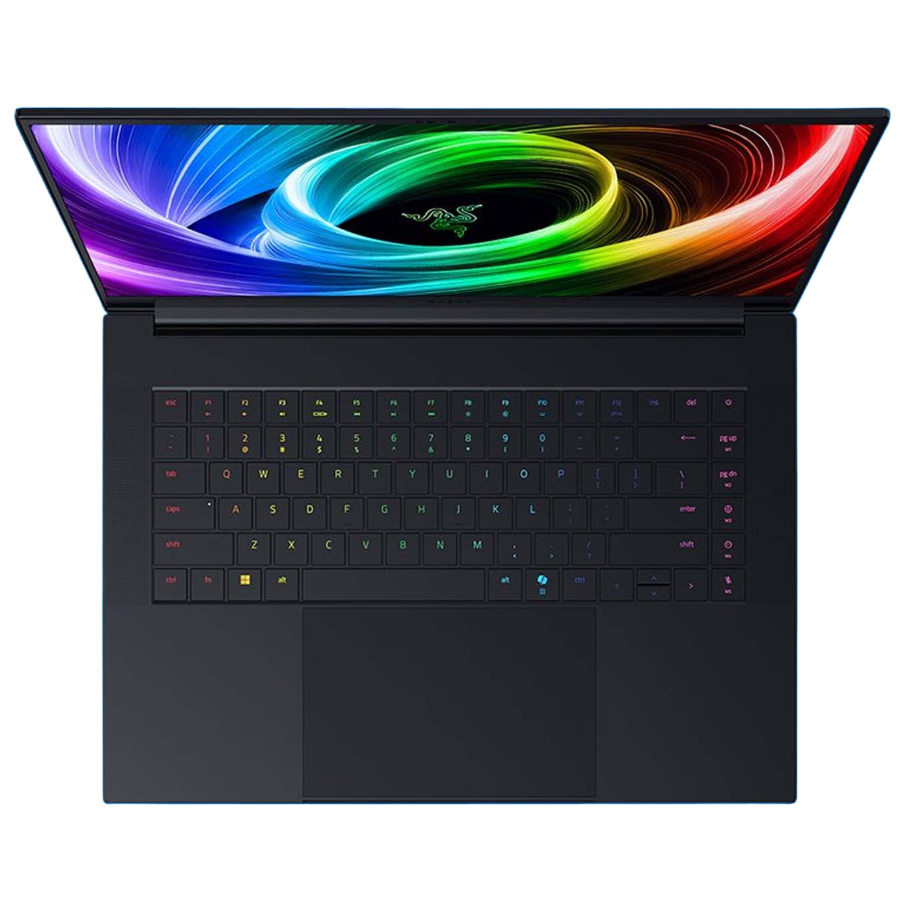
Razer Blade 16 (2025)
2. Best budget:
Lenovo LOQ 15 Gen 10
3. Best 14-inch:
Razer Blade 14 (2025)
4. Best mid-range:
MSI Vector 16 HX AI
5. Best high-performance:
Lenovo Legion Pro 7i Gen 10
6. Best 18-inch:
Alienware 18 Area-51

You must confirm your public display name before commenting
Please logout and then login again, you will then be prompted to enter your display name.