Even though it’s been a difficult 12 months for gamers due to pandemic-related supply chain issues and unprecedented GPU demand, 2021 has been a great year for AMD. According to its recently released third-quarter financial results, the company increased its share of the CPU market by 2.1% over the last quarter, achieving a total market share of 24.6%.
This is AMD’s second-highest overall x86 market share percentage ever, beaten only by its x86 share of 25.3% way back in 2006.
The success of its Ryzen 5000-series processors has been a shining light for the company. Like most semiconductors, they faced availability issues earlier in 2021, but now that supplies have stabilised, they are finding their way into gaming PCs in increasing numbers.
AMD also captured an additional 1.8% of the notebook market over the last year (excluding IoT), with a total share of 22%, a new all-time high. These gains helped the company to hit an all-time high when it comes to revenue of 16.2% in 3Q21, an increase of 1.3% for the quarter and a 3.9% increase compared to the same point last year.
Other important numbers include total revenue of $4.3 billion, a huge 54% increase year-over-year thanks largely to gains in its enterprise and console businesses along with booming Radeon GPU sales.

Of course, now that Intel is gearing up to launch its 12th Gen processors, it will be interesting to see if AMD can maintain its momentum. It should continue for a while as its enterprise and custom (console) divisions aren’t going to see real competition for some time. Mining demand also shows no signs of slowing.
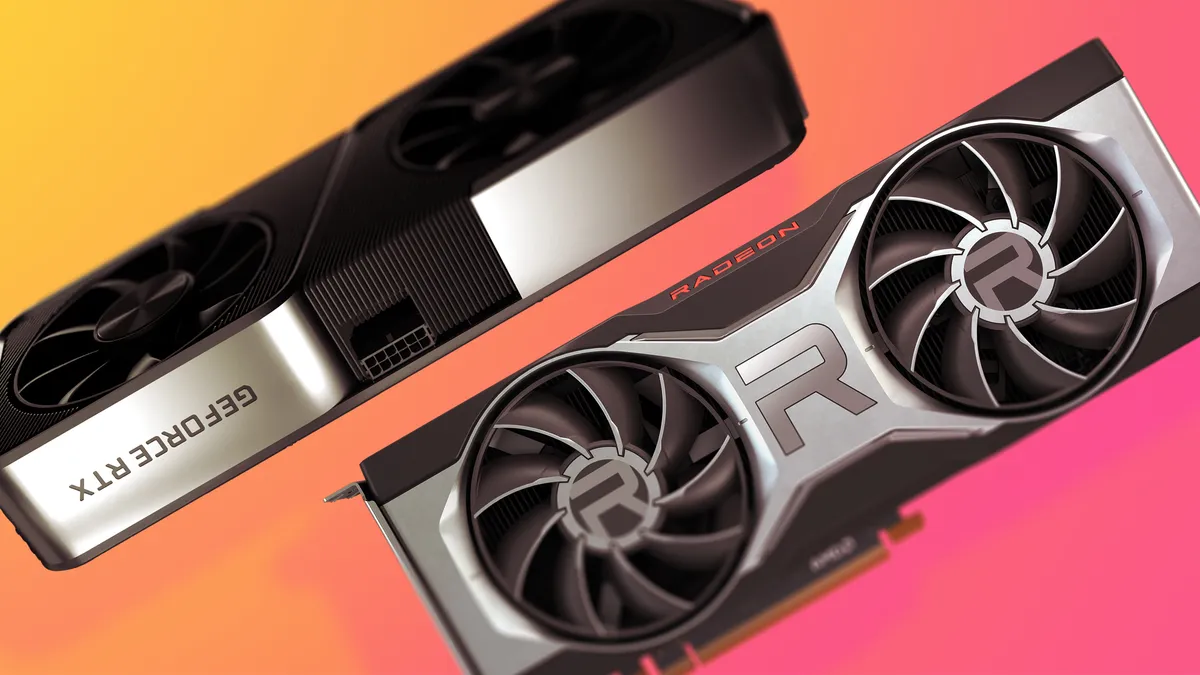
How to buy a graphics card: tips on buying a graphics card in the barren silicon landscape that is 2021
The last time AMD was in such a strong position was in Q4 2006 when it led the market with its Athlon 64 CPUs, just as Intel launched its Core 2 Duo series. With 12th Gen reportedly delivering strong performance, could we be about to see history repeating itself? AMD plans to launch its V-cache equipped Zen 3+ CPUs early in 2022, with Zen 4 and RDNA 3 architectures to follow later in 2022.
Strong competition between AMD, Intel, and Nvidia is good for the whole market. Let’s hope that gamers can look forward to more affordable GPUs in 2022. As Ethereum very slowly gears up to move away from proof of work mining to proof of stake, there’s good news on the GPU horizon, even if that horizon might seem to be a long way away right now.