OK, brace yourself for this one, peeps. Linus Torvalds, the software developer who created the Linux operating system and one of the most iconic figures in the indy computing scene, says the bad rep of the Windows operating system for crashes and bugs is not down to bad code. It's down to bad hardware.
"I'm convinced that all the jokes about how unstable windows is, the Blue Screening—I guess it's not a blue screen any more—a big percentage of those were not actually software bugs, a big percentage of those are hardware not actually being reliable," Torvalds told the Linus Tech Tips YouTube channel (cue endless gurning and puns by the channel's eponymous host).
The hook for Torvalds' appearance on the channel was building his perfect PC. His choices for a DIY PC build are intriguing by any measure, but even more interesting when you dig down into the details, which include an AMD Threadripper CPU with ECC memory support for the ultimate in reliability, but also an Intel Arc GPU.
And it's that ECC memory where the whole Windows stability riff comes in. Hold that thought. Out of the gate, Torvald's choice of an AMD Threadripper CPU, a 9960X 24-core model to be precise, is perhaps no surprise. Apparently, he still gets his hands dirty merging and compiling code, though not so much actually writing code himself.
"One of the things I do between every single merge is compile the whole kernel," he says, adding, "and that's where you want something fairly powerful."

So why not the Threadripper 9980X monster with 64 cores? "I don't want the crazy high-end because I want it to be quiet and reliable and not insane in any particular direction. I've always wanted to have something that is reliable, that comes first. It needs to be something I trust and work with," Torvalds explains.
Speaking of reliability, that's exactly why Torvalds demands ECC or error-correcting code memory. "I don't understand why people don't require ECC in their machines because being able to trust your machine is the number one thing. And without ECC, your memory will go bad, it's just a question of when," he says.
He then recounts the story of a PC he ran with non-ECC RAM that worked fine for two years before he started seeing errors and segmentation violations when compiling code.
"My first reaction is, oh no we have a bug. I spent days on trying to figure out what the bug was until I just realised, no it wasn't a bug at all, it was that my machine was not reliable".
At which point, Torvalds explains how he thinks a big part of the Windows' OS reputation for instability and Blue Screening is not actually software related, a big percentage of those crashes come down to hardware being not reliable and specifically not using error-corrected memory.
"It's a thing with me. I do not touch machines that don't have ECC," Torvalds concludes. But what he will apparently touch for his "perfect" build is an Intel Arc GPU. Unfortunately, Linus of the Tech Tips variety's attention-seeking gurning prevents the Linus we're actually interested in from explaining his choice.

Given the lengthy polemic he presents on the subject of PC stability and reliability, you'd have to assume Torvalds at least views Arc GPUs as robust. But the details of his thinking there remain something of a mystery.
Anyway, all of this has me wondering how often game crashes are down to memory errors. And would using ECC memory largely put an end to them? That is an interesting thought.
For the record, when it comes to AMD CPUs, pretty much all Ryzen desktop CPUs (rather than APUs) including the latest Zen chips support ECC memory, but that hinges on also having motherboard support. As for Intel chips, recent generations including Alder Lake, Raptor Lake and Arrow Lake also all support ECC memory.
However, none of Intel's desktop motherboard chipsets support ECC memory. So, you'll need a motherboard with a workstation chipset like the W880 if you want to run ECC memory. Anywho, if you can overlook the host's constant antics, the rest of the video is certainly worth a watch.
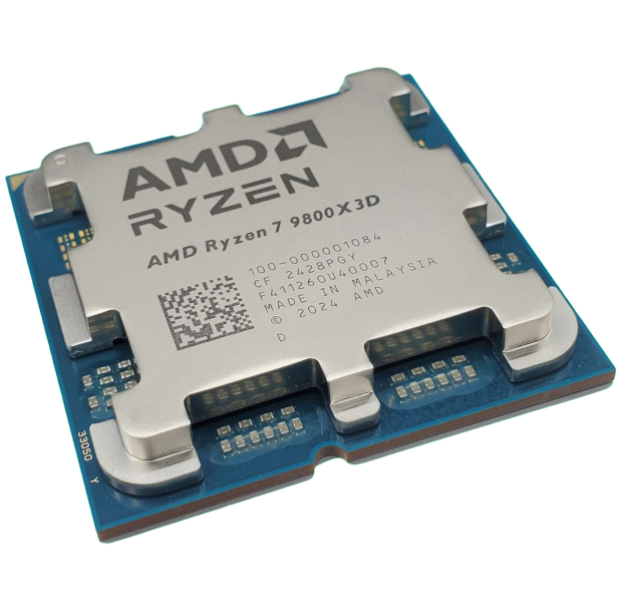
1. Best CPU: AMD Ryzen 7 9800X3D
2. Best motherboard: MSI MAG X870 Tomahawk WiFi
3. Best RAM: G.Skill Trident Z5 RGB 32 GB DDR5-7200
4. Best SSD: WD_Black SN7100
5. Best graphics card: AMD Radeon RX 9070

You must confirm your public display name before commenting
Please logout and then login again, you will then be prompted to enter your display name.