Join The Club





Panther Lake is a big deal for Intel. After the disappointment of Meteor Lake and Arrow Lake, and the backlash over the instability of Raptor Lake, the chip giant has bet big on 18A, the process node used to make the key component of the new chip, and introduced some key improvements with the architecture. However, Panther Lake's official launch at CES has given both Intel and AMD ample room to take potshots at each other.
Talking to Tom's Hardware, AMD SVP and GM of Client Product Group, Rahul Tikoo, spoke about Panther Lake. Tikoo said "Strix Halo or Ryzen AI Max will kill it" and that "it's not even a fair fight at that point." He added that AMD's top-end chips are "better than that in terms of graphics performance" and that those looking for gaming will be buying gaming-specific chips anyway.
Article continues below 
Intel also reports an 82% bump over the AMD Ryzen AI 9 HX 370 with native rendering and 73% with 2x upscaling. Whether or not this comparison is warranted will depend on the price of Panther Lake.
Tikoo is sceptical. "Wait until you see the price point on that. It's gonna be, you know. Enough said." The high-end that AMD wants Intel to compare itself to also isn't very affordable, though.
In a separate interview with PCWorld, Intel's senior director of product management for client, Nish Neelalojan, aired his own grievances about AMD. “They’re selling ancient silicon, while we’re selling up-to-date processors specifically designed for this market”.
Process nodes aren't everything, but Panther Lake is manufactured on Intel's 18A node (with gate-all-around transistors and backside power delivery), whereas Gorgon Point is using TSMC's N4 node (which is a tweaked N5 FinFET process). What Intel is saying isn't necessarily wrong: It's not competing with totally new hardware, it's competing with a mid-cycle refresh.
AMD's Strix Halo, Strix Point, and upcoming Gorgon Point AI 400 series chips are still using the RDNA 3.5 architecture, and, for the most part, Gorgon Point is simply a refresh of Strix Point, albeit with improved power management. They are still operating off older designs and running off the same node.
AMD's naming schemes and various refreshes have only muddied the waters around which chips actually use new hardware, too.

For instance, when it comes to gaming handhelds, the Ryzen Z2 A is an outdated 7 nm RDNA 2, Zen 2 chip, while the Ryzen Z2 Go is a significantly more powerful but still quite outdated Rembrandt chip with four Zen 3+ CPU cores and 12 RDNA 2 CUs. The standard Ryzen Z2 is better than both of those with its RDNA 3.5 GPU and Zen 5 cores, and the Z2 Extreme blows all of those out of the water, being one of the strongest mobile chips right now.
The difference between outdated silicon and current top-of-the-line is just a single word, or letter, and the weakest of the lot (worse than older generation chips) only officially launched last year.
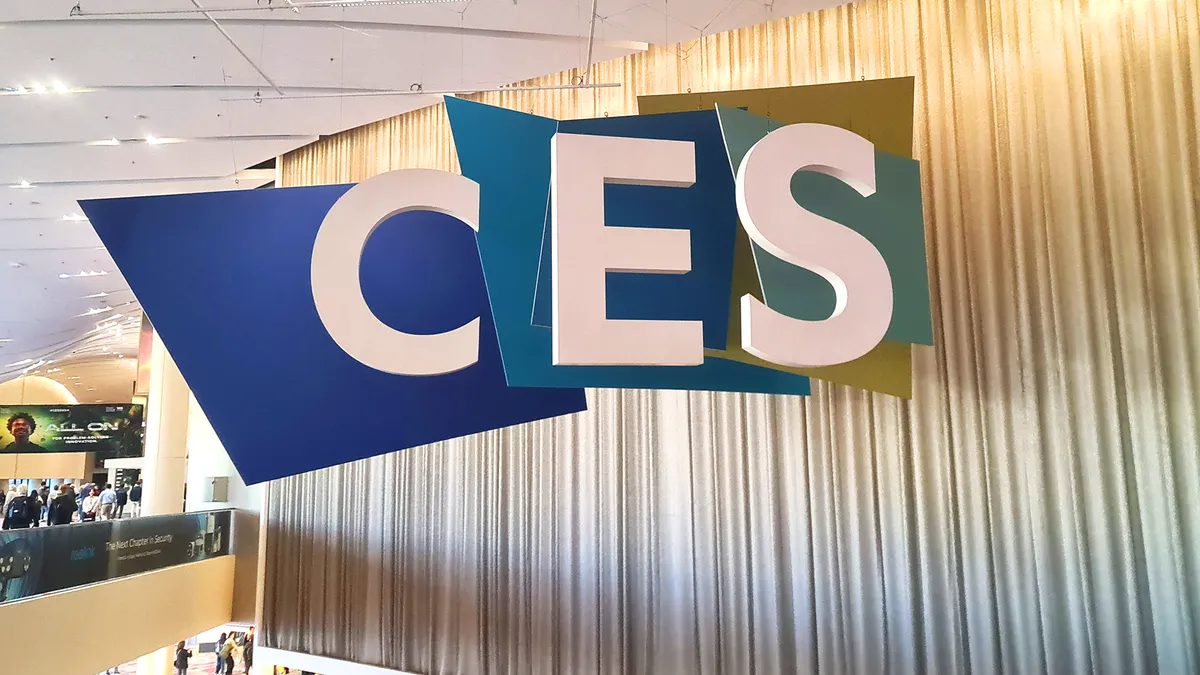
Catch up with CES 2026: We're on the ground in sunny Las Vegas covering all the latest announcements from some of the biggest names in tech, including Nvidia, AMD, Intel, Asus, Razer, MSI and more.
However, this is a technique that Intel has employed many times over the years. We saw various refreshes of Raptor Lake, which also made its way into the Core Series 2 lineup. This is not to be confused with Core Ultra Series 2, which is Arrow Lake and Lunar Lake. Intel accusing AMD of using old silicon feels a tad hypocritical, given the history of both companies.
In a sense, Intel tightening up its naming scheme and complaining about old silicon feels like a gambit to pull back those it may have lost. If gaming performance is as strong as it says, there is room for Intel to take the gaming handheld crown.
Either way, that back and forth between the two companies shows a competitive fire when it comes to its chips, and more fierce competition is only better for the broader market. I, for one, can't wait to see how Panther Lake performs in a tidy handheld.

1. Best overall:
Lenovo Legion Go S SteamOS
2. Best budget:
Steam Deck
3. Best Windows:
Asus ROG Xbox Ally X
4. Best big screen:
Lenovo Legion Go
5. Best compact:
Ayaneo Flip DS

You must confirm your public display name before commenting
Please logout and then login again, you will then be prompted to enter your display name.