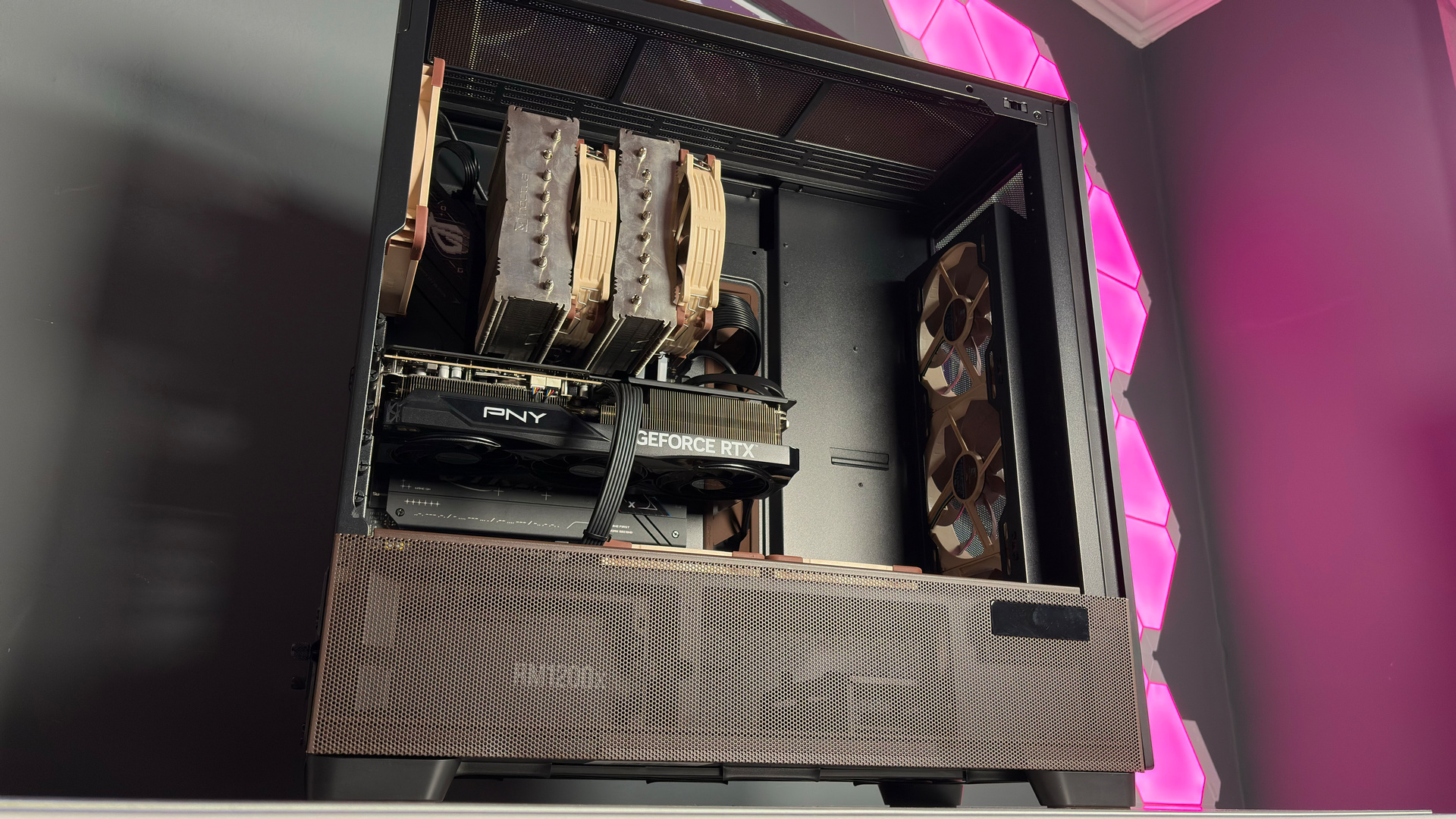
In the late summer of 2014, Microsoft announced that Windows 10 would be rolled out to PC users around the world in the following year. At the same time, it also revealed that the new operating system would be home to another major software release: DirectX 12. It's been a decade since both were officially released, but while Windows 10 has been shuffled off into the realms of 'end of life' support, DirectX 12 has grown to become the most comprehensive collection of graphics APIs ever created.
To celebrate this fact, Microsoft has published a short blog detailing some of the major improvements and upgrades that DirectX 12 has enjoyed over the years. For some folks, especially those who have been involved with PCs for as long as I have, it will only seem like yesterday when the new API was let loose.
Article continues below 
I heartily recommend that you read through this excellent explanation of what made DirectX 12 so different compared to previous iterations, but as a short summary, DirectX 12 (or more specifically, Direct3D 12, the graphics part of the API) is all about giving programmers the maximum amount of flexibility, control, and access to hardware.
With each major addition and update to the API, Microsoft has expanded upon those aspects. For example, in 2018, DirectX Raytracing (DXR) was added to the package, a separate API for… well… ray tracing. Developers also got variable rate shading in Direct3D, as well as mesh shaders, and texture sampler feedback, a few years later in the DirectX 12 Ultimate update.
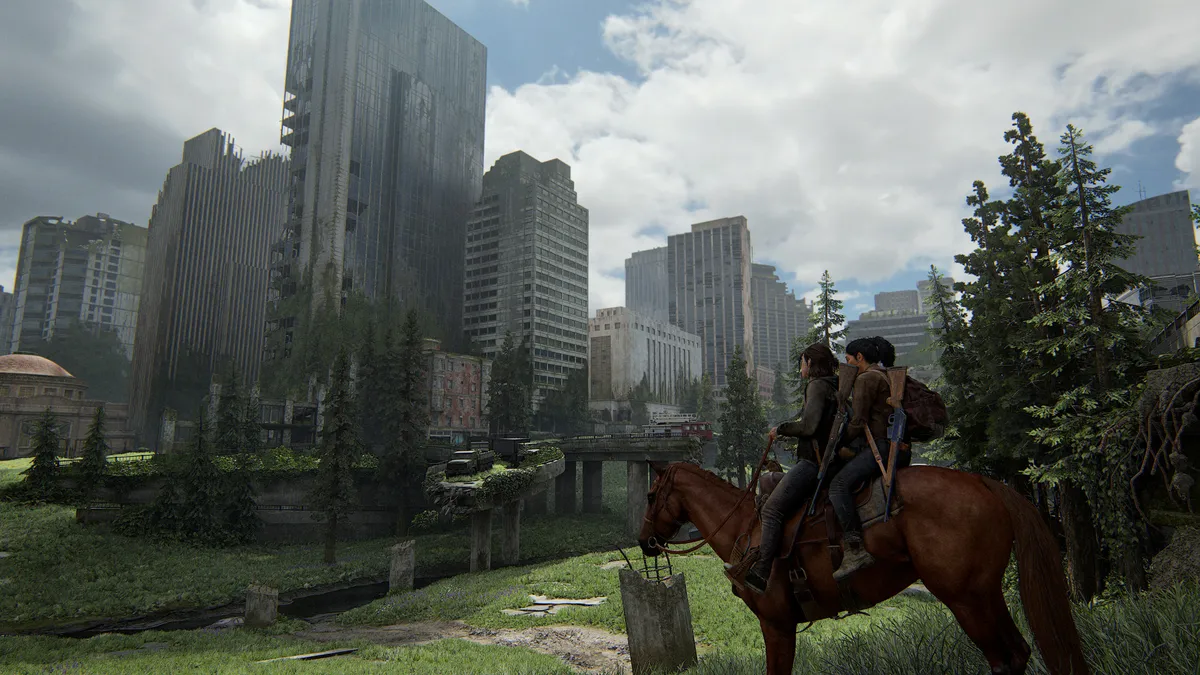
In 2021, AutoHDR and DirectStorage were added, though the latter didn't make a full appearance until the following year. It's fair to say that the former hasn't exactly set the gaming world on fire, and there are still very few games making good use of DirectStorage. Most Nixxes ports of Sony's biggest games leverage the DS API, such as The Last of Us Part 2, but these are exceptions, rather than the norm.
With GPU architectures changing from being entirely graphics-focused and game rendering relying increasingly more on compute shaders, rather than classic vertex and pixel shaders, DirectX12 has gained additional features to suit: Work Graphs in 2024, plus Shader Execution Reordering and Cooperative Vectors in 2025.
All these extras make DirectX 12 the most comprehensive collection of software tools and APIs for gaming graphics around, though one could take the view that it's all just making it ever more complex and challenging to make a renderer that works well on any hardware configuration.
But what of DirectX's future? In fact, where is DirectX 13? You'd think that after ten years, Microsoft would want to introduce a new version, even if it's just a rebranding of the current full package. I put this very question to Shawn Hargreaves, Microsoft's principal engineering manager of Direct3D, last year, and his reply wasn't overly enlightening:
"Technology is always evolving, and DirectX will continue to evolve with it. We are committed to DirectX being the industry leading graphics API, in close partnership with innovation in graphics hardware, and providing developers with the capabilities and flexibility needed to deliver on their creative vision. We have nothing to share regarding a new version of DirectX right now."
So that's not a no to DirectX 13, but at the same time, it doesn't actually suggest that there ever will be a new iteration of the API package. At least, not under the umbrella of a new name. DirectX 12 may be officially ten years old, but the reality is that it's an API of Theseus: so much has changed under the hood, that it's not really 'just' DirectX 12 anymore.
Part of the answer as to why there's no DirectX 13 on the horizon lies in the fact that compute-heavy rendering isn't always the best choice for game programmers. Baldur's Gate 3, for example, uses DirectX 11 or Vulkan for graphics duties, and while the latter is just as low-level and complex as DirectX 12, the game doesn't really run or look any better when using that API.
Hargreaves commented on this, too: "Compute is growing in dominance, especially for the latest and greatest rendering techniques. Much of the evolution over the last several years, first with raytracing, then mesh shaders, and now work graphs, is concentrated on improving compute capabilities as opposed to more traditional triangle rasterization.

"I expect this trend to continue. Will we ever get rid of the triangle rasterizer hardware altogether, though? That’s hard to say. Rasterization is still important for many games, and if that’s what you want to do, dedicated silicon can be much more efficient than implementing everything in compute. The future probably looks more like gradually decomposing the traditional graphics pipeline and enabling the pieces of it to be used in more flexible combinations—a path that we are already some distance along!"
To me, this explains why there isn't a DirectX 13 on a release schedule just yet. Whatever you want to call it—'traditional' rendering, rasterization, pixel shading—is fine for a great many games, and although ray tracing and compute shading are required for the very best graphics, it will be a long time before it's the standard way of rendering in PC games.
So I wouldn't be surprised if we're celebrating the 20th birthday of DirectX 12 in 2035. After all, DirectX 11 is 16 years old and still going strong.

1. Best overall: AMD Radeon RX 9070
2. Best value: AMD Radeon RX 9060 XT 16 GB
3. Best budget: Intel Arc B570
4. Best mid-range: Nvidia GeForce RTX 5070 Ti
5. Best high-end: Nvidia GeForce RTX 5090

You must confirm your public display name before commenting
Please logout and then login again, you will then be prompted to enter your display name.