I've just wrapped up my benchmarking of the Intel Core Ultra X9 388H, or more commonly-known to most of you at this point, the top-end Intel Panther Lake mobile chip. It's a feisty little beast, with iGPU performance that feels very close to what you might expect from an entry-level, discrete GPU-equipped gaming laptop—and that gives me hope for a clutch of super-fast handhelds on the horizon.
Intel remains tight-lipped regarding handheld implementations of its impressive new chips, with the only word I've heard on the matter being something shown to the public "soon". So, I'm left with little but speculation for now. Still, we can have fun dreaming together, can't we?
Its APU is really starting to show its age in 2026, and while it still makes a fantastic value proposition, I'd primarily recommend it as an indie gaming machine if you're looking for smooth performance. Much faster handhelds are available, of course—but with so many demanding games on the market, you still have to be pretty careful with the minimum specs requirements before committing your gaming experience to the truly-portable life.
Intel Arc B390 1080p upscaled gaming benchmarks
Upscaling set to Quality
| Product | Value |
|---|---|
| Intel Arc B390 (Asus Zenbook Duo) | 92 Avg FPS, 60 1% Low FPS |
| Radeon 890M (Asus Zephyrus G16) | 53 Avg FPS, 45 1% Low FPS |
| Intel Arc 140V (Asus Zenbook S 14) | 40 Avg FPS, 33 1% Low FPS |
| RTX 4050 Mobile (75 W, Acer Nitro V 15) | 110 Avg FPS, 63 1% Low FPS |

The Intel Arc 140V was certainly impressive at the time, but now I know it can be thoroughly trounced by the Arc B390 found in several Panther Lake chips at equivalent wattages, I can't wait for the new iGPU be crammed inside a handheld chassis. It's remarkably quick on its feet, in a way that feels downright futuristic when compared to its direct competition.
There's also the Asus ROG Xbox Ally X, of course, which makes use of AMD's Ryzen Z2 Extreme to great effect. It's a fair few frames faster than the Claw, on average—but looking at the performance delta between the new Core Ultra X9 chip and its laptop-based equivalents, I can't help but wonder what its Arc B390 iGPU could do when limited to a similar TDP.
There's a fly in the ointment, though, and I'll ask you to hold your groans—it's the potential price tag. Yes, 2026 is a year in which we'll be complaining about the rising MSRPs of all sorts of hardware (mostly due to the ongoing RAMpocalypse), but high-end handhelds were already a pretty expensive proposition before the DRAM market imploded with horrific results.
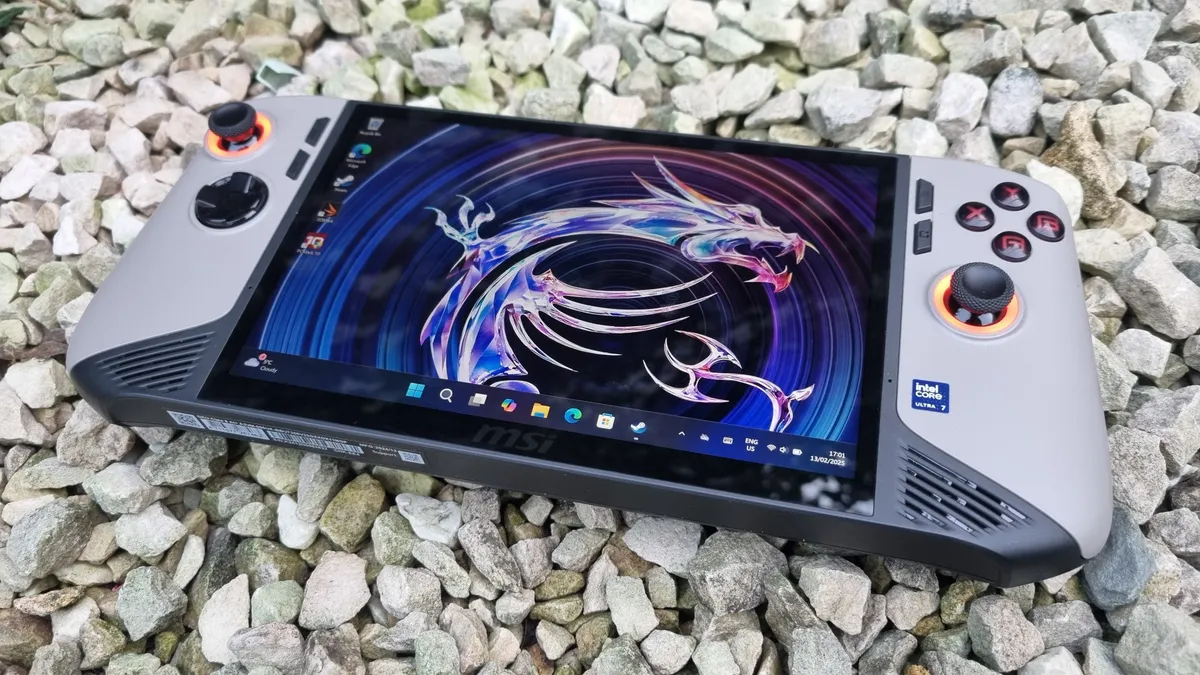
The Claw 8 AI+ retails for around $900, while the Asus/Xbox machine commands an imposing $1,000 MSRP. Nothing I've seen so far indicates that laptops featuring the top-end Intel chips will be cheap, and given the performance advantage they're likely to provide, I can't imagine that handhelds making use of the Arc B390 iGPU will be any better.
Rumours suggest that Intel will eventually release a handheld-specific chip with the full-fat 12 Xe3-core specced iGPU on board, supposedly called the Intel Core G3 Extreme. It's said to have lower clock speeds, with a couple of cores lopped off for good measure, but I still can't imagine it'll show up in anything but the most premium of handheld models.
So, perhaps I should temper my expectations. Any Panther Lake-based handheld will likely come with a hefty price tag, and that's enough to ruin anyone's fantasy gaming scenario. There's always the 10 Xe3-cored Arc B370 iGPU found in some of the lesser-specced Core Ultra Series 3 chips, I suppose, but even that's likely to cost a pretty penny if it makes it into a handheld format.
Still, if Intel's new chips really can kick the top end of the market into high gear, perhaps it won't be too long before slightly crunchy handheld gaming performance becomes a mid-range to budget expectation, rather than the norm for most.
A humble hardware writer can dream, can't they?
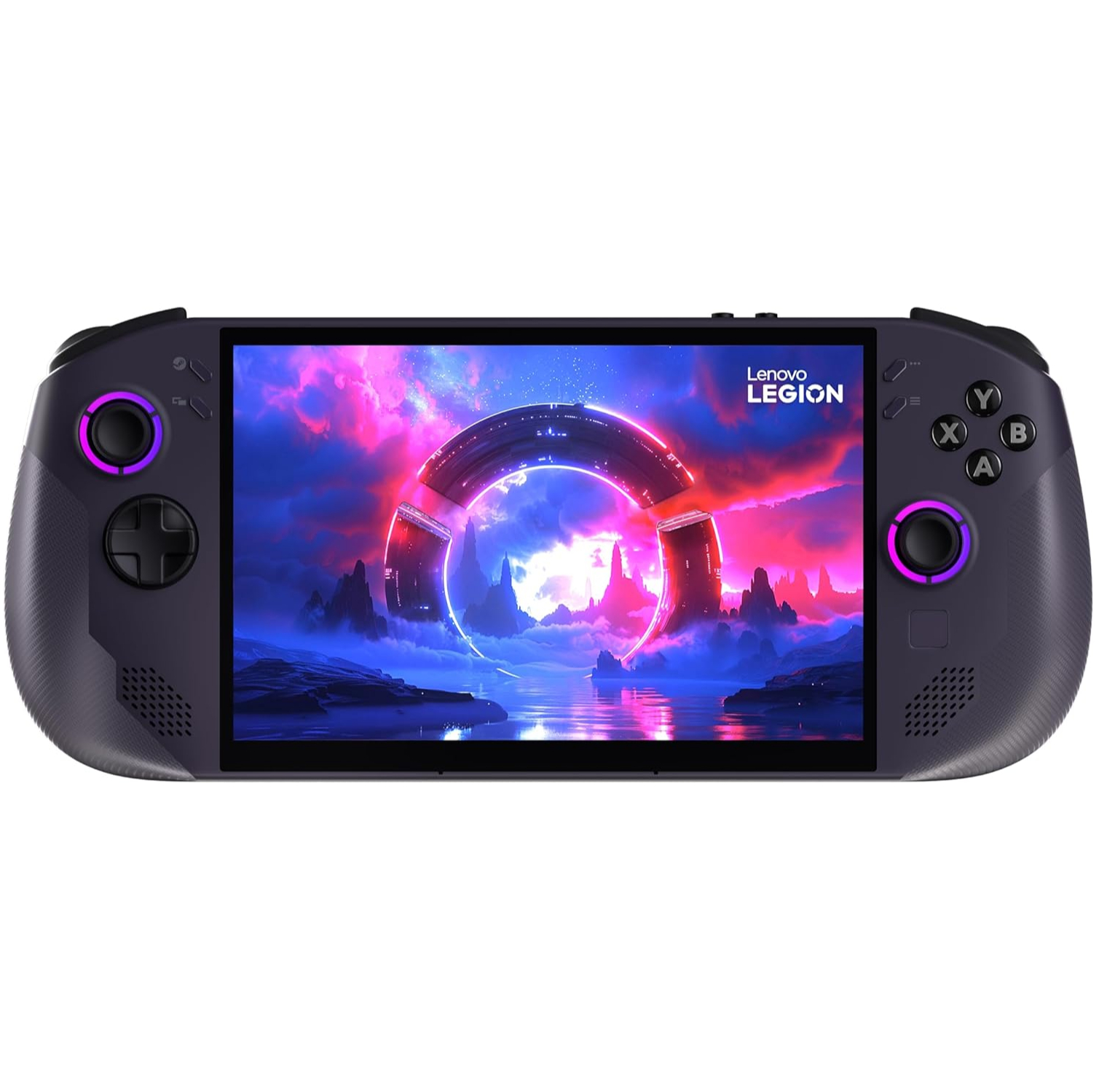
1. Best overall:
Lenovo Legion Go S SteamOS
2. Best budget:
Steam Deck
3. Best Windows:
Asus ROG Xbox Ally X
4. Best big screen:
Lenovo Legion Go
5. Best compact:
Ayaneo Flip DS

You must confirm your public display name before commenting
Please logout and then login again, you will then be prompted to enter your display name.