Two good news stories in the space of one week for Intel? Well, kinda. Hot on the heels of a rumour claiming Intel has convinced Apple to make chip at its foundry comes new analysis showing an uptick in market share for Arc GPUs. Just don't get too excited. Intel's Arc GPUs have gone from basically nothing to 1% of the market.
But 1% is better than no percent, right? The new data comes from research outfit JPR. They claim Intel is now showing up in their latest add-in GPU market share figures for the third quarter of 2025 to the tune of 1%, up from 0% in recent quarters.

It's not clear exactly which graphics cards are responsible for Intel's relative sales success. But we're presumably talking Battlemage-derived boards, perhaps the Intel Arc B580 or its professional cousin the Intel Arc Pro B60.
AMD is also up, from 6% to 7%. Nvidia is thus down by 2% from 94% to 92%. Woe is Nvidia. Not. Of course, this is but one data point from one research outfit. How accurate JPR's figures really are, that's hard to say.
However, there is at least one alternative data point that suggests caution in drawing immediate conclusions could be wise. AMD's most recent financial results showed a very substantial increase in "gaming" revenue.
"In gaming, revenue increased 181% year-over-year to $1.3 billion. Semi-custom revenue increased as Sony and Microsoft prepare for the upcoming holiday sales period. In gaming graphics, revenue and channel sell-out grew significantly driven by the performance per dollar leadership of our Radeon 9000 family," AMD CEO Lisa Su said last month.

Of course, it's frustrating to note that AMD has not broken out those figures fully. Sure, gaming revenue is up 181%. But that includes both PC graphics cards and semi-custom revenue. And semi-custom revenue means console chips.
As Su herself implied, some of that 181% increase in gaming revenue is thanks to Sony and Microsoft stocking up on console chips for the run up to Black Friday sales and the holiday period. When it comes to graphics cards, all we know is that AMD is claiming that "revenue and channel sell-out grew significantly."
Still, the Radeon RX 9000 family and RDNA 4 do seem to be a success. For sure, an RX 9070 XT has been sitting at the top of Amazon's sales charts for some time. So, the idea that AMD has only managed to claw back a single percentage point of market share from Nvidia is hard to parse, that's for sure.
Getting back to Intel, we really do hope that its Arc graphics cards are seeing some sustained demand. Rumours around a more powerful Arc B770 board won't quite go away. So, here's hoping Intel hasn't given up on Arc. Maybe if the company has indeed inked that Apple deal, Intel will find the cash to keep investing in Arc. A third major player in the graphics card market would be so very, very welcome.
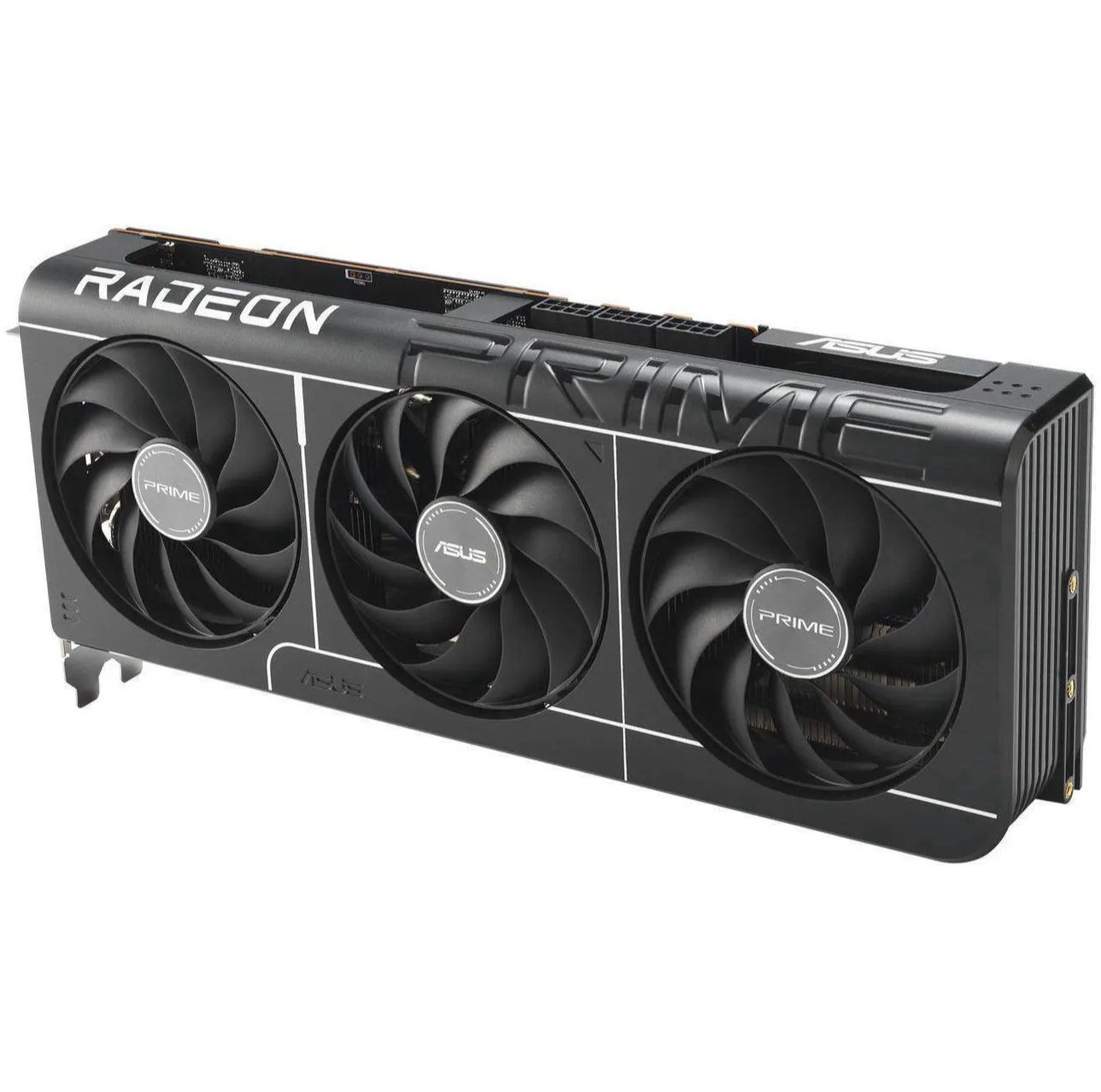
1. Best overall: AMD Radeon RX 9070
2. Best value: AMD Radeon RX 9060 XT 16 GB
3. Best budget: Intel Arc B570
4. Best mid-range: Nvidia GeForce RTX 5070 Ti
5. Best high-end: Nvidia GeForce RTX 5090

You must confirm your public display name before commenting
Please logout and then login again, you will then be prompted to enter your display name.