Seagate has unveiled the fastest hard drive known to man, a 14TB behemoth of spinning platters that can rival some SSDs in the raw transfer speed race. Before you Chia pets get too excited about the possibility of making your crypto fortune off the back of a ludicrously speedy new hard drive, the new Seagate Mach.2 Exos 2X14 (PDF warning, via Tom's Hardware) is only getting close to the sustained transfer speeds of SATA based SSDs, and mainstream ones at that.
But still, the fact that Seagate's dual-actuator tech is able to be mentioned in the same breath as a solid state drive just highlights how effective it is. Maybe the consoles moved onto SSDs a generation too early? Haha, silly consoles...
As the 14TB capacity might have hinted at, the new hard drive is aimed squarely at the datacentre crowd and certainly isn't something you can just pop into Micro Center and pick up on a whim. But hey, it's still the fastest hard drive in the world and that's got to count for something, right?
It also won't plug into most of our gaming PCs as it relies on the SAS 12Gbps interface rather than the standard SATA 6Gbps you'll find on most motherboards. But Seagate's promised 524MB/s maximum sustained transfer rate is mighty close to the 550MB/s speeds of SATA SSDs you can plumb into your gaming board.

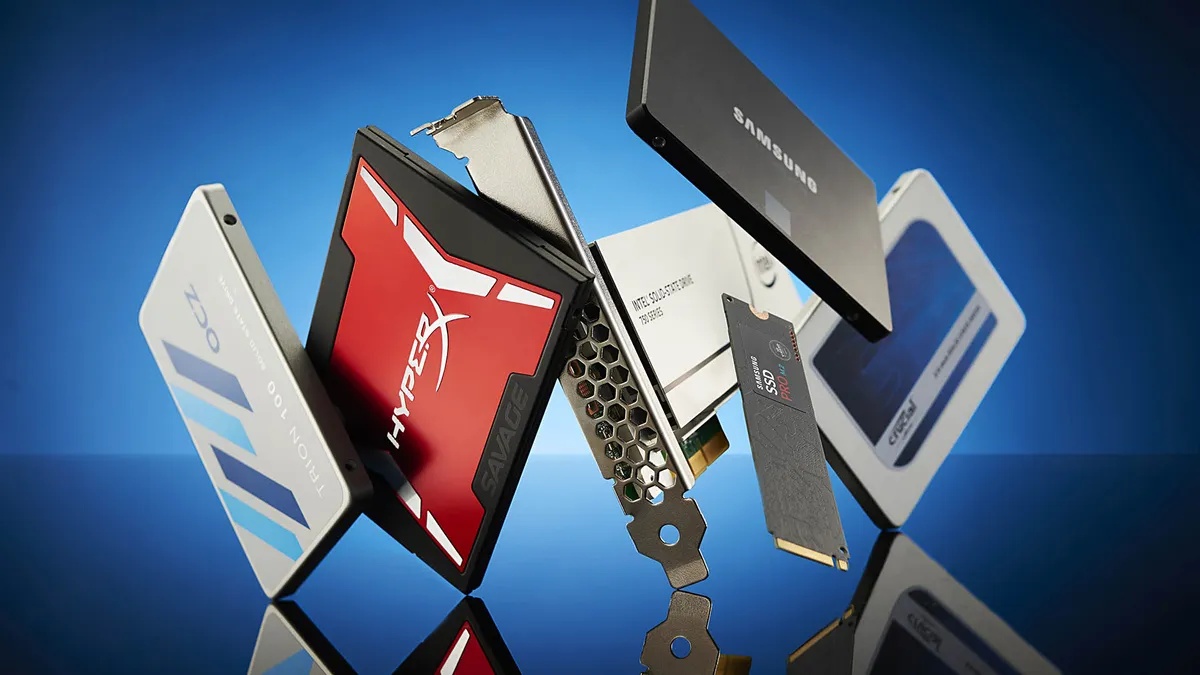
Best SSD for gaming: the best solid state drives around
Best PCIe 4.0 SSD for gaming: the next gen has landed
The best NVMe SSD: this slivers of SSD goodness
Best external hard drives: expand your horizons
Best external SSDs: plug in upgrades for gaming laptops and consoles
That is just the max transfer speed, however, which is great for general storage requirements but it's the random read/write performance of modern SSDs—even slow SATA-based ones—that makes them feel so slick when you're running an operating system or even a game from one. And in that no hard drive is ever going to be able to compare.
So how the hell has Seagate managed to squeeze out this level of performance from a physical set of spinning platters? It's not the helium filled chamber, but the fact that the Mach.2 technology describes a drive with twin actuator arms capable of operating independently.
Think about the arm on a record player (see, we are talking about real old tech here), and imagine how quickly you could switch between tracks on a vinyl recording if you had more than one. It's kinda of like that. Only different. And quicker.
While this is not exactly going to change the world of gaming PCs, it's still fascinating to see there is still a place for genuine innovation in one of the oldest technologies in computing.