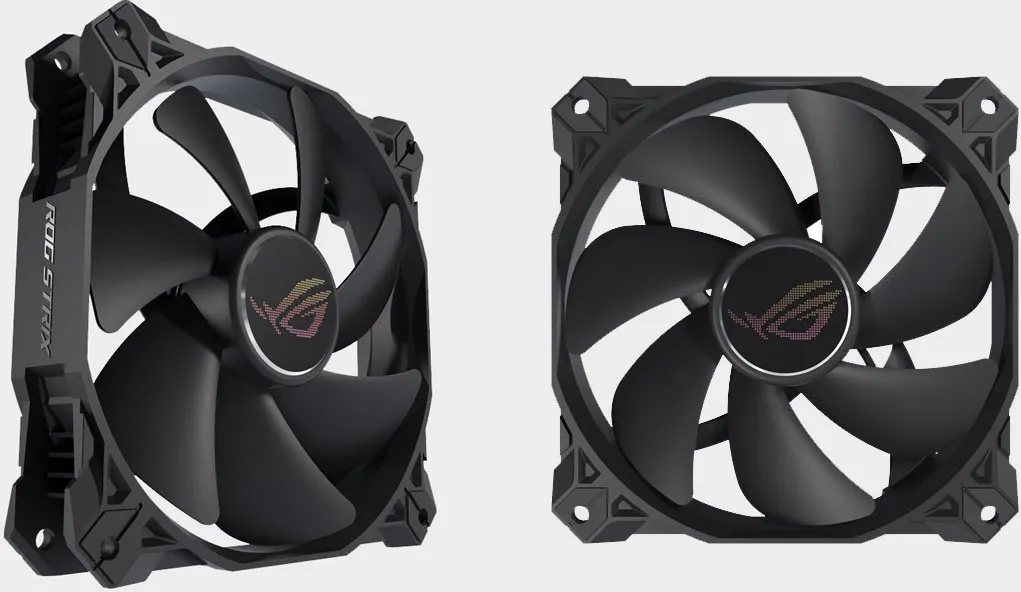
Asus is launching a 'whisper quiet' ROG Strix PC case fan in April
The standalone fan uses magnetic-levitation technology to reduce friction and noise.
Keep up to date with the most important stories and the best deals, as picked by the PC Gamer team.
You are now subscribed
Your newsletter sign-up was successful
Want to add more newsletters?
Every Friday
GamesRadar+
Your weekly update on everything you could ever want to know about the games you already love, games we know you're going to love in the near future, and tales from the communities that surround them.
Every Thursday
GTA 6 O'clock
Our special GTA 6 newsletter, with breaking news, insider info, and rumor analysis from the award-winning GTA 6 O'clock experts.
Every Friday
Knowledge
From the creators of Edge: A weekly videogame industry newsletter with analysis from expert writers, guidance from professionals, and insight into what's on the horizon.
Every Thursday
The Setup
Hardware nerds unite, sign up to our free tech newsletter for a weekly digest of the hottest new tech, the latest gadgets on the test bench, and much more.
Every Wednesday
Switch 2 Spotlight
Sign up to our new Switch 2 newsletter, where we bring you the latest talking points on Nintendo's new console each week, bring you up to date on the news, and recommend what games to play.
Every Saturday
The Watchlist
Subscribe for a weekly digest of the movie and TV news that matters, direct to your inbox. From first-look trailers, interviews, reviews and explainers, we've got you covered.
Once a month
SFX
Get sneak previews, exclusive competitions and details of special events each month!
Several weeks from now, Asus will release its first PC case fan, the ROG Strix XF 120. And for its first foray into the standalone fan market, Asus has opted to go with magnetic levitation bearings, with the promise of "whisper quiet" operation. Or to put a sound measurement to the claim, it checks in at 22.5 decibels.
There is no universally accepted sound chart available, but according to this chart (PDF) compiled by Yale University, 22.5 dB falls between a quiet natural area with no wind (20 dB) and a whisper (25 dB).
Magnetic levitation plays directly into the low noise claim. The fan blade assembly assembly essentially floats around magnetic bearings, so there is no physical contact or friction from the bearings component. There is still some friction from wind resistance, but this typically results in lower noise than sleeve, ball, or fluid dynamic bearings. An additional benefit is there no lubricant to wear out over time, though in my experience, this has not been a problem.
This type of assembly is not quite as common in the PC space, though Asus is not the only one employing magnetic levitation bearings. So does Corsair's ML series.
🚨Calling all #ROG fanboys 🚨#ROGStrix XF 120 coming soon in April 👀 pic.twitter.com/meKVsDG39FJanuary 23, 2021
Asus announced the ROG Strix XF 120 back in September of last year, but said nothing at the time of the price or release date. We still do not have any official word on price, but on Twitter, Asus revealed the ROG Strix XF 120 will be available in April (hopefully not April 1, or April Fool's Day, which is a terrible day to launch an actual product).
Best gaming mouse: the top rodents for gaming
Best gaming keyboard: your PC's best friend...
Best gaming headset: don't ignore in-game audio
As the model name implies, it's a 120mm fan. It's also a 4-pin pulse-width modulation (PWM) model, with an operating range of 250 to 1,800 RPM (it can also stop spinning entirely, depending on the fan profile). Asus rates the air flow at 62.5 CFM, and the lifespan at 400,000 hours.
On top of using magnetic levitation bearings, the fan also employs "specially grooved blades and an anti-vibrating design." And while not specifically mentioned, it looks like the RGB logo in the center features RGB lighting.
Keep up to date with the most important stories and the best deals, as picked by the PC Gamer team.
While no price has yet been announced, there some pre-order listings already. Swedish retailer ProShop, for example, has the fan listed for 239.20 SEK (excluding VAT). That works out to around $29 in US currency.
Paul has been playing PC games and raking his knuckles on computer hardware since the Commodore 64. He does not have any tattoos, but thinks it would be cool to get one that reads LOAD"*",8,1. In his off time, he rides motorcycles and wrestles alligators (only one of those is true).