You are now subscribed
Your newsletter sign-up was successful
Want to add more newsletters?

Every Friday
GamesRadar+
Your weekly update on everything you could ever want to know about the games you already love, games we know you're going to love in the near future, and tales from the communities that surround them.

Every Thursday
GTA 6 O'clock
Our special GTA 6 newsletter, with breaking news, insider info, and rumor analysis from the award-winning GTA 6 O'clock experts.

Every Friday
Knowledge
From the creators of Edge: A weekly videogame industry newsletter with analysis from expert writers, guidance from professionals, and insight into what's on the horizon.

Every Thursday
The Setup
Hardware nerds unite, sign up to our free tech newsletter for a weekly digest of the hottest new tech, the latest gadgets on the test bench, and much more.

Every Wednesday
Switch 2 Spotlight
Sign up to our new Switch 2 newsletter, where we bring you the latest talking points on Nintendo's new console each week, bring you up to date on the news, and recommend what games to play.

Every Saturday
The Watchlist
Subscribe for a weekly digest of the movie and TV news that matters, direct to your inbox. From first-look trailers, interviews, reviews and explainers, we've got you covered.

Once a month
SFX
Get sneak previews, exclusive competitions and details of special events each month!
Given AI is meant to change everything, it's not exactly a surprise to learn that it's going to upend operating systems, too. At least, that's what OpenAI has planned for ChatGPT. In a new interview, OpenAI's ChatGPT boss Nick Turley says he wants to make the chatbot "more like an operating system" over the next few years.
So, what, exactly does this mean? For starters, Turley thinks the current iteration of ChatGPT will eventually be seen as something akin to the command-line era for conventional operating systems.
You can now chat with apps in ChatGPT. pic.twitter.com/T9Owi3POimOctober 6, 2025
Indeed, he implies it's actually surprising the chatbot has been as successful as it has given how arcane the current interface is. "It’s kind of bonkers to me that we’ve scaled the product to 800 million weekly active users with the form factor we have," he explains.
"The evolution we’re trying to make over the next few years," he goes on, "is one where ChatGPT itself is more like an operating system where you can come and use applications. If you want to write, there’s an app for that. If you want to code, there’s an app for that. If you want to interact with goods and services, there are applications for you."
While OpenAI obviously makes bold claims about the capabilities of ChatGPT, Turley also concedes, "we can’t build everything ourselves. We’re not going to have a music streaming service, or replicate Coursera’s catalog of educational materials. We’re not going to get into the business that Expedia and Booking.com are in."
Immediately, you sense the direction this is going. Just as Google and Apple don't offer all of those services, what they can do is provide a platform for apps of all kinds and then, hopefully, take a cut of at least some of the various revenue streams.
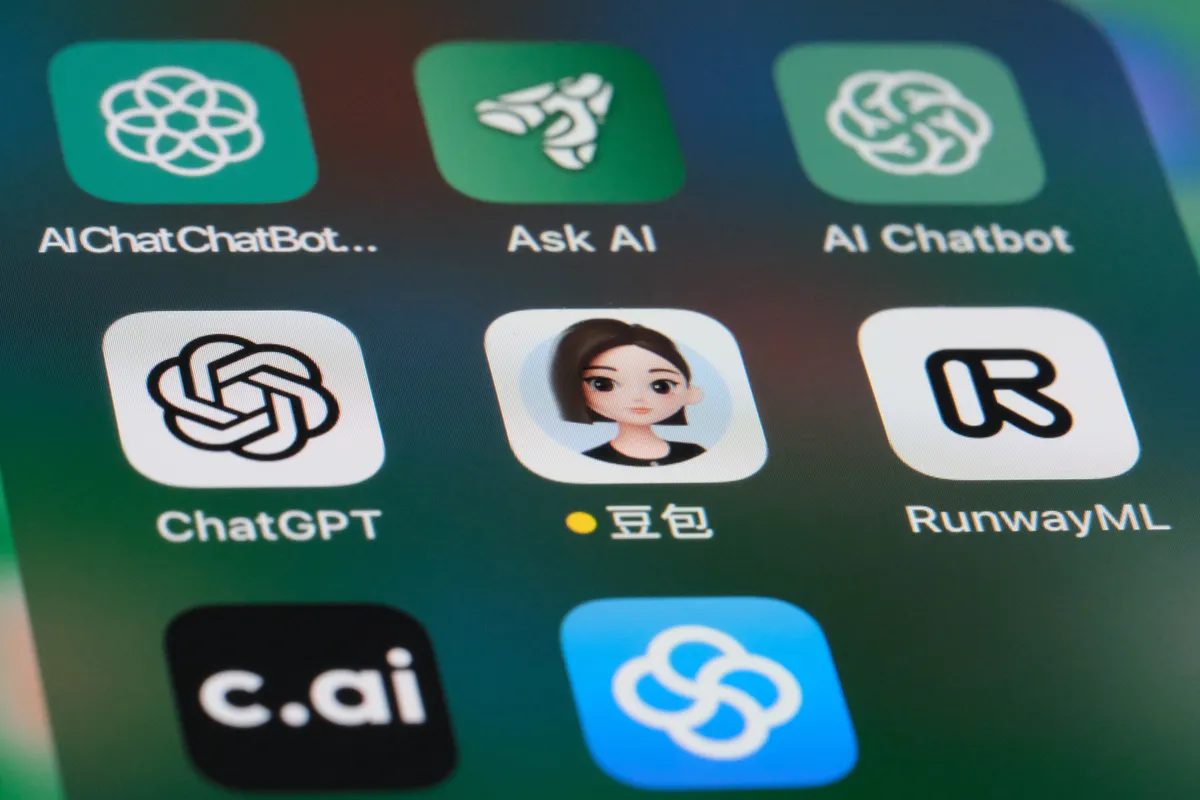
Clearly, this fits into the remit Turley was given when he joined OpenAI, which was to help "commercialize OpenAI technology” in very open ended terms. To that end, OpenAI has announced an app SDK and a number of initial third-party apps, including ooking.com, Expedia, Spotify, Figma, Coursera, Zillow, and Canva.
Announcing the move earlier this week, OpenAI CEO Sam Altman said, “we want ChatGPT to be a great way for people to make progress, to be more productive, more inventive, to learn faster, to do whatever they’re trying to do in their lives better,” and that the new SDK, "will enable a new generation of apps that are interactive, adaptive, and personalized, that you can chat with.”
Of course, one way in which this doesn't ostensibly gel with the broader Open AI sales pitch and its pretensions around AGI or artificial general intelligence is that you'd need an SDK or similar tools to help developers build apps for ChatGPT in the first place. Shouldn't ChatGPT be clever enough to do whatever these apps are doing, all by itself?
The obvious answer to that, is that OpenAI may find it harder to take a cut of all those juicy revenue streams if ChatGPT is "merely" acting as an agent for users. By building third party apps into the chatbot directly, suddenly there are opportunities to negotiate deals.
"Come and join us in the AI revolution," the sales pitch to third party app providers presumably goes, "we're at 800 million users already, we're going to rule the world and if you want even the slightest chance of staying relevant, you need to be with us." Well, maybe something a bit friendlier than that, but you get the idea.
Put another way, when Apple first launched the iPhone, it wasn't obvious that the App Store was going to be the big money spinner. Likewise, when ChatGPT first exploded onto our PCs and phones, taking a cut of app revenue wasn't the first thing that sprung to mind when considering how this revolutionary new tech was likely to be monitised. But then if ChatGPT really is to become much more OS-like, it probably makes sense if the chatbot's revenue streams started looking like an OS, too.
Of course, what the likes of Google and Apple will make of all this is another matter. Apple, for instance, doesn't currently take a cut of purely offline services, like ride sharing or hotels. But it does take a cut of the fees for digital services like game streaming or online dating.
Where things could get complicated is using a third party chatbot app on your phone, like ChatGPT, and to then use yet another app effectively embedded within that app to order or subscribe to either physical or digital products and services. How would that be defined and viewed by Apple and indeed Google?
At the very least they must be pretty terrified at the prospect of apps moving off their platform and on to OpenAI's. So, this is very likely a subject on which we'll hear plenty more in the coming years.
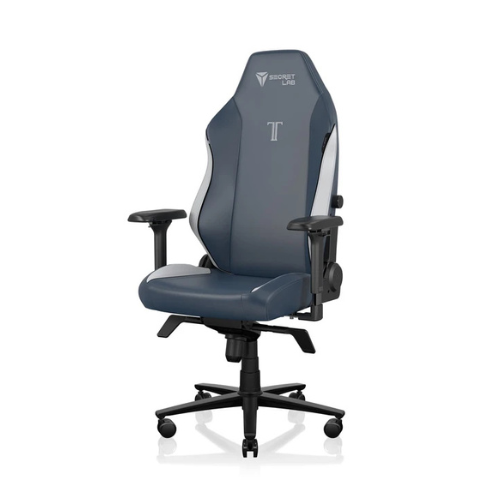
1. Best gaming chair: Secretlab Titan Evo
2. Best gaming desk: Secretlab Magnus Pro XL
3. Best gaming headset: HyperX Cloud Alpha
4. Best gaming keyboard: Asus ROG Strix Scope II 96 Wireless
5. Best gaming mouse: Razer DeathAdder V3 HyperSpeed
6. Best PC controller: Xbox Wireless Controller
7. Best steering wheel: Logitech G Pro Racing Wheel
8. Best microphone: Shure MV6 USB Gaming Microphone
9. Best webcam: Elgato Facecam MK.2

You must confirm your public display name before commenting
Please logout and then login again, you will then be prompted to enter your display name.