Even the most casual of PC users won't have missed that Microsoft is very keen for Windows and 365 customers to use Copilot. However, according to one report, it might not actually be Microsoft's own AI model behind the scenes, as a key internal division is being encouraged to road test the competition.
That's according to The Verge, which claims that sources have told them staff are using Anthropic's Claude, alongside Copilot, for AI coding tasks (aka vibe coding). Not that they're making the choice subversively; in fact, the software giant has been happy for its staff to try out various AI coding tools, including its own GitHub Copilot, Anthropic's Claude 4, and OpenAI's GPT-5.

Microsoft does have more than just its staff's preferences at stake here. In November last year, Anthropic, Microsoft, and Nvidia announced a strategic partnership, with Redmond stumping up a $5 billion investment in Anthropic, as well as the AI company committing to purchasing a cool $30 billion worth of Microsoft's Azure compute services.
And Microsoft is being quite sensible, too, because if Anthropic's engineers can produce a better model for coding than its own team, then it would make sense to switch to Claude.
But where does this leave OpenAI? It's also received large investments from Microsoft and works very closely with the software behemoth. According to The Verge, that relationship remains unchanged: "OpenAI continues to be our primary partner and model provider on frontier models, and we remain committed to our long-term partnership."
With hundreds of billions of dollars being bandied around in the world of AI, I should imagine that any such relationship is only as strong as the ultimate business bottom line: profits. Should it come to pass that future iterations of GPT, as well as GitHub Copilot, prove to be less capable at coding than Claude, it's not hard to see where the money will eventually head towards.
That said, the most important question here isn't about money or strategic partnerships, it's about the future of software engineering at Microsoft and the wider world. If all things Microsoft are going to be vibe-coded by non-experts or handled by AI agents, where does that leave professional coders?
Answers on a postcard, please.
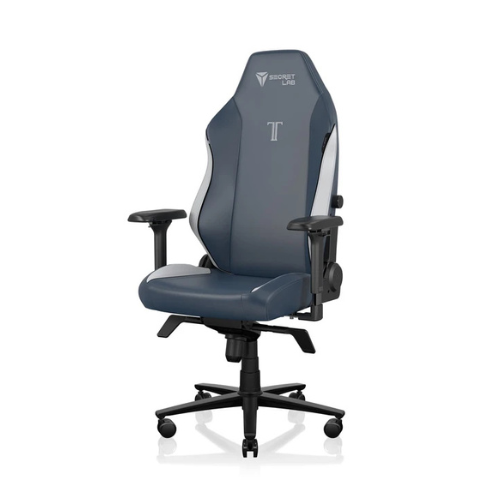
1. Best gaming chair: Secretlab Titan Evo
2. Best gaming desk: Secretlab Magnus Pro XL
3. Best gaming headset: Razer BlackShark V3
4. Best gaming keyboard: Asus ROG Strix Scope II 96 Wireless
5. Best gaming mouse: Razer DeathAdder V4 Pro
6. Best PC controller: GameSir G7 Pro
7. Best steering wheel: Logitech G Pro Racing Wheel
8. Best microphone: Shure MV6 USB Gaming Microphone
9. Best webcam: Elgato Facecam MK.2

You must confirm your public display name before commenting
Please logout and then login again, you will then be prompted to enter your display name.