When I blasted through Resident Evil Requiem over the course of one blood-spattered weekend, I thought Capcom's latest looked great—though I did play it on a PS5. Turns out, on PC, your zombie mashing mileage may vary due to Nvidia driver shenanigans.
Unhappy PC gamers took to Reddit earlier this week, claiming to have seen a significant drop in performance while playing Resi with the GeForce Game Ready Driver 591.86 installed. One Redditor gaming on an RTX 40-series GPU reported a drop to 74 fps, and even a dip in average GPU power draw to 304 W while path tracing was enabled.

The plot only thickened when I took to the PC Gamer test bench myself. First things first, I made sure to use Display Driver Uninstaller to blitz any GPU drivers on the machine. I would install my chosen driver, test, remove it with DDU, and then repeat.
For those curious, the hardware team's test bench is built on a Gigabyte X870E Aorus Master motherboard, with an AMD Ryzen 7 9800X3D CPU, and enjoys 64 GB of DDR5 RAM.
As for game settings within Resident Evil Requiem, I switched on path tracing and my resolution to 1920 x 1080. I also set graphics, lighting and shadow quality to max, set the upscaling mode to 'Performance', and kicked up Nvidia Frame Generation to '2x'. All in order to match the settings presented by one Redditor impacted by the issue.
Beginning testing with an RTX 4080 Super slotted in, I played Resident Evil Requiem with the latest 595.71 driver installed, and path tracing enabled. Running around Wrenwood, blasting zombies as Leon S. Kennedy, I saw fps averaging—drum roll, please—164.

With the earlier 576.88 driver installed, my average fps was 167. The stretch of game I'd chosen to loop for these tests is pretty frantic, with civilians running away towards Leon as a fresh batch of infected shamble down the street. If I was going to see a bump in performance from rolling back the driver this would be the place, though a gain of 3 fps is nowhere close to the massive uptick reported by others, and is largely within standard testing variance.
Whacking in an RTX 5090, and changing nothing else, my FPS average climbed to 186 with the latest 595.71 driver installed. So far, that's still nothing really earth-shattering. Continuing with the RTX 5090, and installing the earlier 591.86 driver, I saw an average of 178 FPS. With the driver release before that, 576.88, I saw an average of 180. As for average GPU power draw throughout these later tests, the RTX 5090 sucked up 240 watts on average.
Again, I'd argue the frame fluctuations are all still within expected variance. Certainly while memorising the zombie placement throughout this apocalyptic stretch of Wrenwood, I didn't notice a tangible difference, either.
Nvidia GeForce driver comparison
Resident Evil Requiem (RTX 4080 Super) (1080p Path tracing)
| Product | Value |
|---|---|
| 595.71 | 164.173 Avg FPS, 115.942 1% Low FPS |
| 576.88 | 166.85 Avg FPS, 119.25 1% Low FPS |
Resident Evil Requiem (RTX 5090) (1080p Path tracing)
| Product | Value |
|---|---|
| 595.71 | 185.97 Avg FPS, 123.47 1% Low FPS |
| 576.88 | 180.06 Avg FPS, 119.83 1% Low FPS |

In short, even after a whole day of testing across multiple software and hardware setups, I was not able to replicate the driver issue in Resident Evil Requiem—though, granted, our test bench enjoys a lot more grunt than most rigs (especially in the midst of a memory supply crisis).
That's not to say the driver issue isn't happening, but simply that it won't affect absolutely everyone—there may be more at play than just Nvidia's drivers. A number of the posts I've seen online don't specify which part of the game is seeing these frame drops for one thing, or don't give a lot of detail about the setup it's running on beyond the GPU and driver.
With all that in mind, it's entirely possible that the cache-heavy 3D V-Cache gaming CPU installed in the hardware team's test bench is papering over the cracks, though I definitely can't say for sure.

At any rate, these aren't the only driver shenanigans we've recently seen surrounding Resident Evil Requiem. Nick tested the game on the AMD Ryzen Z1 Extreme-based Asus ROG Ally and endured pretty abysmal results. The weaker Steam Deck seemed to deal just fine, however.
This seemingly fanned the flames of the rumour that official support was ending for the Ryzen Z1 chip series. However, Lenovo came forward to say they were working with AMD on driver updates for their own handheld gaming PC; the company explicitly stated that it would support the Ryzen Z1 Extreme-based Lenovo Legion Go "through October 2029."

But to bring it back to Resident Evil Requiem, it's one of very few games rocking up with path tracing as its technical headline act. This driver drama doesn't necessarily showcase the tech at its best, even though path tracing is perhaps not specifically to blame. Nick has previously been optimistic that it won't take developers as long to adopt path tracing compared to ray tracing.
Unfortunately for such a GPU-intensive technology, PC gaming is an expensive hobby at the best of times and the knock-on effects of the memory supply crisis has not helped this at all. Basically, devs will need to get to grips with path tracing quickly and then quickly figure out how to optimise the tech for a wide range of rigs—particularly those far less powerful than our test bench.
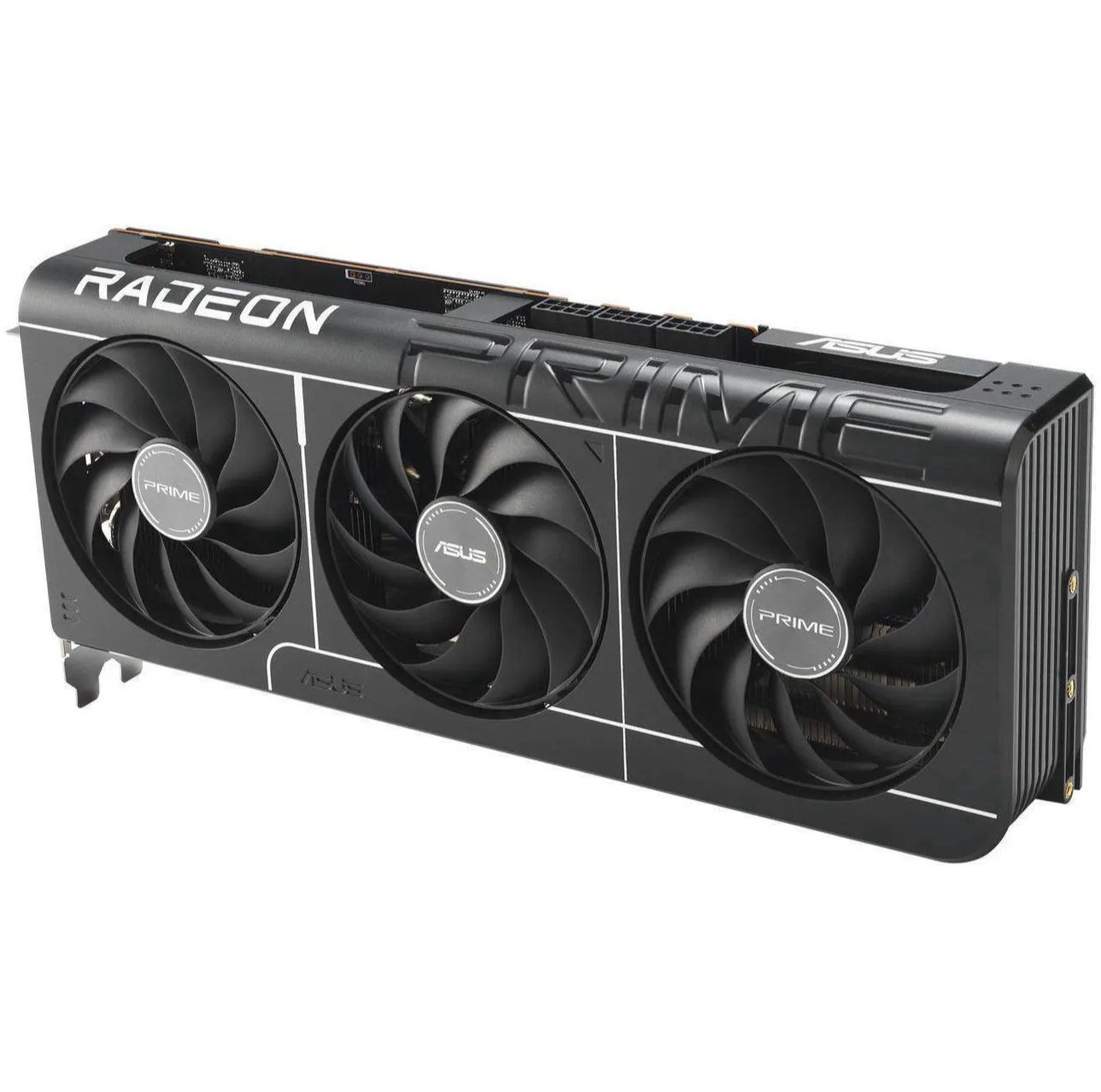
1. Best overall: AMD Radeon RX 9070
2. Best value: AMD Radeon RX 9060 XT 16 GB
3. Best budget: Intel Arc B570
4. Best mid-range: Nvidia GeForce RTX 5070 Ti
5. Best high-end: Nvidia GeForce RTX 5090

You must confirm your public display name before commenting
Please logout and then login again, you will then be prompted to enter your display name.