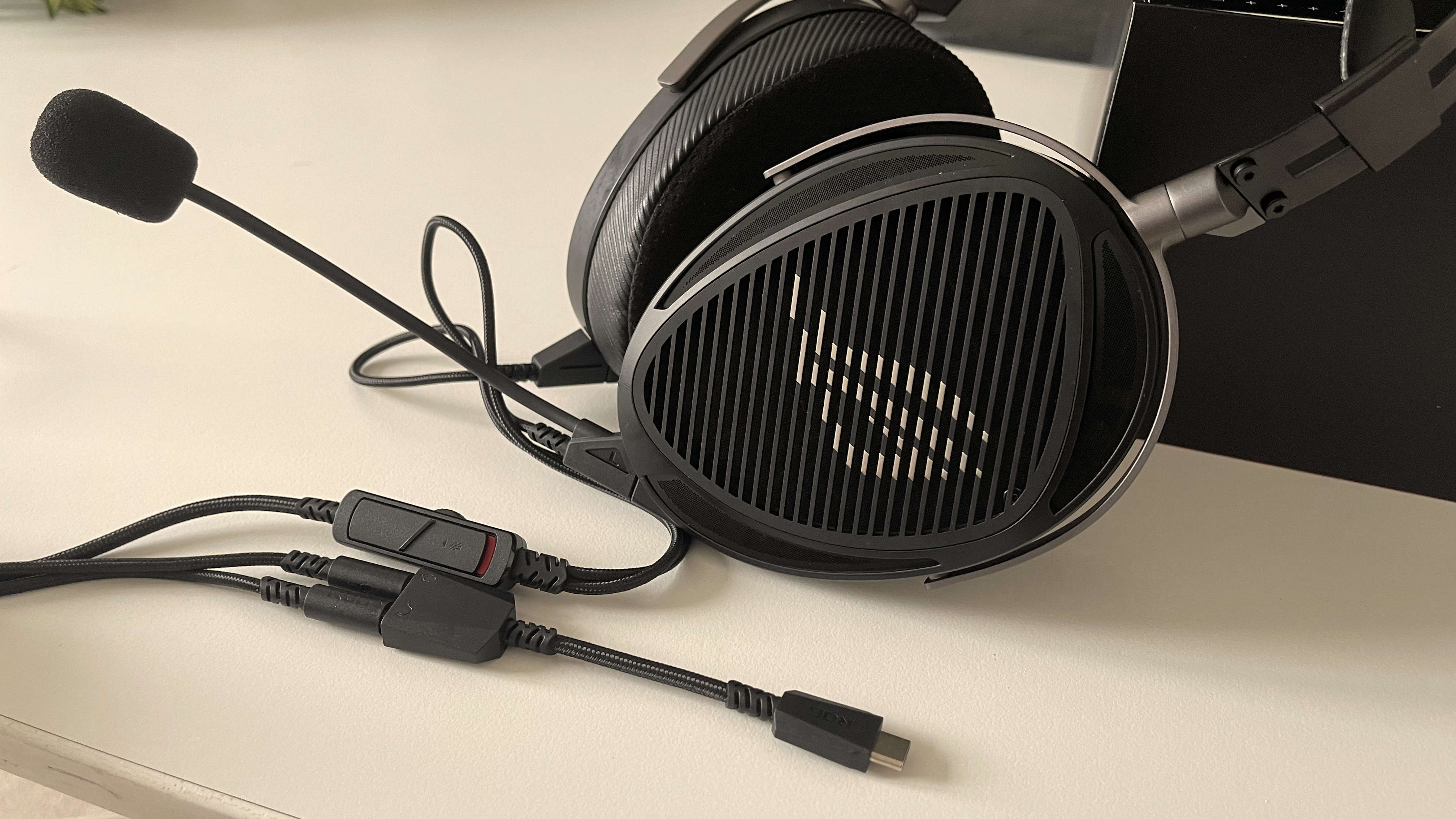
Apparently jealous of AMD and Intel's god-awful CPU branding, Samsung has cooked up a doozy for its latest QD-OLED panel tech for PC gaming monitors. We give you Samsung QD-OLED Penta Tandem, a brighter, more durable panel tech with a baffling brand name.
Samsung says the new panel is 1.3 times brighter and twice as long lasting as previous QD-OLED generations used in PC monitors. Helpfully, Samsung explains that, "'Penta' comes from the Greek word for the number five." Uh huh.
Article continues below 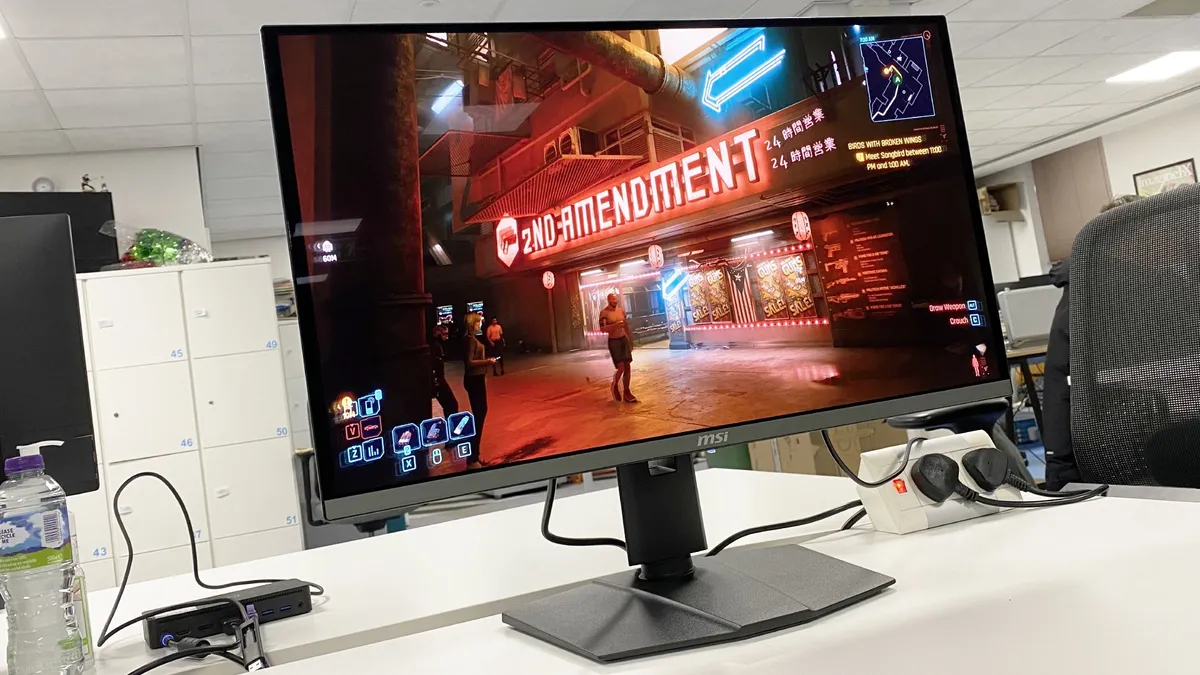
With reference to LG's OLED panels, in theory, the "Tandem" denotes a dual-layer or "stacked" construction. In practice, it's more complicated than that. Tandem WOLEDs now actually have four emissive OLED layers, two blue, one red and one green. These OLED stacks combine to emit white light, which is passed through filters for each of the primary coloured subpixels, red, green and blue.
LG Tandem OLEDs, on the other hand, have two layers, but each composed of red, green and blue organic LEDs. Thus, each subpixel only uses unfiltered OLED light sources of a matching colour. Got that?
Oh, and you can have Tandem WOLED with both standard RGB or red, green and blue subpixel structure or a RGWB structure (previously RWGB but updated to improve font rendering) with an added white subpixel. In both cases, the "W" in WOLED no longer refers to the white subpixel, but the fact that the OLED stack beneath each subpixel emits white light. At which point the very idea of "Tandem" seems pretty tangential. Still with me?
Into this barely comprehensible landscape comes Samsung's new QD-OLED Penta Tandem. Now, Samsung already has four-layer panel tech, but it does things a little differently from LG. Instead of shining light through filters for each subpixel, it shines blue light onto an emissive quantum dot layer.
Toward the top of each subpixel, there are red, green or blue emissive quantum dot layers (which aren't counted in the whole four or five layer thing) which absorb the blue light, convert it and emit it as red, green or blue. Well, as I understand it, the blue subpixel is actually just a passthrough of the base blue QD-OLED emission, but you get the idea. Possibly.

Now, for this new "Penta Tandem" panel, Samsung is using three layers of blue OLED emissive material and two layers of green, which all somehow combine to emit blue light. If you're wondering what the layers are in last year's four-layer Tandem QD-OLED tech, you've got me on that one solitary point. I'm not sure. But, again, together they emit blue light.
So, here's the punchline. Samsung's latest QD-OLED panel has five light-emitting layers. LG's only have four. Everyone has already beaten the "Tandem" thing to death. It would seem that Samsung has apparently added the "Penta" thing to denote the five layers and throw shade on LG's now presumably pathetic and laggardly four-layer panels.
Of course, the truth is that Samsung and LG appear to be in lockstep, releasing incremental annual panel tech upgrades that keep the competition very close. At last count, LG's best panels for gaming monitors are good for about 350 nits full screen and 1,500 nits peak HDR in a 3% window, where the best Samsung QD-OLEDs are more like 300 nits and 1,300 nits, respectively.
However, because Samsung doesn't rely on white subpixels to boost peak luminance, QD-OLED is in practice as bright or sometimes brighter for full-colour as opposed to white images.

Finally, if you're wondering when this new Samsung Penta-Tandem-Messiah-Whatever panel is out, and maybe this is actually the punchline, well, it already is—I reviewed it recently, somewhat unwittingly. Yup, it's the MSI MPG 272URX.
At the time, I knew (and indeed mentioned) it was a new five-layer panel. It's just Samsung wasn't using the "Penta Tandem" label. It was referred to as "five-layer Tandem OLED with EL 3.0 technology" then. I guess in that context, Penta Tandem is an improvement, even if it implies both five layers and two layers and ultimately makes no sense at all.
And just squeeze in a bonus confusion, because why not, the new Penta Tandem panel, as we must now retrospectively call it, in that particular MSI isn't quite as bright as the 1.3x claim mentioned up top would have you expect, because it's a 4K 27-inch model with very tiny pixels. The 1.3x boost will come with other panel types, like 27-inch 1440p and 34-inch ultrawide, with larger pixels.
And with that bombshell, I'm sure we've all had enough OLED panel tech, tandem or otherwise, for a few lifetimes. If you've absorbed it all, nice job, but I need a lie down.
1. Best overall / 4K:
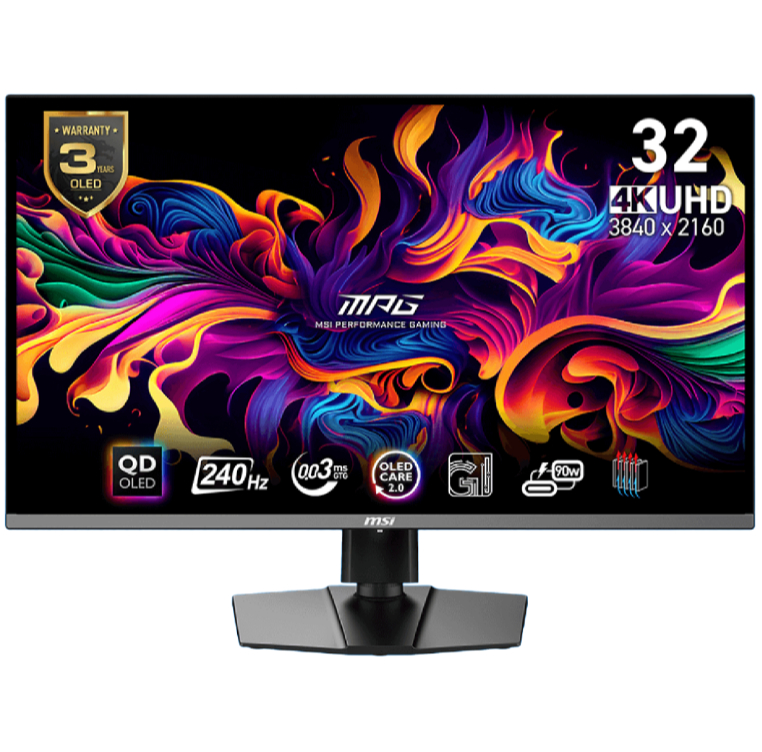
MSI MPG 321URX
2. Best budget 4K:
Asus ROG Strix XG27UCG
3. Best 1440p:
MSI MPG 271QRX
4. Best budget 1440p:
KTC H27T22C-3
5. Best 1080p:
AOC Gaming C27G4ZXE
6. Best Ultrawide:
Gigabyte MO34WQC2
7. Best budget ultrawide:
Xiaomi G34WQi
8. Best 32:9:
Samsung Odyssey OLED G9
9. Best dual-mode:
Alienware AW2725QF

You must confirm your public display name before commenting
Please logout and then login again, you will then be prompted to enter your display name.