Starfield is a fascinating RPG. Not necessarily to play, but its development, its legacy—that's what's interesting. Massive in terms of ambition and scale, overflowing with checked open-world RPG boxes, crafted by a talented team who put years and years of work into it—so why is it a cautionary tale instead of an astronomical success?
According to Kurt Kuhlmann, Bethesda's former Elder Scrolls loremaster and the co-lead designer on Skyrim, "the main problem with Starfield is it didn't fully cohere as a game".
There would be people talking to the leads in one studio and getting an answer, and people talking to the leads in the other studio and getting maybe a different answer.
Kurt Kuhlmann
Leads not "making content" didn't feel right to him. "I don't know that they were wrong and I was right, but I didn't like that, you know, it may be that when you have that many people, your job can't be also making content if you're actually also sort of managing that scope of the project."
With Zenimax having acquired various studios, the scope of Bethesda's projects increasing, and teams ballooning in size, communication problems where it wasn't clear who was making the decisions started to appear. "There would be people talking to the leads in one studio and getting an answer, and people talking to the leads in the other studio and getting maybe a different answer," Kuhlmann recalls.
Howard's growing responsibilities also created some speed bumps. "Decisions weren't being made maybe when they needed to be because maybe they needed Todd to make a decision as a tiebreaker and he was busy."
Kuhlmann says that Howard is a "very good project lead", but as the company got larger, his responsibilities took him away from game design, "and when he would get pulled away from the game that would really hurt the game". And with Starfield, that happened a lot more.
"When it came out, I thought it was a good game," says Kuhlmann. "It was a releasable game, but it wasn't the best." It had been in development for so long it had to come out, though he emphasises that he doesn't feel like it was pushed out the door too soon. Indeed, Starfield ended up being Bethesda's most polished, least janky open-world RPG.
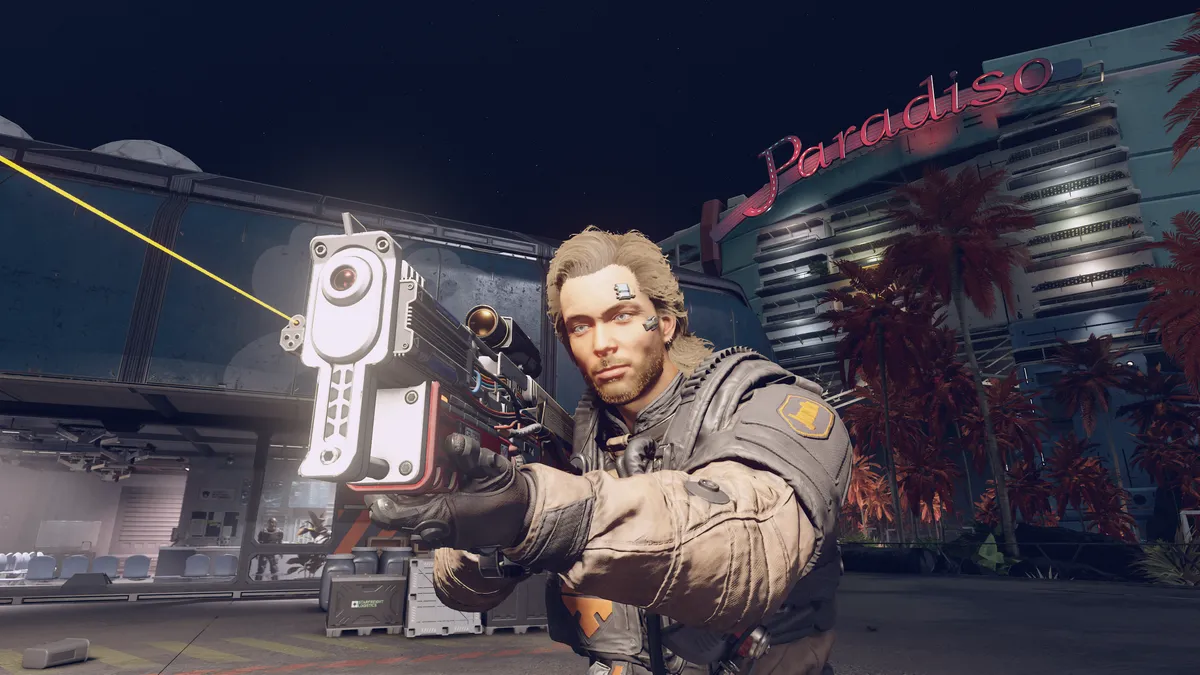
Ultimately, Starfield was a victim of Bethesda's ambitions. Previously, with the possible exception of Fallout 76, a multiplayer novelty, each game was built on its predecessor. "The previous game is sort of the foundation we're building on," says Kuhlmann, "and then we're adding some new things."
Starfield, Kuhlmann guesses, was 50% "brand new", with the space setting, space combat, procedurally generated planets and craftable spaceships. Bethesda could no longer rely on one of its greatest weapons: "institutional knowledge".
To handle this, Bethesda needed to "add a bunch of people", raising the question of "how do you manage that size of a team and keep everybody on the same page … we don't have an institutional knowledge about how space works, how do spaceships work, how do we integrate that into quests?"
Combine this lack of institutional knowledge with the communication issues and you end up with some new problems.
From a quest designer perspective, Kuhlmann says problems arose because "if spaceships and planets don't really work for a long time, you are just guessing how you should integrate that into your mission, your quests and stories, and it might change fundamentally, because what we originally thought of how space or spaceships were going to work, well, it changed, or this idea we had didn't work, and we had to change it".
We can't release a game that has the kind of problems 76 had when it was released.
Kurt Kuhlmann
This led to quests being reworked, unsurprisingly, but Kuhlmann also notes that designers would try to anticipate reworks by avoiding adding anything that might be changed. "So you have both those things going on that make the game feel less cohesive, I think, because there were so many pieces that, when we started and for a long time, were up in the air or being reworked and in flux."
There was also the spectre of Fallout 76's initial reception looming over Starfield. While Fallout 76 has since been transformed into a genuinely good multiplayer Fallout game, it had little of what made Fallout work when it launched, along with a new level of jank. "We cannot do that again," says Kuhlmann. "We can't release a game that has the kind of problems 76 had when it was released, and that was one of the reasons why we got so much more time on Starfield."
But while Starfield bucked the trend of a buggy Bethesda launch, it didn't engender the kind of love that Skyrim received. "Some people thought it was a very good game and were surprised that everyone didn't love it," Kuhlmann recalls, but for him the reception was "about what I expected".
He believes it was a "solid" game, but it wasn't one of Bethesda's best. "We had tried to take this huge leap into this new genre with all these new systems and things … I don't know that you should expect that if you jump into the space combat genre that you're going to be better or as good as games that just do that, and have maybe been doing it for multiple iterations, right? Like, it was good enough. It wasn't, like, embarrassing."
Kuhlmann is still fond of many aspects of Starfield, though, from its aesthetic to things like its celestial mechanics. Those things, he says, were "knocked out of the park". But it just didn't come together. "There's this piece of the game over here, and there's this piece of the game over here, and do they fully have much to do with each other? That, to me, is where it isn't quite as good as some of our other games."


You must confirm your public display name before commenting
Please logout and then login again, you will then be prompted to enter your display name.