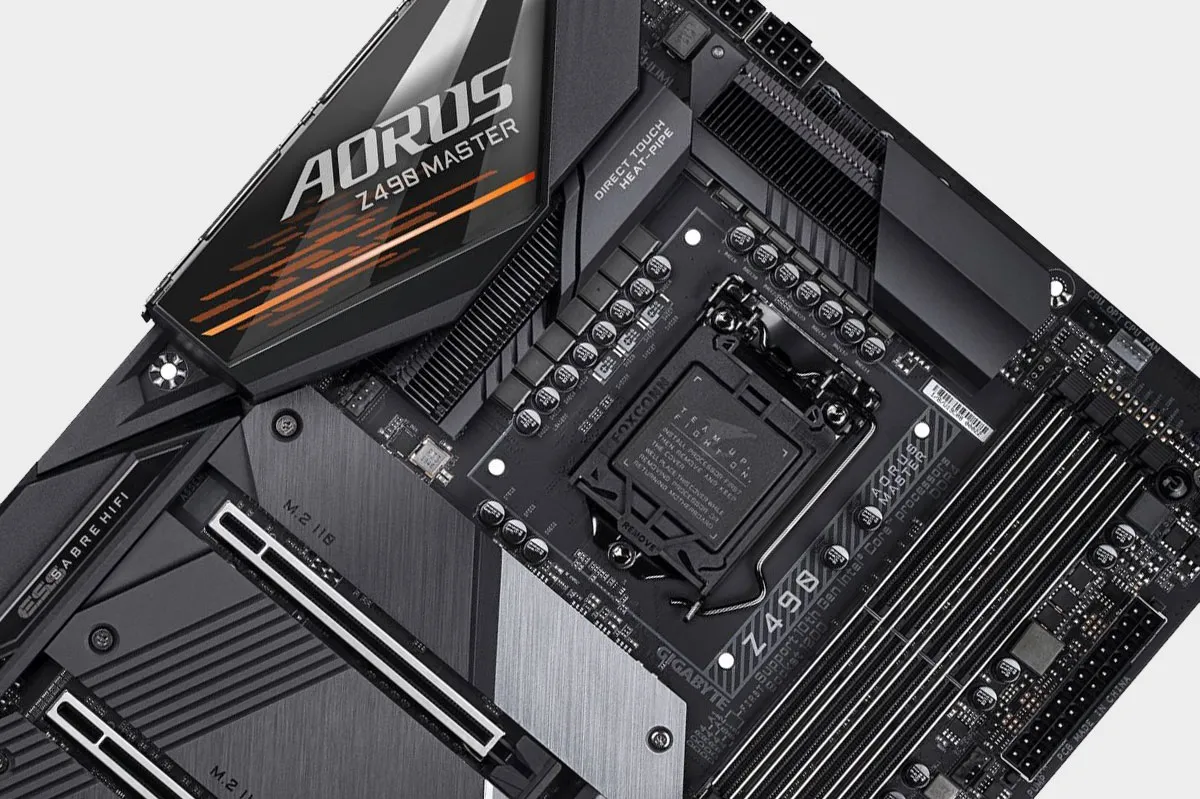
Meet the Gigabyte Z590 AORUS Xtreme, the first Intel Rocket Lake 500-series motherboard to make an appearance ahead of launch, likely at CES 2021. This Gigabyte board (uncovered by Videocardz) is the very first to have surfaced, but it's also likely to be one of the top SKUs available when the rest of its ilk do finally launch alongside the latest Intel CPUs over the next few months.

Best chair for gaming: the top gaming chairs around
Best PC controller: sit back, relax, and get your game on
This ultra-premium motherboard is said to come equipped with 21+1 phase digital VRM with 100A power stages, a darn sight more than its direct predecessor (the Z490), which packed just 16+1. Thunderbolt 4 connectivity gives it yet another edge, along with additional digital power stages for a majorly cool experience. Not to mention both 10GbE and 2.5GbE Ethernets ports, as well as Wi-Fi 6E capacities.
With PCIe Gen4 exclusive to Rocket Lake CPUs on Intel's side, two of the three PCIe x16 slots on the Z590 will support Gen4, along with two of the three M.2 slots. That means more lanes and bandwidth for your setup. Currently only some Z490s come with PCIe 4 support for Rocket Lake, but expect some more mainstream Rocket Lake motherboards to boast this technology in future.
In fact, a tweet from Komachi_Ensaka details some of the other motherboards in the 500-series line-up, some of which will be more affordable, and all of which are likely to support PCIe Gen4, but expect some lessened functionality as you move down the line. All are set to come with the LGA 1200 socket, however, the same one found on existing 400-series motherboards for Intel's Comet Lake chips.
GIGABYTE Z590 AORUS Series.Z590 AORUS XTREME.Z590 AORUS MASTER.Z590 AORUS PRO AX.Z590I AORUS ULTRA.January 7, 2021
But back on the Z590 AORUS Xtreme, not only is it the world's first Rocket Lake motherboard, it's also the first confirmed application of the as yet unannounced Realtek ALC4080 audio codec, successor to the ALC1220 codec. Lots of things to get excited about with this one then.
But for all this new-fangled functionality, don't expect it to be a steal. As the flagship of Gigabyte's 500-series, the Z590 AORUS Xtreme motherboard will likely go on sale for something in excess of $600, undoubtedly more than the current price of its Z490s.