
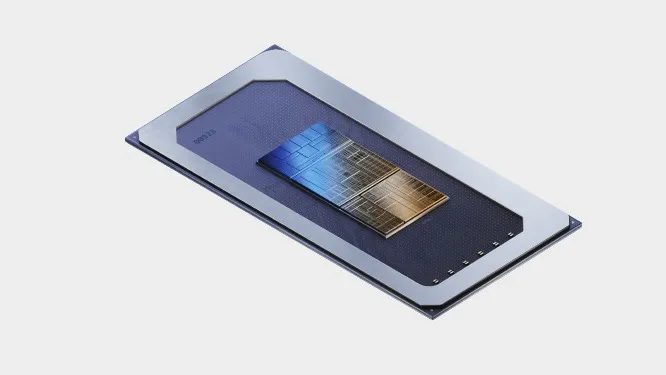
Intel Lunar Lake CPU with a curious configuration spotted running Windows
It's early days though.
Keep up to date with the most important stories and the best deals, as picked by the PC Gamer team.
You are now subscribed
Your newsletter sign-up was successful
Want to add more newsletters?
Every Friday
GamesRadar+
Your weekly update on everything you could ever want to know about the games you already love, games we know you're going to love in the near future, and tales from the communities that surround them.
Every Thursday
GTA 6 O'clock
Our special GTA 6 newsletter, with breaking news, insider info, and rumor analysis from the award-winning GTA 6 O'clock experts.
Every Friday
Knowledge
From the creators of Edge: A weekly videogame industry newsletter with analysis from expert writers, guidance from professionals, and insight into what's on the horizon.
Every Thursday
The Setup
Hardware nerds unite, sign up to our free tech newsletter for a weekly digest of the hottest new tech, the latest gadgets on the test bench, and much more.
Every Wednesday
Switch 2 Spotlight
Sign up to our new Switch 2 newsletter, where we bring you the latest talking points on Nintendo's new console each week, bring you up to date on the news, and recommend what games to play.
Every Saturday
The Watchlist
Subscribe for a weekly digest of the movie and TV news that matters, direct to your inbox. From first-look trailers, interviews, reviews and explainers, we've got you covered.
Once a month
SFX
Get sneak previews, exclusive competitions and details of special events each month!
An Intel Lunar Lake engineering sample CPU has been spotted running Windows. That's hardly surprising during the development phase of any CPU, but this one is made more interesting given the screenshot reveals some key specifications regarding its cache configuration and Hyperthreading (or lack thereof).
The leak comes courtesy of XZiar, (via @9550pro and Tom's Hardware). It shows a screenshot of the Windows Task Manager featuring some specifications of a Lunar Lake A1 engineering sample. The tested CPU has eight cores and eight threads, meaning Hyperthreading is not present. It's believed the core configuration consists of four P-cores and four E-cores.
Its base clock is 1.8GHz while its boost clock is 2.8GHz. There's nothing unusual about that as the purpose of early engineering samples is for testing basic functionality, compatibility and debugging rather than performance. What's really interesting however, is its cache configuration.
The chip in question reportedly has 14MB of L2 cache, but only 12MB of L3 cache. Usually a higher level cache would be much larger. There are several possibilities as to why that might be the case. Firstly, it could just be the Task Manager is reading it incorrectly. Other possibilities are that some cache is disabled, or Intel is doing something really different with Lunar Lake's architecture, perhaps in conjunction with on-package LPDDR5X memory.
It's important not to assume too much from this one screenshot. A1 silicon indicates that its a very early sample. Specifications and configurations can change, and clock speeds are sure to increase as the kinks are ironed out.
Lunar Lake is a mobile oriented design, with low power and efficiency being a key focus. It'll have an AI NPU (of course) and improved graphics capabilities thanks to its Battlemage iGPU. We'll have to wait and see what kinds of devices Lunar Lake chips are housed in, but handhelds and ultra-portable devices are surely on the menu.
Lunar Lake will launch alongside Arrow Lake, which is the replacement for current 14th Gen Raptor Lake CPUs. Given the Meteor Lake architecture is out and about in laptops, there's going to be a lot of lakes to wade through towards the end of 2024.
Keep up to date with the most important stories and the best deals, as picked by the PC Gamer team.

Chris' gaming experiences go back to the mid-nineties when he conned his parents into buying an 'educational PC' that was conveniently overpowered to play Doom and Tie Fighter. He developed a love of extreme overclocking that destroyed his savings despite the cheaper hardware on offer via his job at a PC store. To afford more LN2 he began moonlighting as a reviewer for VR-Zone before jumping the fence to work for MSI Australia. Since then, he's gone back to journalism, enthusiastically reviewing the latest and greatest components for PC & Tech Authority, PC Powerplay and currently Australian Personal Computer magazine and PC Gamer. Chris still puts far too many hours into Borderlands 3, always striving to become a more efficient killer.

