"Everyone doubted it. Even today, people say that it works in practice but not in theory." On its 25th anniversary, that's what Wikipedia has to say about itself and the tale of its improbable success. Oh, and a warning about the threat generative AI poses to the integrity of information.
To mark the occasion, the online, open-source encyclopaedia that everyone can edit has posted a website dedicated to its 25th anniversary. The website recalls the origins of the online encyclopaedia, explains how it all works and looks to the future of both Wikipedia itself and the very availability of information.
Article continues below 
25 years on, the website stands as a testament to the power of open sourcing, and some would argue the wisdom of crowds. Getting there, of course, hasn't been straight forward.
As Wikipedia's 25th anniversary website explains, there have been plenty of debates about how to go about it all, how to manage information, what should qualify for a page on the encyclopaedia.
"The English Wikipedia has had lengthy debates over whether Kate Middleton's wedding dress should have an article about it (yes), whether the "i" in "Star Trek Into Darkness" should be lowercase (no)," Wikipedia explains.
Heck, even implementing Dark Mode wasn't easy. But perhaps more seriously, there's now the question of whether new AI-generated articles without human review should be automatically eligible for quick deletion. And the Wikipedia hive mind's conclusion? Yes, they should be defenestrated with some urgency, which is a relief to hear. Which brings us neatly to what Wikipedia identifies as one of the greatest challenges facing both it specifically and more broadly information.
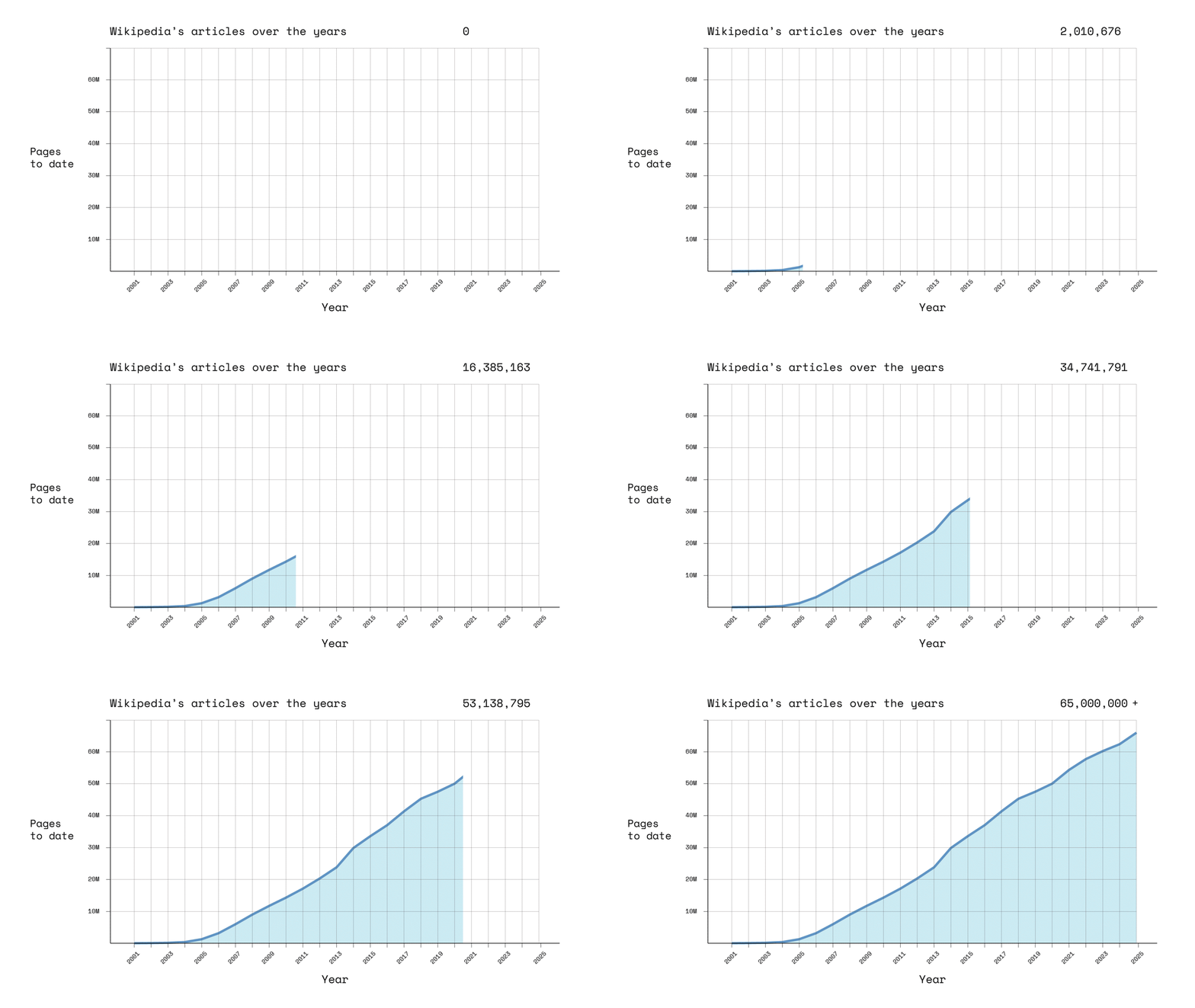
"Wikipedia is confronting a challenging environment. Information integrity is being contested as distrust in media and institutions trends up. Wikipedia's knowledge is also increasingly being used and consumed by generative AI tools, search engines, social media platforms, and other technologies without attribution. That means that while Wikipedia continues to be a vital source of trusted information, it's becoming less visible to those who use its content on other websites," Wikipedia says.
So, how to meet that challenge? Apart from the aforementioned bias in favour of human-generated content, the answer is probably contained within Wikipedia's so-called five pillars:
1. Wikipedia is an encyclopaedia
2. Wikipedia is written from a neutral point of view
3. Wikipedia is free content that anyone can use, edit, and distribute
4. Wikipedia's editors should treat each other with respect and civility
5. Wikipedia has no firm rules
It's hard to argue that ostensibly unassuming and innocuous list hasn't served Wikipedia remarkably well over the last 25 years. But it's equally difficult to avoid the conclusion that those five pillars will be tested like never before over the next 25. For the sake of freely available and reliable information, here's hoping Wikipedia and its five pillars pass the test.

1. Best overall: AMD Radeon RX 9070
2. Best value: AMD Radeon RX 9060 XT 16 GB
3. Best budget: Intel Arc B570
4. Best mid-range: Nvidia GeForce RTX 5070 Ti
5. Best high-end: Nvidia GeForce RTX 5090

You must confirm your public display name before commenting
Please logout and then login again, you will then be prompted to enter your display name.