Keep up to date with the most important stories and the best deals, as picked by the PC Gamer team.
You are now subscribed
Your newsletter sign-up was successful
Want to add more newsletters?
Every Friday
GamesRadar+
Your weekly update on everything you could ever want to know about the games you already love, games we know you're going to love in the near future, and tales from the communities that surround them.
Every Thursday
GTA 6 O'clock
Our special GTA 6 newsletter, with breaking news, insider info, and rumor analysis from the award-winning GTA 6 O'clock experts.
Every Friday
Knowledge
From the creators of Edge: A weekly videogame industry newsletter with analysis from expert writers, guidance from professionals, and insight into what's on the horizon.
Every Thursday
The Setup
Hardware nerds unite, sign up to our free tech newsletter for a weekly digest of the hottest new tech, the latest gadgets on the test bench, and much more.
Every Wednesday
Switch 2 Spotlight
Sign up to our new Switch 2 newsletter, where we bring you the latest talking points on Nintendo's new console each week, bring you up to date on the news, and recommend what games to play.
Every Saturday
The Watchlist
Subscribe for a weekly digest of the movie and TV news that matters, direct to your inbox. From first-look trailers, interviews, reviews and explainers, we've got you covered.
Once a month
SFX
Get sneak previews, exclusive competitions and details of special events each month!
Come February 19, Epic Games says Fortnite will require additional hardware features to help prevent cheating. Two of these you probably already know about, these being Secure Boot and TPM, but the third you might not be so familiar with.
This latter feature is IOMMU, which is part of a motherboard and helps ensure there are no untrusted devices attached to your system. Most modern motherboards have it—Epic says "If your PC is Windows 11-compatible (~95% of Fortnite players on PC), you likely already meet these requirements", including IOMMU—but you might need to enable them in your BIOS.
The IOMMU (input–output memory management unit) is a go-between the system memory and devices such as PCIe ones, mapping virtual addresses to physical ones. It's also supposed to act as a preventative measure or check against devices accessing your system before your operating system loads.
There's been a fair amount of talk about it recently because of the possibility of it allowing memory to be hijacked via a PCIe device before the operating system loads, because there was previously a small window during which its direct memory access (DMA) protection mechanisms weren't activated. Which is why Asus released an important BIOS update for its motherboards a couple of months ago, to patch it.
This BIOS update, along with similar ones from Gigabyte, MSI, and ASRock, was then made a requirement to play Valorant. That's because, as Riot explained in a blog post, the game relies on IOMMU to check your memory and only allow approved devices to communicate with the game. If there's a chance this protection process could have been hijacked or interfered with during boot-up, that might not spell good news for its anti-cheat. The BIOS updates patched this potential hijack window.
While Valorant previously required IOMMU and then, after this vulnerability was discovered, required BIOSes to be updated to ensure the feature is airtight, Fortnite didn't previously require IOMMU at all. That's what's changing: the game will soon require this feature. Alongside TPM and Secure Boot, which Valorant also already required.
Epic Games explains: "On February 19, we’re expanding Fortnite’s Anti-Cheat system requirements for PC players to all tournaments, requiring three security features to be enabled: Secure Boot, TPM, and IOMMU.
Keep up to date with the most important stories and the best deals, as picked by the PC Gamer team.
IOMMU is a security feature that helps the operating system control how hardware devices access system memory. This technology allows us to better protect our game memory from being accessed by cheat hardware."
It's unclear whether the game will require the latest BIOS updates to patch the aforementioned vulnerabilities with IOMMU, like Valorant does. It's probably best to keep your BIOS up-to-date just in case.
TPM and Secure Boot are also required, of course, and we've seen these requirements in big games such as Battlefield 6, Black Ops 7, and more recently, Highguard. Windows 11 itself requires a Secure Boot-capable motherboard with a TPM (trusted platform module), which most Windows gamers know about by now.
It's not really a surprise that Fortnite is adding more anti-cheat requirements. It's one of the slowly growing number of games that have super strict requirements thanks to its kernel-level anti-cheat, a fact that I'm all too aware of since trying out Linux. It's on the mental list that I lug around of games I can't go near when using that OS, alongside Valorant and Apex Legends, among others.
Pros and cons, I suppose.
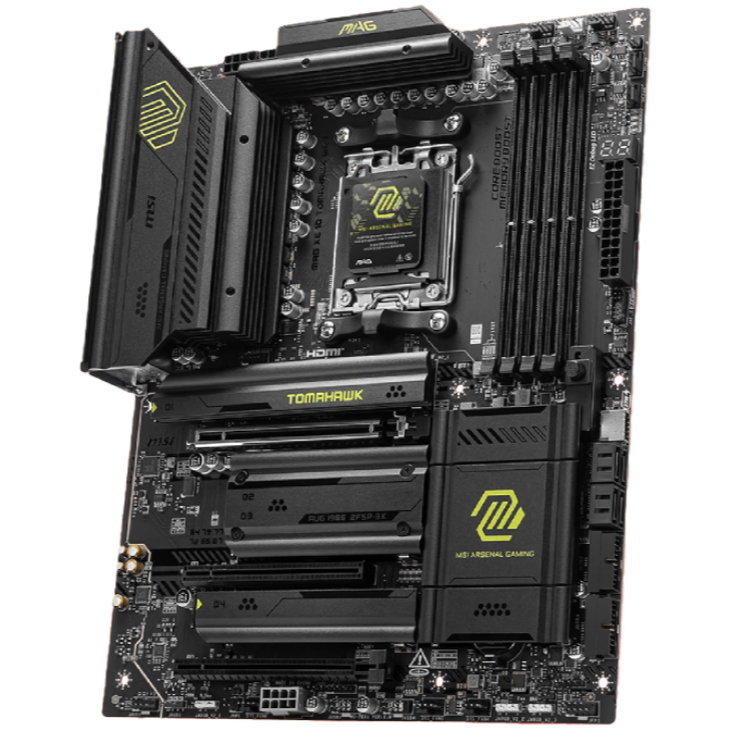
1. Best AM5 - AMD Ryzen 9000/7000:
MSI MAG X870 Tomahawk WiFi
2. Best budget AM5 - AMD Ryzen 9000/7000:
Asus TUF Gaming B650-Plus WiFi
3. Best midrange AM5 - AMD Ryzen 9000/7000:
ASRock B850 Steel Legend WiFi
4. Best AM4 - AMD Ryzen 5000/3000:
Asus ROG Strix B550-E Gaming
5. Best LGA1851 - Intel Core Ultra 200S:
Asus ROG Maximus Z890 Hero
6. Best budget LGA1851 - Intel Core Ultra 200S
ASRock B860 Steel Legend Wi-Fi
7. Best LGA1700 - Intel 14/13th Gen:
MSI MAG Z790 Tomahawk WiFi
8. Best budget LGA1700 - Intel 14/13th Gen:
Asrock B760M PG Sonic WiFi

Jacob got his hands on a gaming PC for the first time when he was about 12 years old. He swiftly realised the local PC repair store had ripped him off with his build and vowed never to let another soul build his rig again. With this vow, Jacob the hardware junkie was born. Since then, Jacob's led a double-life as part-hardware geek, part-philosophy nerd, first working as a Hardware Writer for PCGamesN in 2020, then working towards a PhD in Philosophy for a few years while freelancing on the side for sites such as TechRadar, Pocket-lint, and yours truly, PC Gamer. Eventually, he gave up the ruthless mercenary life to join the world's #1 PC Gaming site full-time. It's definitely not an ego thing, he assures us.
You must confirm your public display name before commenting
Please logout and then login again, you will then be prompted to enter your display name.