Our Verdict
Likely the most affordable 4-inch display based AIO on the market today. With impressive performance, insane compatibility and a decent price tag, it's a hard thing to say no to. Still, it's not perfect. The warranty leaves a lot to be desired and the software could use some clean-up.
For
- Loooooong tubes
- Clean overall design
- Outstandingly affordable
Against
- Limited Warranty
- Display software underwhelming
PC Gamer's got your back Our experienced team dedicates many hours to every review, to really get to the heart of what matters most to you. Find out more about how we evaluate games and hardware.
Say it ain't so, a product in the custom PC industry space right now that's dare I say "cheap", "affordable", "coming down in price". Unbelievably, yes, that is the case. This is Thermaltake's TH360 V3 Ultra ARGB Sync all-in-one liquid cooler. And despite the ridiculously funky name, it's surprisingly impressive all things considered. That's mostly because of the price.
Let me be clear, this thing isn't going to blow the bloody doors off of our best CPU coolers buying guide, on quality alone, or by introducing some radical new design element. No sir, but what it does do is dramatically drop the price of LCD display AIOs by a hell of a lot.
This is possibly the cheapest 360 mm I've seen with a display ("possibly" doing a lot of heavy lifting there, to stop the comments section from rinsing me. It's cheap, ok, real cheap). At $140 US and £125, what you get for the money is utterly staggering.

Socket Compatibility: AM5, AM4, LGA2066, LGA2011-3, LGA2011, LGA1851, LGA1700, LGA1366, LGA1200, LGA115X
Dimensions: 397 x 120 x 27 mm
Radiator: 360 mm aluminum
Tubing: 460 mm
Pump: High Performance Pump @ 800 - 2500 rpm
Fans: 3x 120 mm / 360mm Single Frame ARGB Fans
Lighting: Full RGB Fans & LCD Display
Screen: 3.95-inch TFT LCD, 720 x 720
Warranty: 3-years US, 2-years UK
Price: $140 / £125
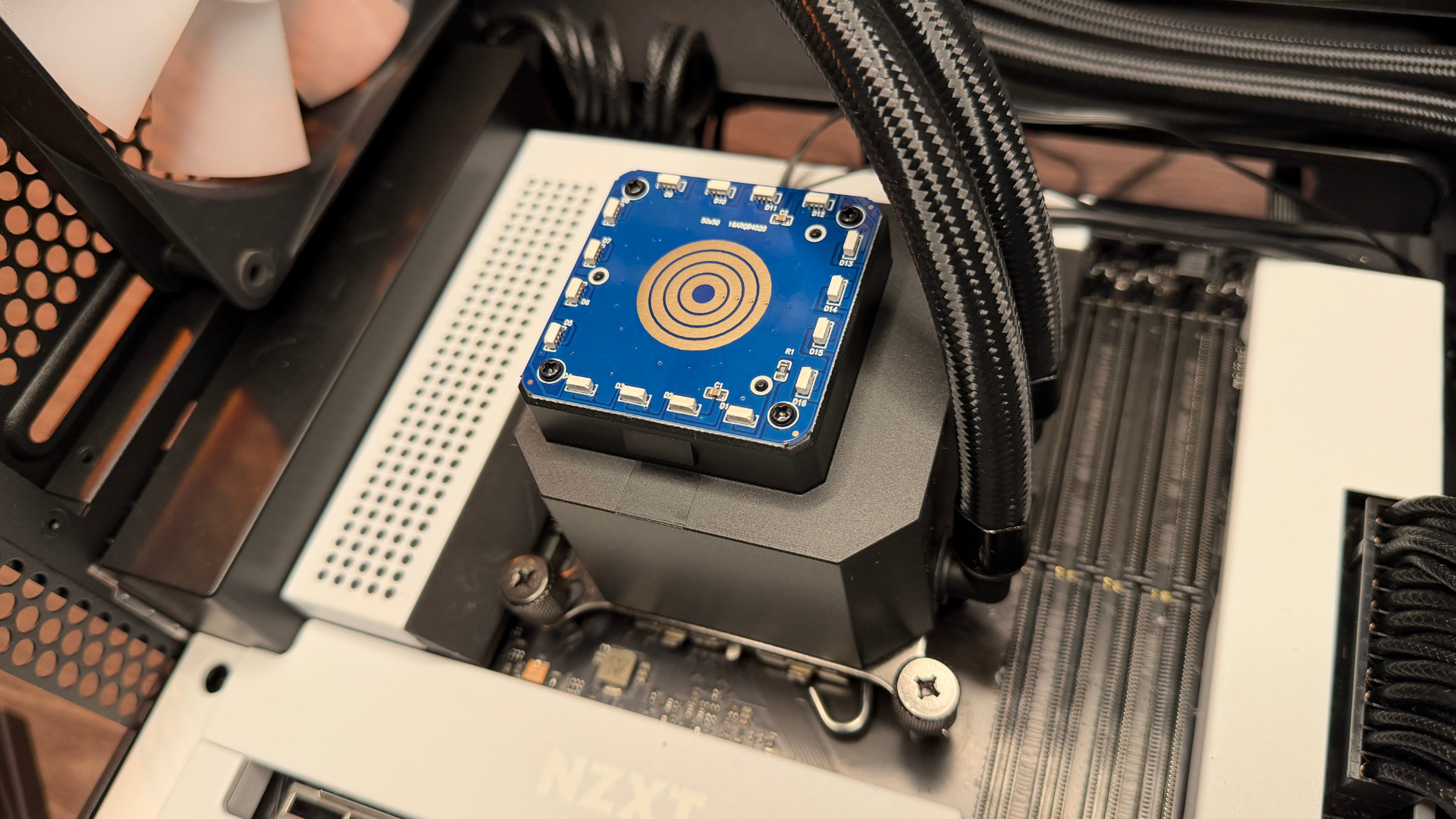
The display itself, completely detachable from the pump block, isn't particularly fancy. Just a TFT-LCD model, but it does come with a 720x720 resolution on a 3.95-inch display and is entirely customizable within Thermaltake's multitude of software. More on that in a bit.
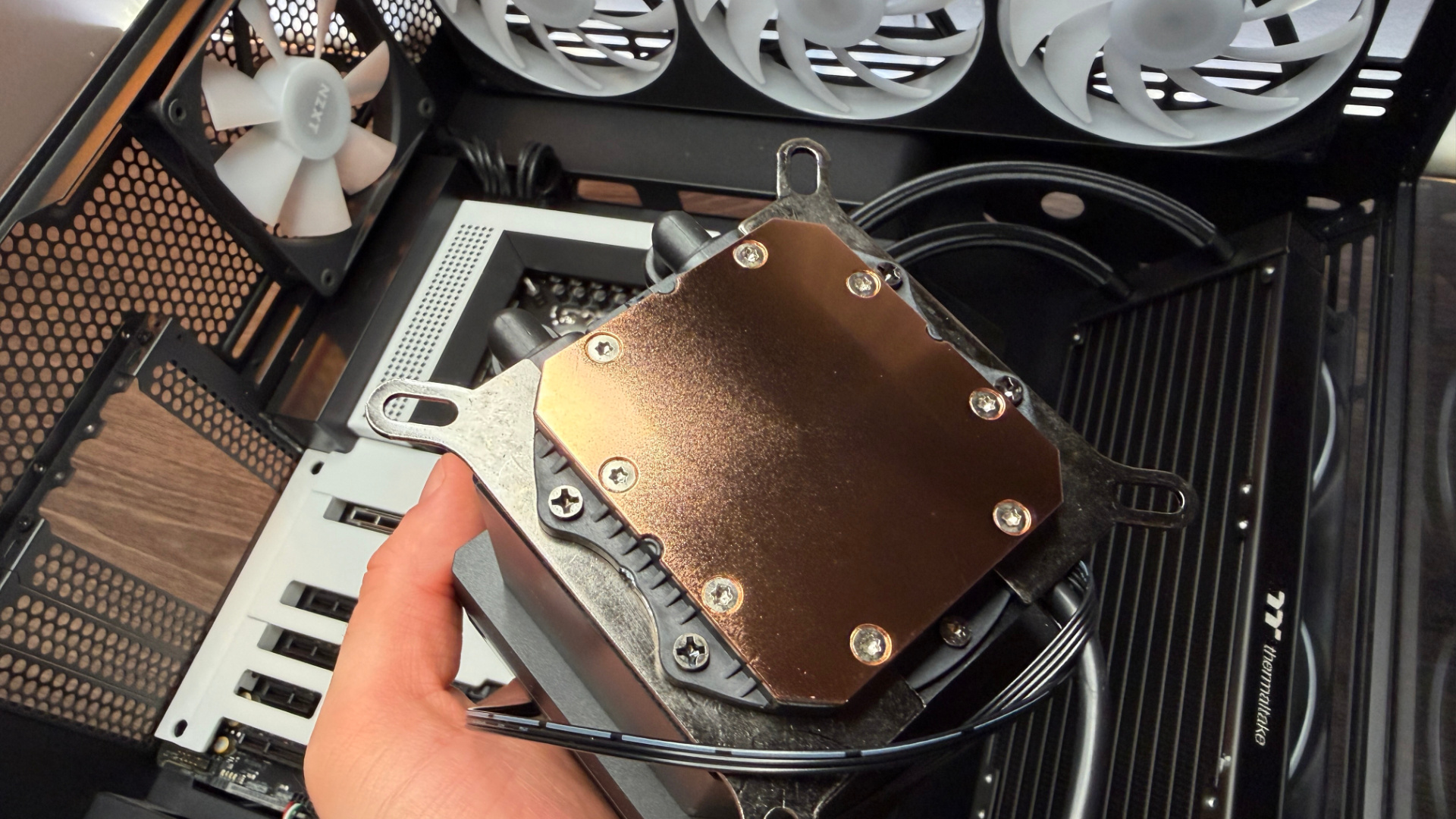
You also get 460 mm tubes (the longest I've seen in my testing), and a copper cold plate attached to a block that's compatible with enough Intel CPU sockets to break our humble table CSS, probably; in fact, it's easier to list what it's not compatible with (anything below LGA1150 and above LGA2066, oh and 1567 because screw that guy).
And again, it's just the price of it that's so mind-bogglingly savage. Just take a look at a few of the true LCD displays on the market. The Kraken Elite 360 RGB is $320, the Tryx Panorama SE is $280, the Kraken Plus is $220. Like those are more than double in most cases, and, yes, ok some are OLED curved models I'll admit. That said, we can't ignore the big bumbling RAM error in the room, and that's the warranty on this thing.
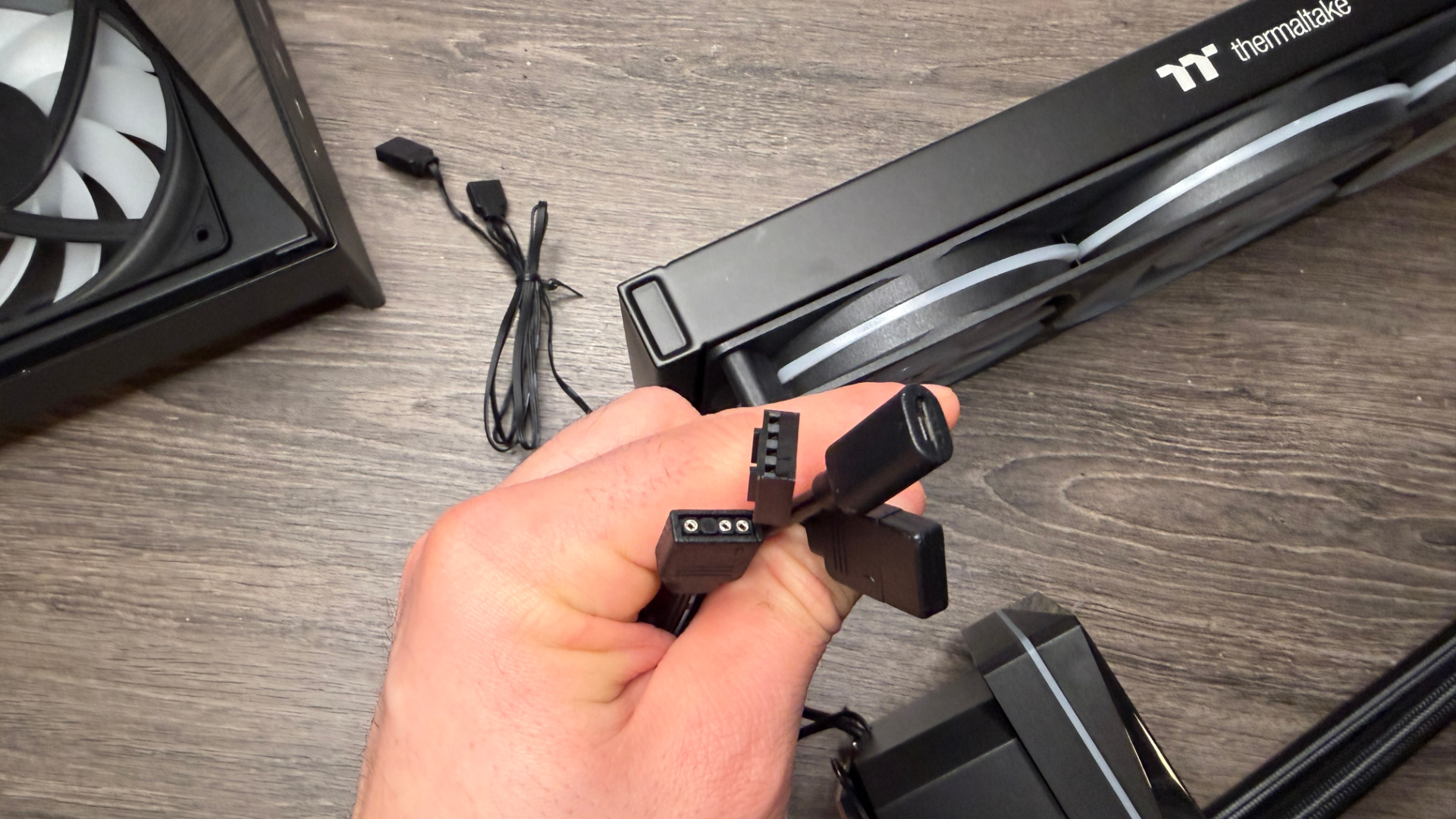
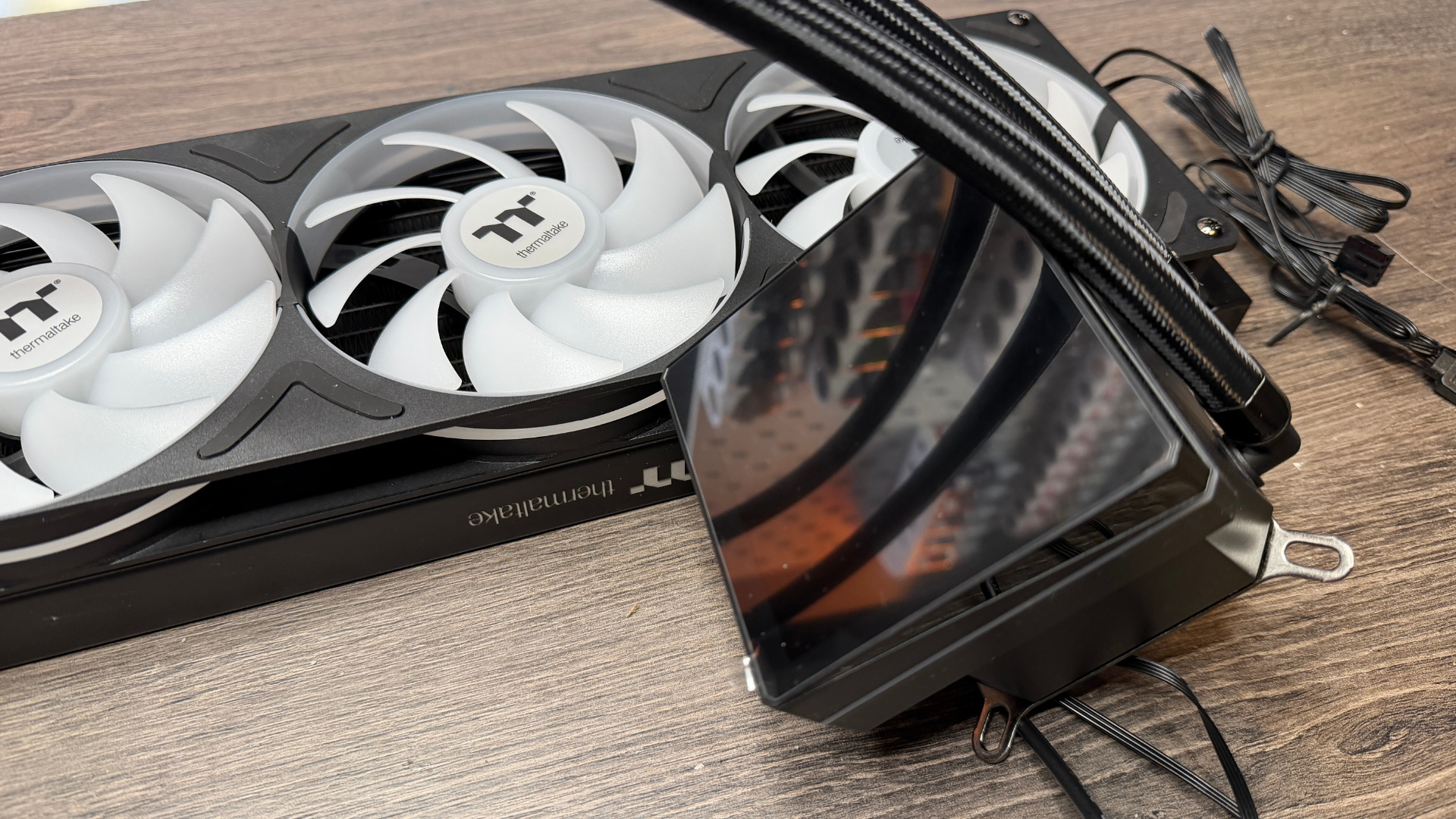
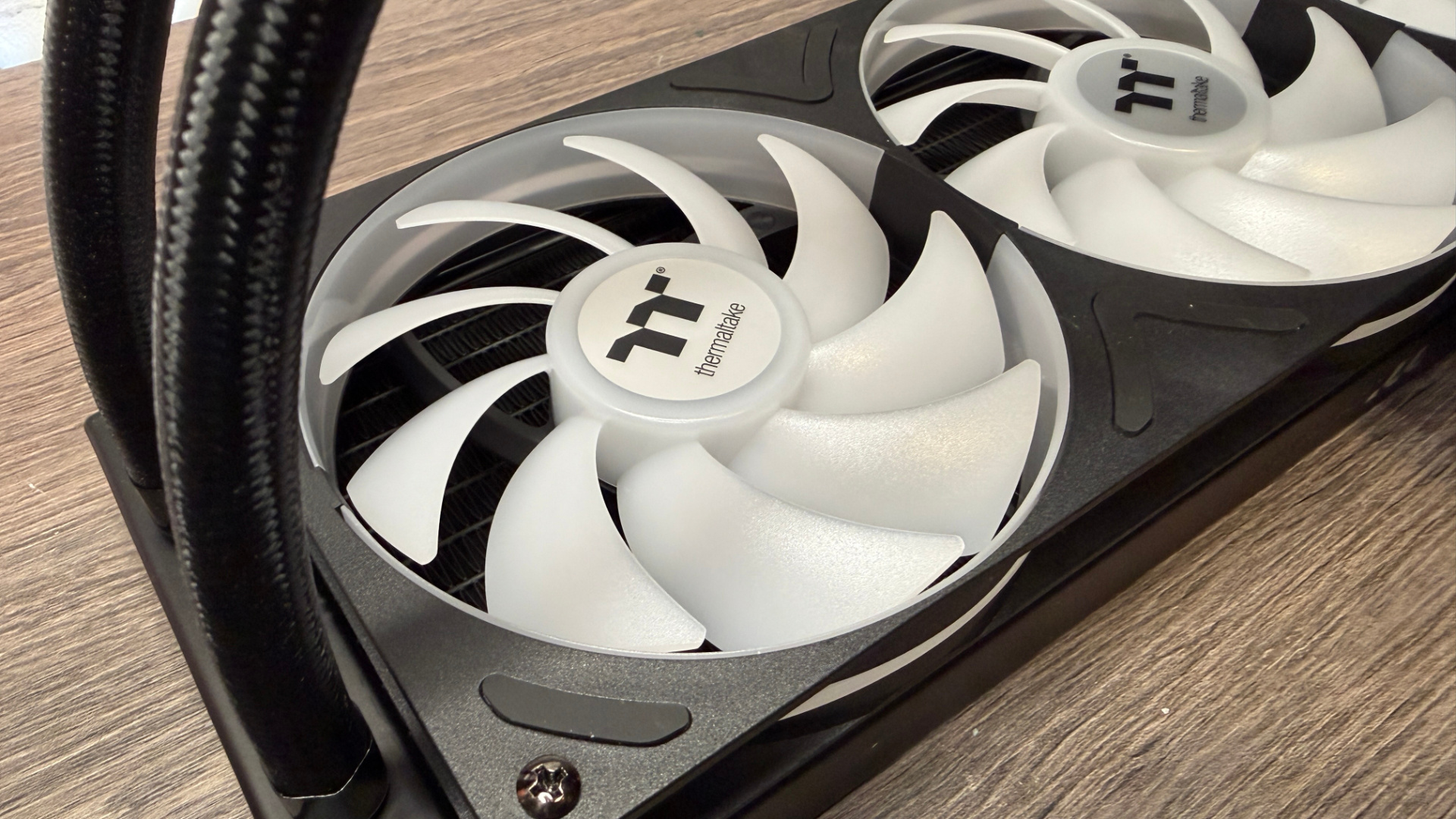
Three years in the US, two years in the UK. Given the industry standard is at least six years on the pump alone for almost all of the TH360 V3's competitors, that's a painful cutback, particularly for us pommes living in ol' blighty. Given the cost of practically everything else in the industry at the minute, I think it's fair to say, most folk's upgrade plans are now spanning half-decades, rather than the one to two year cycle they used to, so seeing that warranty so minimal is a little unnerving.
And then there's the pump; in short, there's no detail on what it actually is. Thermaltake has it listed as "high performance," but that's it. To our knowledge, it's not an Asetek model (again likely to keep cost down), but the pump speed is rather limited, suggesting the internal spec is probably quite cut-back in contrast to other models on the market.
Benchmarks: Temperature
Delta over ambient (Celsius) for CPU package temp with a Core i7 14700K in various benchmarks
| Product | Value |
|---|---|
| Thermaltake TH360 V3 Ultra ARGB Sync | 49 Delta over ambient (max °C), 26 Delta over ambient (avg °C) |
| Thermaltake Minecube 360 Ultra ARGB Sync | 54 Delta over ambient (max °C), 32 Delta over ambient (avg °C) |
| MSI MPG CoreLiquid P13 360 | 51 Delta over ambient (max °C), 39 Delta over ambient (avg °C) |
| Corsair iCUE Link Titan 360 RX LCD | 45 Delta over ambient (max °C), 37 Delta over ambient (avg °C) |
| Arctic Liquid Freezer III Pro 360 A-RGB | 43 Delta over ambient (max °C), 30 Delta over ambient (avg °C) |

Fortunately, in my time testing, that reduced RPM doesn't seem to be hurting that much in terms of overall performance. With an ambient temperature of 26 degrees Celsius, it performed admirably across our testing suite, with record temperatures in CineBench R23 (86 degrees) and an impressive 71 degrees in Baldur's Gate 3, too.
There's one caveat to that, and that's the noise. The V3 Ultra is incredibly loud. By my readings, those fans clocked in at an astonishing 63.4 dB at full whack, that's a full 8.4 dB louder than the likes of the Kraken Plus 360 RGB (now the second loudest cooler I've tested so far).
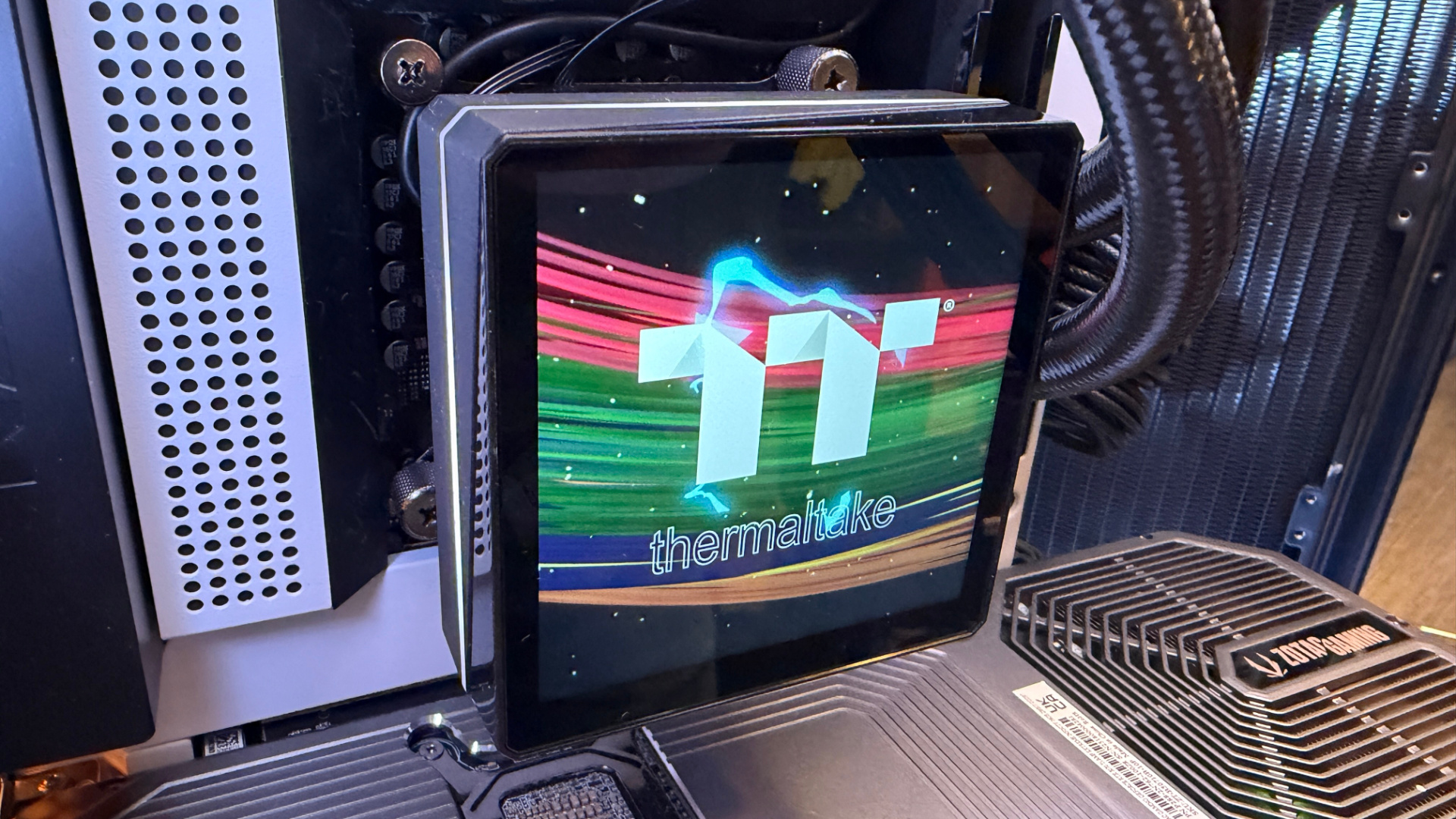
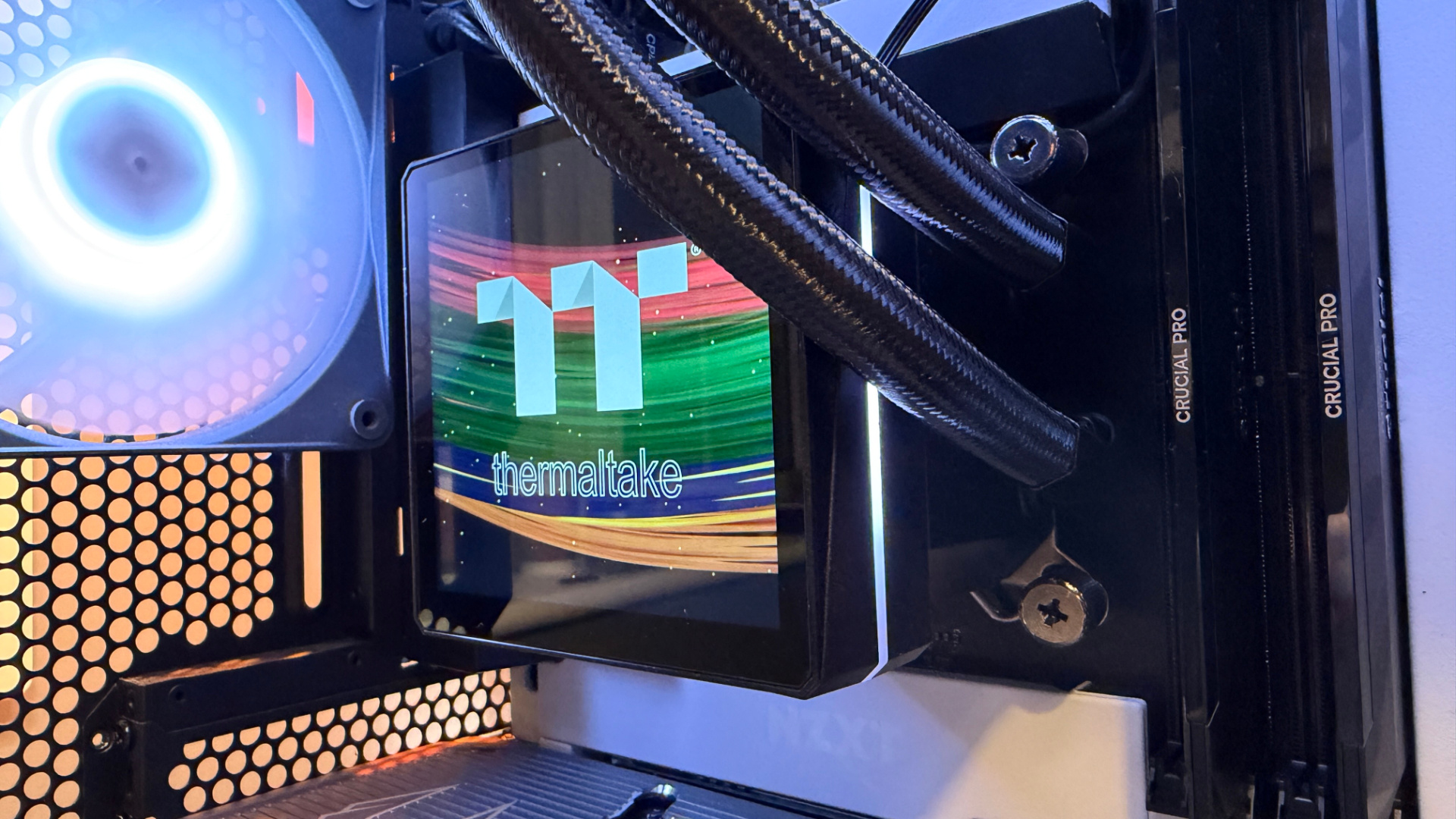
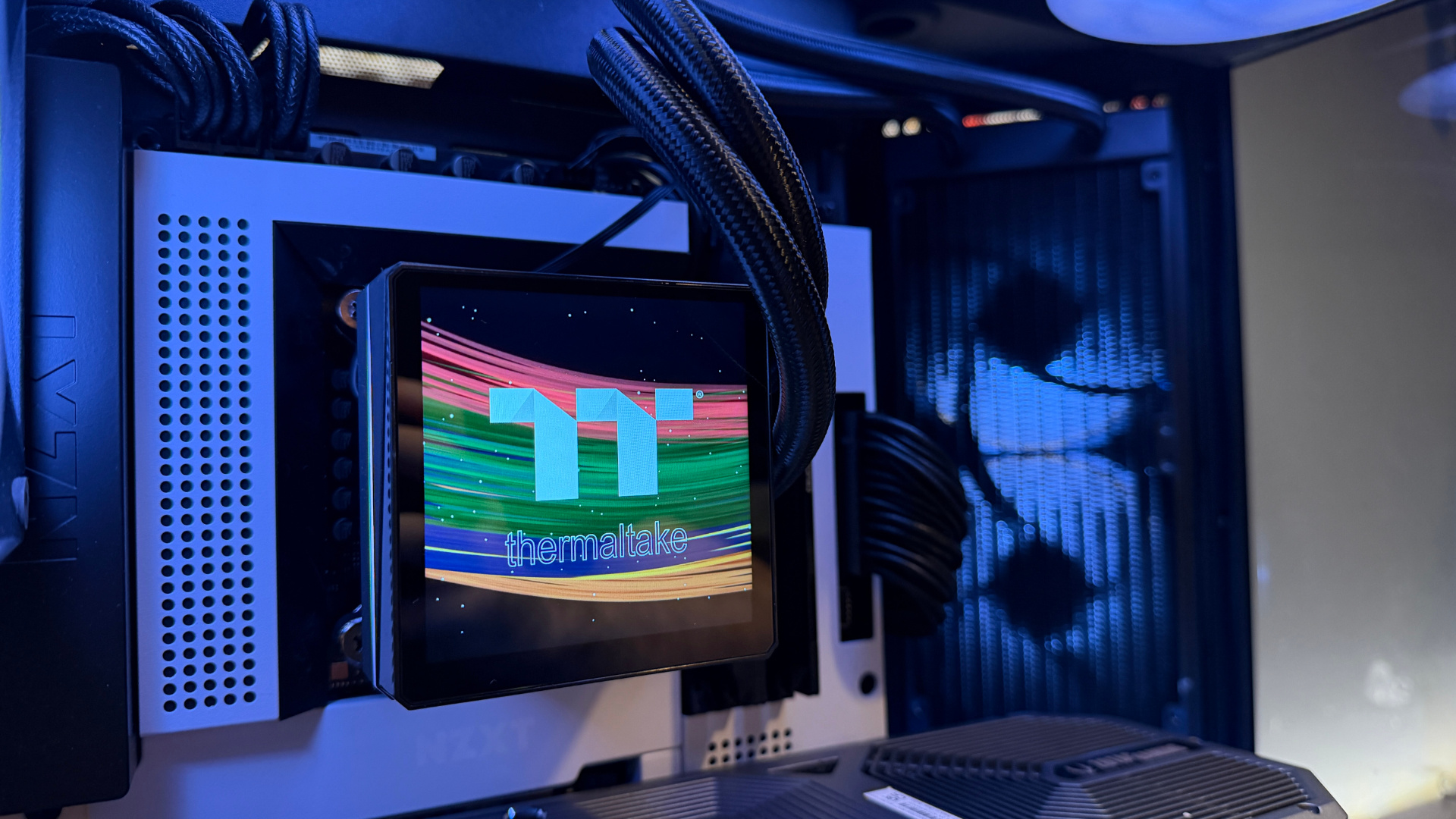
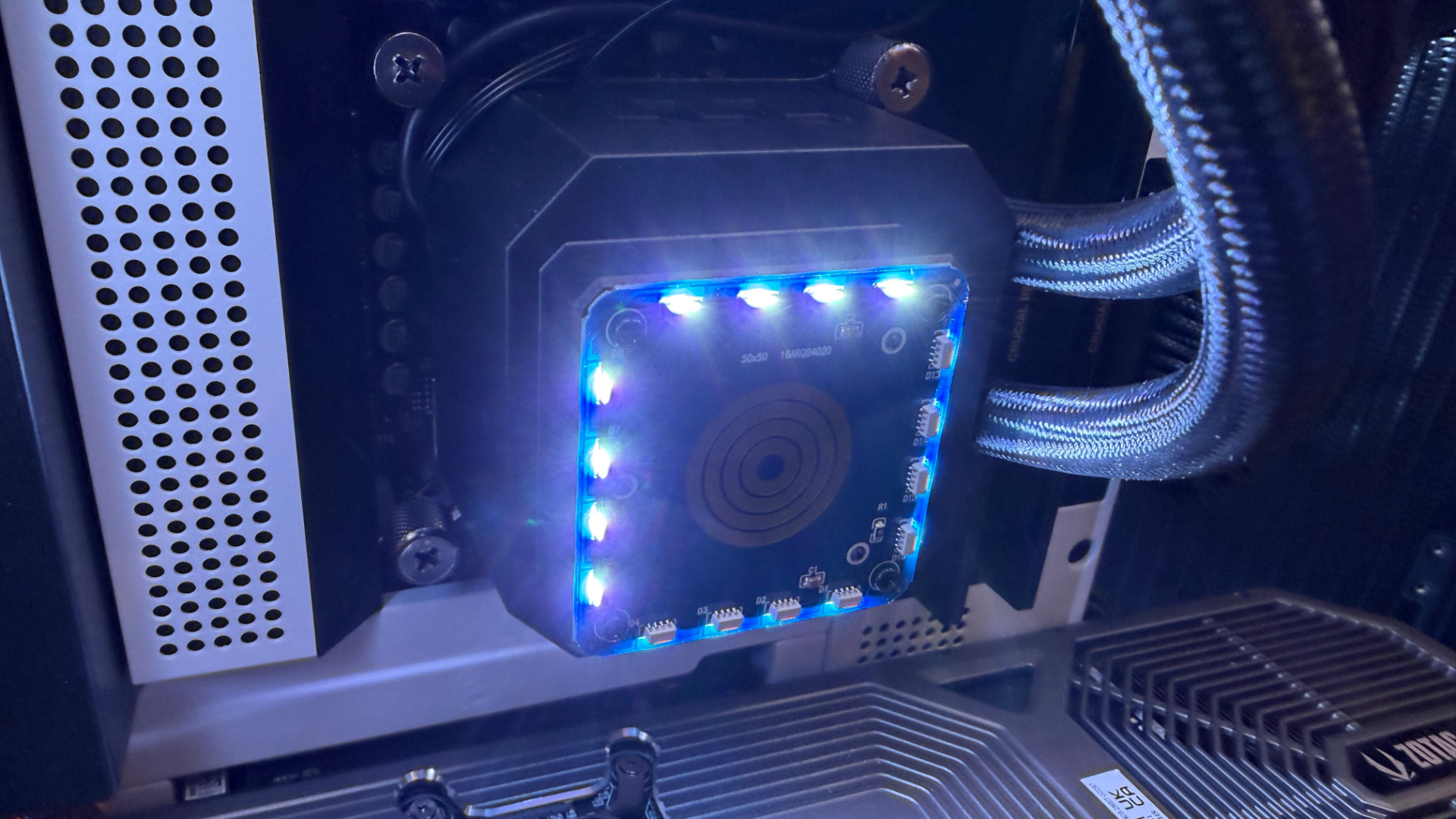
It doesn't disappoint on the looks front either, the display is crisp and punchy, the tubing braided (anyone else getting nostalgia for the old school PVC tubing, now we're getting older?), and the ARGB fans crisp and clean too. The single-frame design and one set of cables to manage makes things seriously easy to handle too.
✅ You're trying to save money to buy RAM: What you're getting for $140 or £125 is utterly wild. Top-tier performance, a full-size LCD customizable display and outstanding compatibility.
❌ You're worried about longevity: Will the TH360 V3 break in four years? Maybe, maybe not. But if it does your warranty doesn't cover it.
Thermaltake's software is a pretty mixed bag overall. Confusingly, there's two, neither of which are found in the downloads section of the TH360 V3 Ultra's product page. You've got the TT RGB Plus 3.0 software, which is buried in the features section, and the TT LCD Screen software (technically for the Minecube, but it also works).
The MineCube version is pretty barebones but allows you to build a completely custom display, with all manner of stats monitoring, font control and backgrounds. RGB Plus, on the other hand, is more plug-and-play; you get a set number of stat setups, backgrounds are automated, there's some carousel modes, and clocks, and that's about it, barring some AI background generation oddness integrated in there too.
So then. Thermaltake TH360 V3 Ultra ARGB Sync. Big, bold, versatile, potent, and insanely affordable compared to the competition. But, with some caveats. If you go into this purchase with that in mind, and don't expect this to outlast the AI boom, then you're going to have a good time.
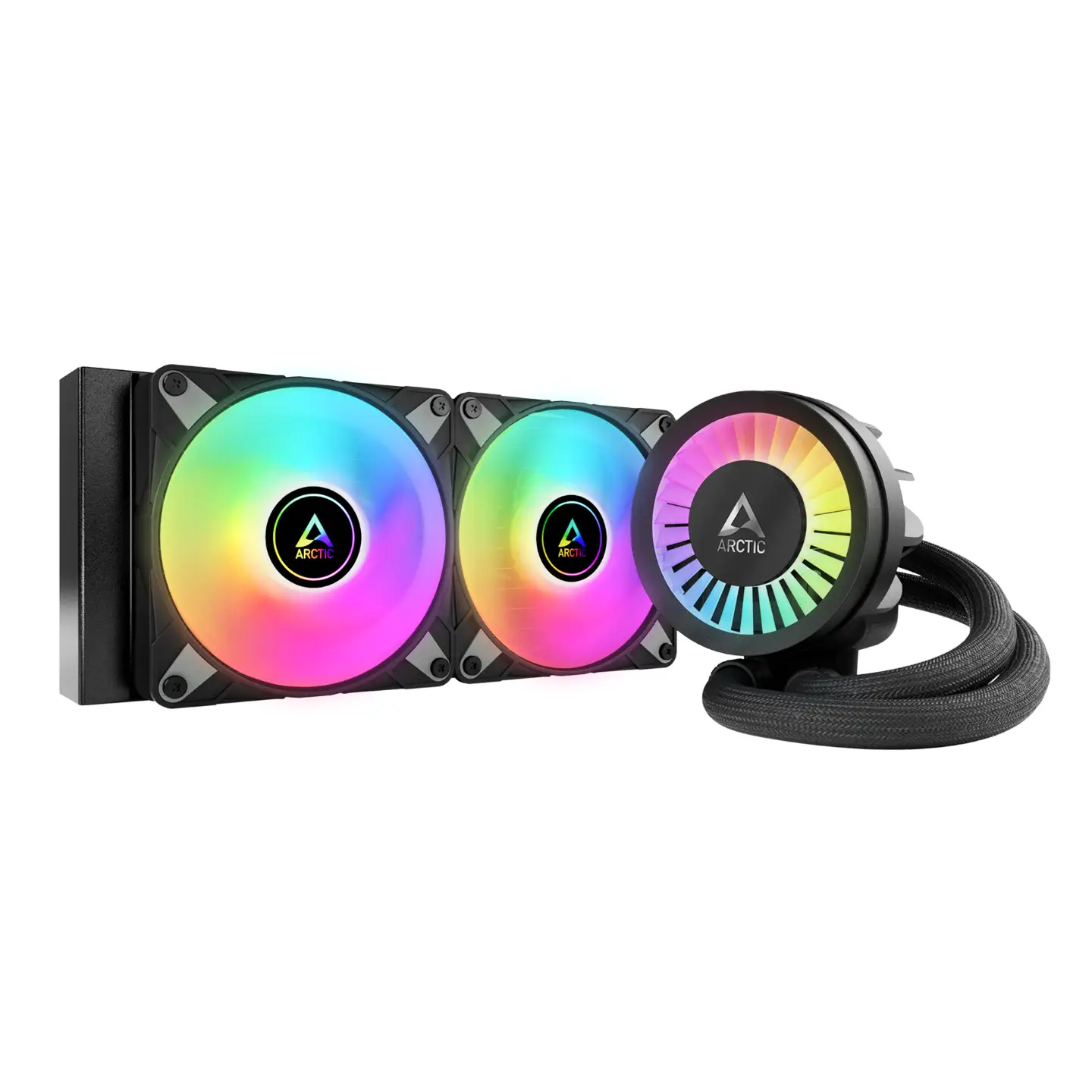
1. Best AIO:
Arctic Liquid Freezer III Pro
2. Best budget AIO:
Cooler Master MasterLiquid Core II
3. Best high-end AIO:
Be Quiet! Light Loop
4. Best screen:
NZXT Kraken Elite RGB (2024)
5. Best stealth:
Corsair Nautilus RS
Likely the most affordable 4-inch display based AIO on the market today. With impressive performance, insane compatibility and a decent price tag, it's a hard thing to say no to. Still, it's not perfect. The warranty leaves a lot to be desired and the software could use some clean-up.

You must confirm your public display name before commenting
Please logout and then login again, you will then be prompted to enter your display name.