Until I found the website ooh.directory last year, I hadn't really understood, completely, how malnourished my internet diet had become. I still had some bookmarks I visited everyday, and the social media feed I checked (too often) for breaking news and interesting stories. But only when I made a conscious effort for the first time in a decade to fill up an RSS reader with bloggers, critics, news sources, and even webcomics did I realize that I'd lost track of the original, primal joy of the internet:
Clicking a link and finding a whole new world unfurl before me, as fast as my dial-up modem or DSL connection could load it in.
I realize in hindsight that that was the really magical part, not knowing what I would get when I clicked. Finding a site wholly born from the passion and personality of someone I'd never met was as much the point as the information that site contained.
For 20 years Google has been trying to kill this version of the internet that I loved. At first I think it was with good intentions: the internet just seemed so vast back then (ha!) that a search engine that could truly crawl all of it to surface the "best" stuff was amazing. Then, of course, Google took over the entirety of internet advertising and tightly integrated it with search. It took over browsing with Chrome so it could control the standards websites would have to adhere to. It made it so you could search without even going to Google.com.

Google itself has become the final form of "Saved you a click,"
It started autofilling what everyone else was searching for, so that it could precisely tailor those results pages (and all the lucrative sponsored links at the top—$198 billion in ad revenue last year!). For years now we've watched Google rip more and more information out of the websites it once presented as promising, useful links and act as though it's done us a huge favor.
Why should you click on George Clooney's Wikipedia page (the first result when you search his name) when a snippet of it is right there in the sidebar? Surely you want to know "Is George Clooney richer than Brad Pitt?" and the answer is right there for you in the "People also ask" widget, sandwiched between the links.
Surely when you Google "Does Master Chief have sex?" you just want the answer to that pressing question as quickly as possible, right? Google is doing you a great service with its new AI Overview, then, which summarizes "Yes, Master Chief has sex with a human Covenant spy named Makee in a specific episode of the live-action Halo TV series."

It graciously provides a source for this information with a link to the 2022 YouTube video Master Chief Lays Pipe in the Halo Show.
But Google would really much rather entice you to click a button it highlights with swirling RGB lights titled "Dive deeper in AI mode," where it promises to provide more context. As much context as you want. Endless context. I click it to see what insights it can offer. Master Chief "is often jokingly referred to by fans as a 'big green virgin,'" Google tells me. Sure!
We all know that Google has, for years, been trying harder and harder to stop helping us navigate the internet and instead be the internet, with the answer to any and every thought or query right there at the top of the results page.
We can all feel in our bones that this convenience has become more and more a hindrance, every search weighed down by paid results and shortform videos and SEO'd-to-hell listicles as autocomplete funnels us to the lowest common denominator results.
And yet the infection eating away at Google's core goes deeper than "search sucks now." Google's AI overviews aren't just leeching traffic away from the very websites it's happily pilfering from, with no fucks given in the halls of big tech about fracking the internet's core until the whole thing collapses in on itself. The rot is spiritual.
Google's AI overviews demonstrate with diamond clarity that Google views the trillions of links it crawls as nothing more than information—data to be surfaced in any form, the more immediate and convenient the better. Google itself has become the final form of "Saved you a click," a 2010s Twitter phenomenon that writer Charlie Warzel once succinctly analyzed as fighting less against clickbait than "the premise of simply reading."
"In @SavedYouAClick's"—or, now, Google's!—"perfect world, information doesn't just want to be free, it demands to be right in your face in its entirety—showmanship, gimmicks, and creativity be damned. Your time is, quite simply, too precious."

AI overviews and everything about the modern Google experience view the totality of the internet as nothing but questions and answers. The same goes for ChatGPT, Grok, whatever—they're not just offensive because they're built on stolen material and wrong half the time, but because they don't even recognize the actual value in what they're stealing. How else should we interpret Google now deciding to rewrite our headlines with AI, turning this:
- 'Child labor is unbeatable': Baldur's Gate 3 players discover how to build an army of unkillable kids through the power of polymorph and German media laws
Into this?
- BG3 players exploit children
What could the point of these AI headlines possibly be, other than to convince you that all the 'information' you 'need' is contained within Google's feed in its most easily digestible form? Don't waste time clicking away! Rest assured that all flavor will be hewn from the bone and discarded before serving so that you're left with nothing but a flavorless content broth, so calorie light you can scroll-slurp it forever without interruption.
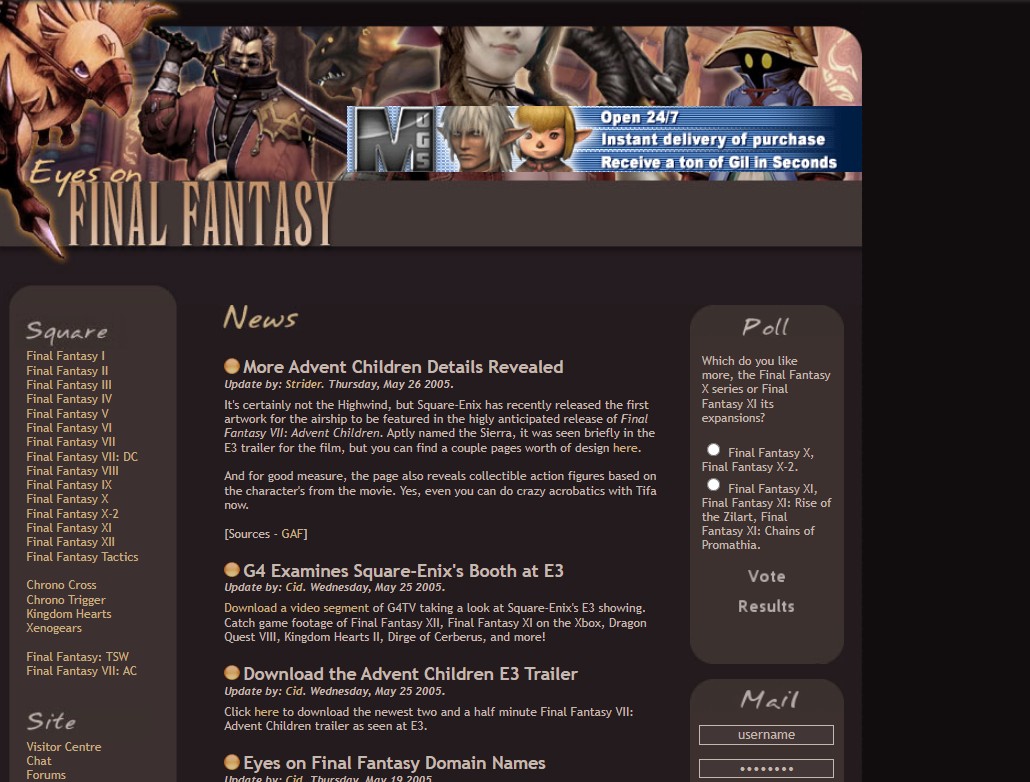
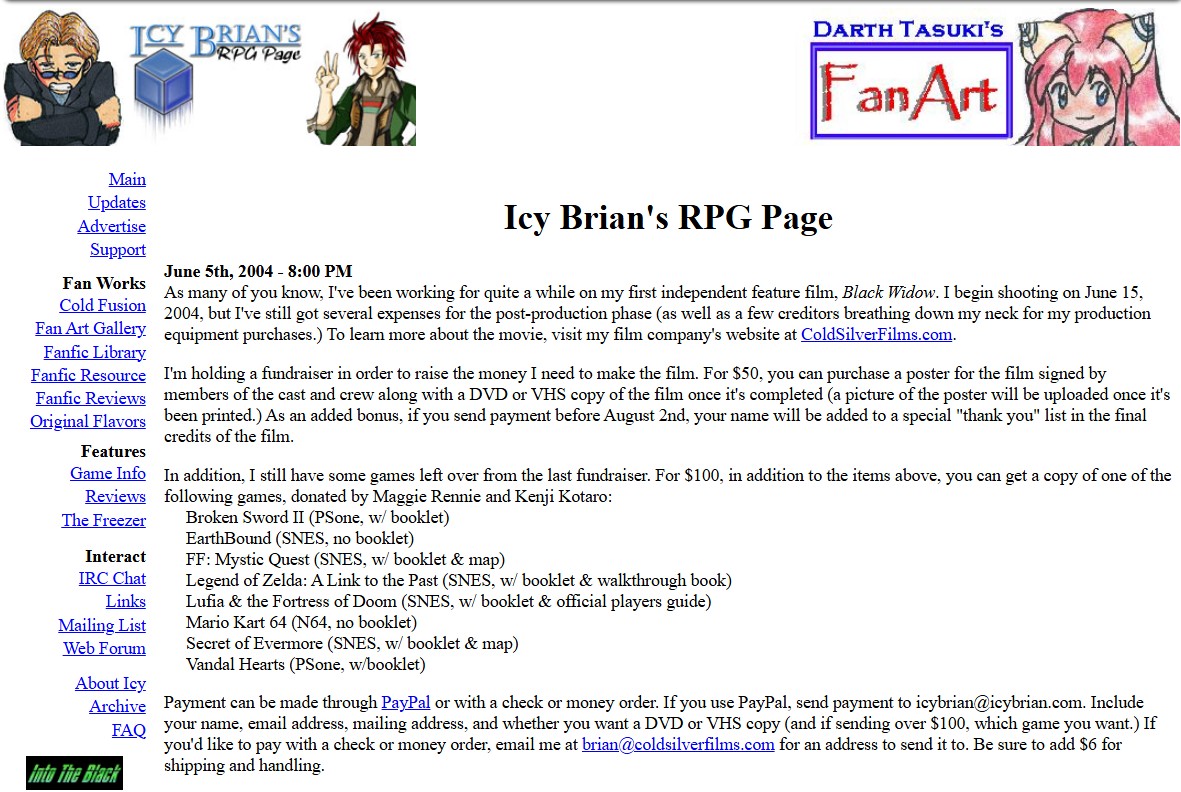
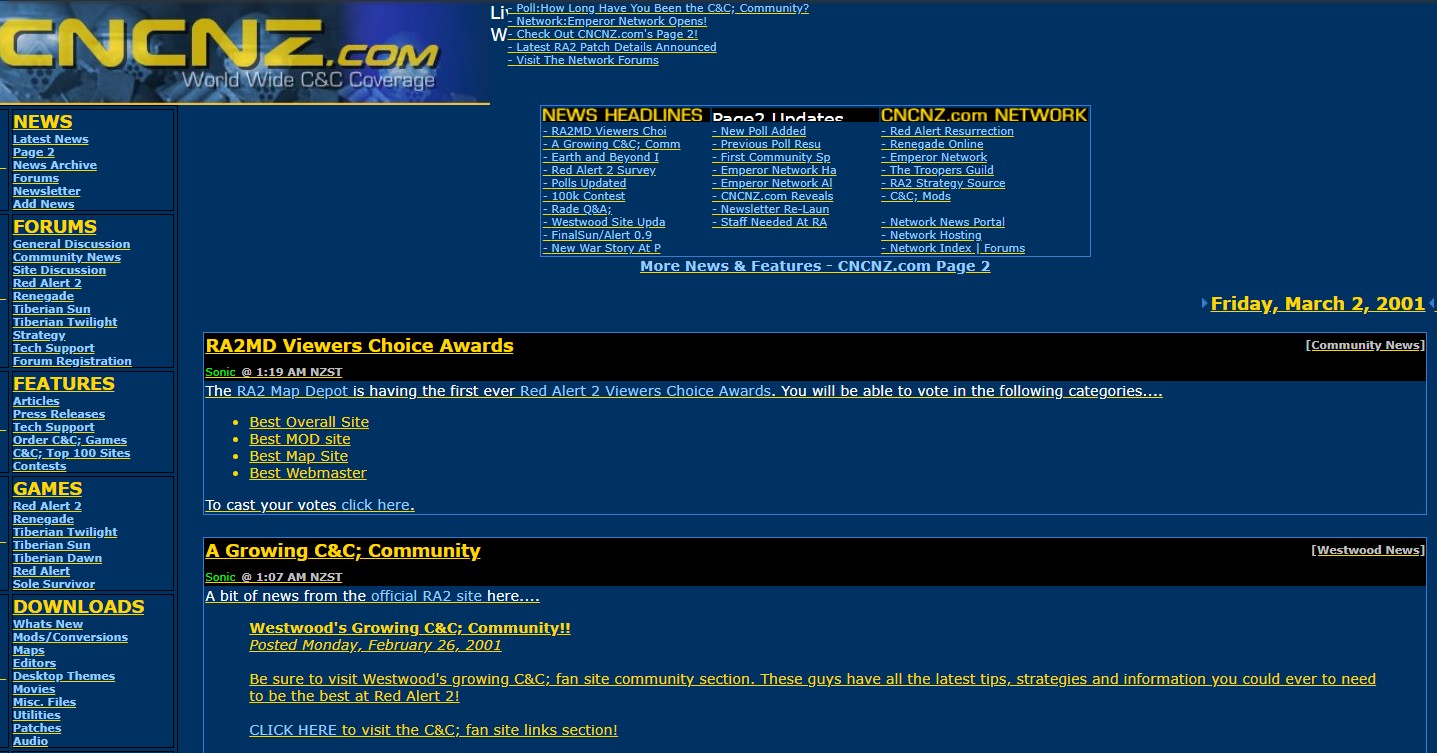
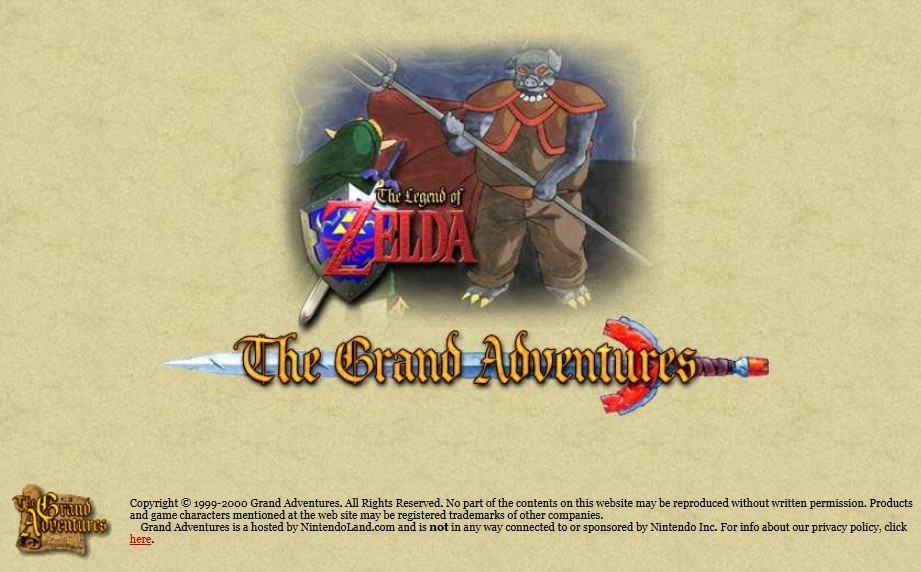
The thing is: Showmanship, gimmicks, and creativity? That's what living is for, man! That was the whole original joy of clicking on an old website with no idea what you were going to get; whether it would start auto-playing a midi version of the Star Wars theme or dazzle you with a tiled 32x32 pixel tiled background of the Zelda triforce or a dancing baby.
Search and "AI" ... have become so focused on serving up the known that they no longer bear any resemblance to the version of the internet that cherished discovering the unknown
Remember cursing when you landed on a Flash website because it would take so long to load, but then being like damn, this looks cool?
Remember joining a message board because you really liked a website's Final Fantasy 7 guides and then, I don't know, marrying someone else who posts there?
Okay, that was not an experience too many people had. But some did! And you sure as hell would never even crack open the door leading to that wholly unpredictable path through life if, in the year 2025, you Googled "what's the best materia in Final Fantasy 7," read the AI overview, and never clicked a thing.
(Dumbshit AI can't even give you the right answer which is that obviously Knights of the Round is the best materia because it's cool, more practical choices be damned).
There are a million yeah, buts we could get into here: sometimes headlines really are misleading, sometimes websites are so stuffed with ads that reading them kinda sucks (sorry, but I remind you again that Google monopolized the ad market), sometimes search results pages are useless because the few human writers still eking out a living are fighting against a million spammy content mills to win a popular search term Google has told everyone to type in. Sometimes you do just need a quick answer to a quick question.
But Google has made us forget how much more nourishing clicking a link can be—how much beyond mere information could await you when that page loads. Search—and really any sort of "AI" that can answer your every question—have become so focused on serving up the known that they no longer bear any resemblance to the version of the internet that cherished discovering the unknown.

So now, every few months, I find myself back on ooh.directory, clicking around at random. I love the front page, where it shows me a blog that is celebrating its 25th birthday today.
I click the random button and learn there's a guy out there named Robert X Cringely (wow).
I land on the personal site of a game developer who worked on Doom 2016 and Deer Avenger 4: The Rednecks Strike Back and has created 1,450 pieces of Javascript art (so far), each in under 140 characters of code.

Without it I never would've started reading Sandwich Tribunal, a blog trying to review every sandwich listed on Wikipedia. They've been at it for 10 years. Never in my life would I have possibly typed the words "Rou Jia Mo, the Flatbread Sandwich of Shaanxi Province" into Google.
But now I know that there's a sandwich out there that marries two culinary traditions dating back 3,000 years and 1,400 years, respectively—a sandwich I must eat before I die.
We'll all need something like a Rou Jia Mo to sustain us during the internet nuclear winter that Google is eagerly creating, and once AI has fully destroyed search you'll have to look for it the old fashioned way. Go out there, and find your own.

You must confirm your public display name before commenting
Please logout and then login again, you will then be prompted to enter your display name.