You are now subscribed
Your newsletter sign-up was successful
Want to add more newsletters?

Every Friday
GamesRadar+
Your weekly update on everything you could ever want to know about the games you already love, games we know you're going to love in the near future, and tales from the communities that surround them.

Every Thursday
GTA 6 O'clock
Our special GTA 6 newsletter, with breaking news, insider info, and rumor analysis from the award-winning GTA 6 O'clock experts.

Every Friday
Knowledge
From the creators of Edge: A weekly videogame industry newsletter with analysis from expert writers, guidance from professionals, and insight into what's on the horizon.

Every Thursday
The Setup
Hardware nerds unite, sign up to our free tech newsletter for a weekly digest of the hottest new tech, the latest gadgets on the test bench, and much more.

Every Wednesday
Switch 2 Spotlight
Sign up to our new Switch 2 newsletter, where we bring you the latest talking points on Nintendo's new console each week, bring you up to date on the news, and recommend what games to play.

Every Saturday
The Watchlist
Subscribe for a weekly digest of the movie and TV news that matters, direct to your inbox. From first-look trailers, interviews, reviews and explainers, we've got you covered.

Once a month
SFX
Get sneak previews, exclusive competitions and details of special events each month!
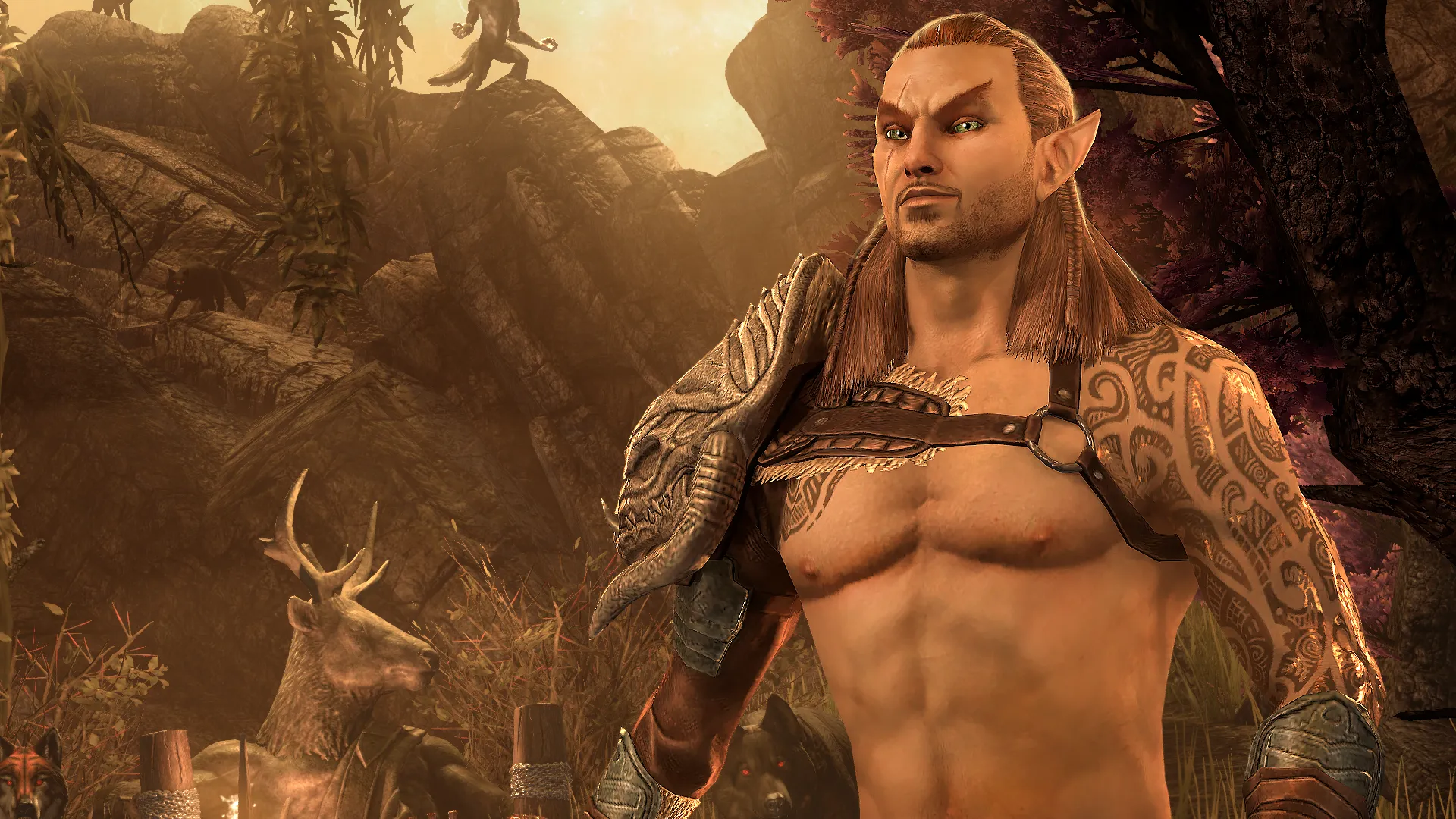
The Elder Scrolls Online's going through a big shift—with subclassing falling somewhat short and a difficult year for Zenimax in the rearview, its developers have decided to shake things up. Going from a yearly "chapter" formula to a seasonal structure where, in a recent conversation I had with executive producer Susan Kath and game director Nick Giacomini, "nothing is off the table."
A huge part of this shift has been in addressing long-standing quality-of-life complaints: Update 49 will begin to tackle a ton of long-standing bugbears, such as the time it takes to train mounts, after Zenimax put together a dedicated team whose job is to listen to community complaints and nip them in the bud. Or, as Kath puts it, a team with a "mandate of: Let's find out what everybody wants to do, and let's do that."
"We communicate with our players, we read, we listen, we play the game—it wasn't like we were blind to the things that players were talking about," he says. However, Giacomini lays the blame at the feet of the long-form chapter model: "We had this commitment to the chapter model, it was 18 months [long], and it left little time to focus on these other things that we knew were important."
"There were foundational issues and changes that needed to be made … If we wanted to have a shot at reaching that 30-year mark, we thought that we needed to address more foundational core experiences in the game."
Bit by bit
One major shift, echoed by both Giacomini and Kath, lies in not trying to do everything all at once. Kath used an example of furnishing limits, which were previously held off on because they couldn't be applied to Notable Homes—a specific subsection of player housing.

"Nick and I have gone, look, we can release these things in parts. It's going to make it better for everyone as a whole. We don't need to hold this [fix] … let's put all the others out there, and then we'll keep working on this in the background."
Giacomini tells me that this new change in mindset has led to an increased era of "permission" for the studio—no more waiting at the edge because it can't get things perfect.
"It's not that we can't see [problems], we can be very critical of our own game, and there are things that we want to address and things that we want to fix, and we have a lot of passionate, creative people here who have the capability to—they just lacked the permission before."
Kath agrees, adding, "We were all marching to the beat of a drum over the last few years, and now we're saying 'we can wiggle off to the sides a little bit'. We're all still going forward, but maybe our path to get there isn't as linear as it's been in the past."
One notable example of finally letting go of past assumptions lies in the respec system. Soon, in ESO, you'll be able to just respec your character at the click of a button with nary an in-game currency charge in sight, which is especially important given the recent subclassing system—which was, and is still intended to, improve build variety, something that's hard to obtain if respeccing is a pain in the butt.
Let's do what we think is the right thing to do for our players, for the game, rather than adhering to what we've done in the past as a blueprint for the future."
Giacomini explains encountering this frustration with the old system himself. "I would zone into my house, I would check my DPS against the target dummy," he says. "And then, I'd be like, 'Okay, now I want to change a morph. Now I have to leave my house, go to the shrine, change it, go back to my house, go back to the target dummy, and [then test it].
"It's not the worst experience, but it was friction, right? And it was preventing me from actually exploring and experimenting … I think that the old paradigm was anachronistic, honestly, and this is way more in line with player expectations and providing players the ability to do more in the game."
All in all, both devs seem optimistic for the future, and willing to make big, sweeping changes. Giacomini tells me that "Nothing is off the table right now, let's do what we think is the right thing to do for our players, for the game, rather than adhering to what we've done in the past as a blueprint for the future."
It echoes what a lot of large MMOs have gone through in these past few years. Post-Shadowlands, World of Warcraft's director talked at length about "letting go of old stubbornness". Meanwhile, Final Fantasy 14 director Naoki Yoshida is starting to question (or at least compromise) on his preferences. 'Out with the old, in with the new' seems the mantra, and I'm excited to see ESO hopefully find its stride again.


You must confirm your public display name before commenting
Please logout and then login again, you will then be prompted to enter your display name.