
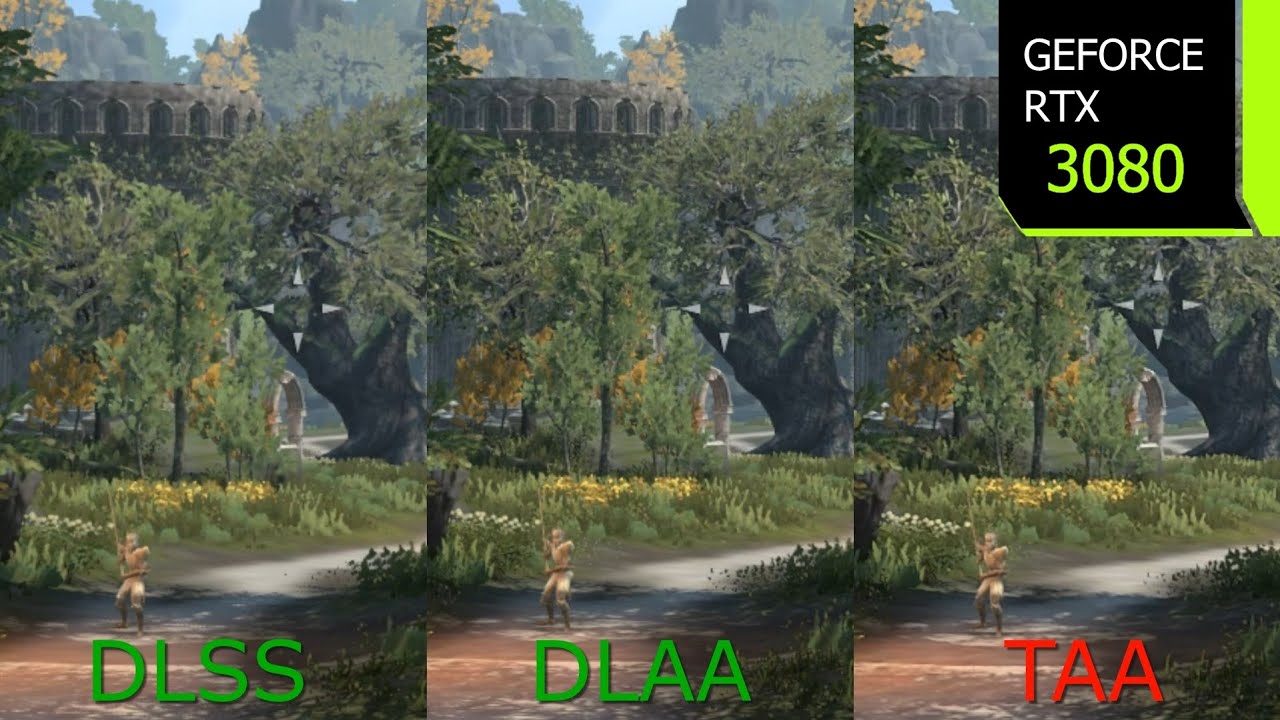
Comparison video shows Nvidia's new DLAA tech alongside TAA and DLSS in Elder Scrolls Online
Time to squint at your screen and play spot the difference.
Keep up to date with the most important stories and the best deals, as picked by the PC Gamer team.
You are now subscribed
Your newsletter sign-up was successful
Want to add more newsletters?
Every Friday
GamesRadar+
Your weekly update on everything you could ever want to know about the games you already love, games we know you're going to love in the near future, and tales from the communities that surround them.
Every Thursday
GTA 6 O'clock
Our special GTA 6 newsletter, with breaking news, insider info, and rumor analysis from the award-winning GTA 6 O'clock experts.
Every Friday
Knowledge
From the creators of Edge: A weekly videogame industry newsletter with analysis from expert writers, guidance from professionals, and insight into what's on the horizon.
Every Thursday
The Setup
Hardware nerds unite, sign up to our free tech newsletter for a weekly digest of the hottest new tech, the latest gadgets on the test bench, and much more.
Every Wednesday
Switch 2 Spotlight
Sign up to our new Switch 2 newsletter, where we bring you the latest talking points on Nintendo's new console each week, bring you up to date on the news, and recommend what games to play.
Every Saturday
The Watchlist
Subscribe for a weekly digest of the movie and TV news that matters, direct to your inbox. From first-look trailers, interviews, reviews and explainers, we've got you covered.
Once a month
SFX
Get sneak previews, exclusive competitions and details of special events each month!
A week ago it was announced that The Elder Scrolls Online would be the first game to show off Nvidia's deep learning anti-aliasing. The tech is based on the same idea as Nvidia's DLSS (coming to The Elder Scrolls Online at the same time), only instead of improving performance, DLAA uses AI upscaling to improve image quality—reducing jagged edges while running at your native resolution, where DLSS runs games at a lower resolution and uses upscaling to make it less noticeable.
DLAA and DLSS are live on ESO's public test server, and MxBenchmarkPC's has some footage comparing both to the regular temporal anti-aliasing. The video above was captured on a GeForce RTX 3080 at maximum settings, with motion blur and depth of field turned off.
If you're squinting at that footage and having difficulty telling the difference between TAA and DLAA, you're not alone. Shadows seem slightly better with DLAA at the cost of some fuzziness, maybe? The difference becomes much more noticeable when walking toward stairs. Start the video here and you'll see the moiré shimmer with TAA is absent with DLAA. Whether that's worth your framerate dropping 8% is a question only you can answer.
DLAA doesn't seem to do much for ESO's ghosting, and it'll be more interesting to see what it looks like on games that aren't an MMO from 2014 once support for it spreads.

Keep up to date with the most important stories and the best deals, as picked by the PC Gamer team.

Jody's first computer was a Commodore 64, so he remembers having to use a code wheel to play Pool of Radiance. A former music journalist who interviewed everyone from Giorgio Moroder to Trent Reznor, Jody also co-hosted Australia's first radio show about videogames, Zed Games. He's written for Rock Paper Shotgun, The Big Issue, GamesRadar, Zam, Glixel, Five Out of Ten Magazine, and Playboy.com, whose cheques with the bunny logo made for fun conversations at the bank. Jody's first article for PC Gamer was about the audio of Alien Isolation, published in 2015, and since then he's written about why Silent Hill belongs on PC, why Recettear: An Item Shop's Tale is the best fantasy shopkeeper tycoon game, and how weird Lost Ark can get. Jody edited PC Gamer Indie from 2017 to 2018, and he eventually lived up to his promise to play every Warhammer videogame.

