Nvidia has announced RTX IO, a feature of its new graphics cards that promises to handle data from high-speed SSDs with the graphics card, taking the load off your CPU.
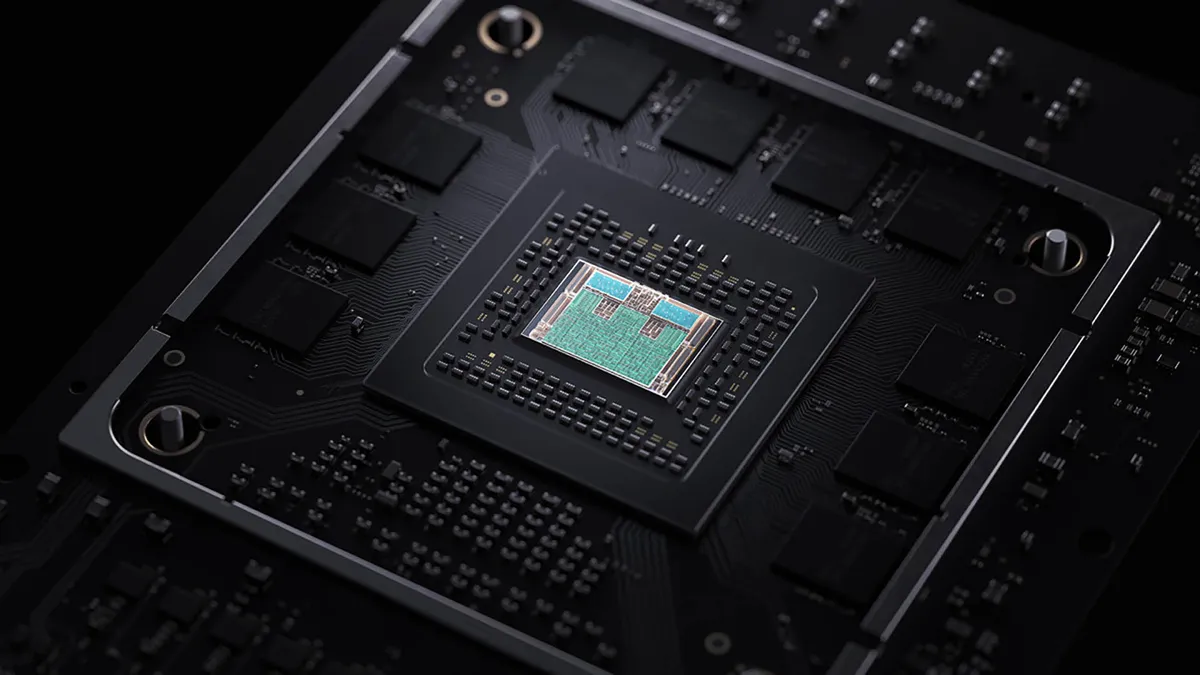
These are the Xbox Series X and PS5 features coming to PC.
RTX IO is high-throughput decompression accelerated on the Ampere RTX 30-series GPUs, and Nvidia says it offers 100 times the throughput and 20x lower CPU utilisation compared to traditional CPU decompression. This technique looks awfully similar to the technology introduced with the Xbox Series X and found within the PlayStation 5, too.
Nvidia RTX IO supports Microsoft DirectStorage for Windows, the exact same technique found within the Xbox Series X. It's not all that surprising that the tech is coming to PC so soon considering Microsoft laid out its desktop plans for the DirectStorage API from the beginning offset when it announced the next Xbox's specs.


Essentially this API, and GPU acceleration found within the RTX 30-series, aims to accelerate data decompression tasks, thus allowing the onus of rendering a high-fidelity, high-resolution scene to fall on the GPU and not the CPU. While a CPU is quick, a dedicated block of hardware located on a GPU is sure to be much quicker—and that means you can load up expansive and beautiful worlds more quickly as a result.
"This delivers GPU-based lossless decompression," Nvidia's blog post reads, "and low-level, super-efficient APIs architected specifically for game workloads. Just as we did with RTX and DirectX Raytracing, we are partnering closely with Microsoft to make sure RTX IO works great with their DirectStorage on Windows API. By using DirectStorage, next gen games will be able to take full advantage of RTX IO-enabled hardware to accelerate load times and deliver larger open worlds, all while reducing CPU load.

Theoretically RTX IO means there will be less waiting for data to hit the GPU, so it can get on with what it does best: Chomping polygons and pixels. It likely also means we'll soon see more demand on PC for the same kind of high-bandwidth SSDs that are coming in the next-gen consoles—but I feel like we've had fair warning of that for some time. And that hardware is nearly here, with Samsung's 7,000 MB/s 980 Pro SSD set to release soon.
A similar decompression block to RTX IO is employed within the PlayStation 5, although sans Microsoft's DirectStorage. Both consoles will also use hardware decompression with AMD RDNA 2 silicon, which means you can likely expect to see AMD follow suit with its next-gen PC graphics cards, too.