Join The Club





AMD says its Smart Access Memory isn't proprietary and isn't only locked into working with its own Ryzen 5000-series CPUs and Radeon RX 6000-series GPUs. It's just that it hasn't yet worked with any other hardware vendors to enable it, though it welcomes the opportunity to do so.
This comes after Nvidia spilled AMD's beans about what exactly the Smart Access Memory (SAM) feature of its new Big Navi graphics cards was built on, and explained that base technology wasn't restricted to PCIe 4.0 hardware, or indeed AMD-only hardware.


But it only seemed as though AMD was locking its SAM feature down to its own new hardware because that was all it was going to actually work on. At least at launch.
“As the only company offering high performance gaming CPUs and GPUs, AMD is in a unique position to deliver incredible PC gaming experiences," reads the statement. "With AMD Smart Access Memory, we have designed, optimized and validated both hardware and software technologies with all combinations of Ryzen 5000 Series processors, Radeon RX 6000 Series graphics cards, AMD 500 Series motherboards and the latest drivers and BIOS at launch. We believe this pairing unlocks maximum platform performance.
"Smart Access Memory is built on features of the PCIe standard and firmware standards (Resizable BAR), and was developed through extensive validation and platform optimization. We welcome the opportunity to support other hardware vendors in their efforts as part of our ongoing commitment to using common and open standards to improve gaming experiences.”
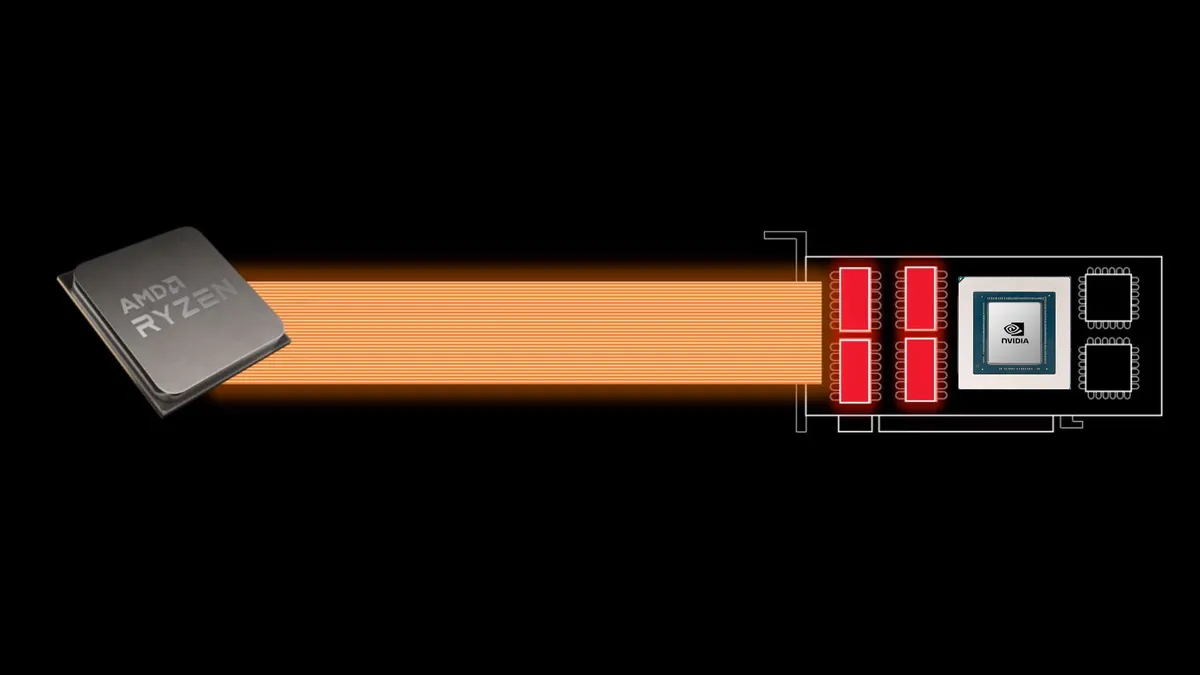
To be fair, getting a new GPU feature validated across the vast spectrum of PC gaming hardware would have been a total nightmare so it makes sense for AMD to initially only spend the time to validate it on a very select bunch of silicon. Even then, making sure Smart Access Memory is validated and optimised for every new Ryzen chip and Radeon GPU, and 500-series motherboard—and every combination thereof—is still an almost Herculean effort.
Making sure it can completely optimise the new all-AMD platform to deliver the highest possible performance boost for its own tech makes complete sense, especially as the red team must be keen to ensure the word gets out that you'll only get the highest performance from your new AMD CPU or GPU when paired together.

Black Friday 2020 deals: the place to go for the all the best Black Friday bargains.
Dr. Su's droogs will want to ensure as few Ryzen processors get hooked up to Nvidia GPUs, and as few Radeon graphics cards get hooked up to Intel CPUs, as possible. And being able to offer this holistic platform performance boost was surely a smart way to go.
It would have also been a nice li'l PR win later on down the line when the company could have announced it had opened up SAM to older hardware. Though whether it would have ever gotten around to chatting with Intel and Nvidia about hooking up to SAM, I'm not sure.
Still, a lot of internet words have been taken up by this little back and forth around the Smart Access Feature, despite the fact that, in real terms, it's actually going to make very little difference to in-game performance. The boost you'll get from your CPU being able to access more of your GPU's attached VRAM at any given time—the essential PCIe spec feature SAM and Nvidia's version are based upon—is largely negligible.
But hey, it's fun to see these two PC gaming heavyweights going at it, right?