You are now subscribed
Your newsletter sign-up was successful
Want to add more newsletters?

Every Friday
GamesRadar+
Your weekly update on everything you could ever want to know about the games you already love, games we know you're going to love in the near future, and tales from the communities that surround them.

Every Thursday
GTA 6 O'clock
Our special GTA 6 newsletter, with breaking news, insider info, and rumor analysis from the award-winning GTA 6 O'clock experts.

Every Friday
Knowledge
From the creators of Edge: A weekly videogame industry newsletter with analysis from expert writers, guidance from professionals, and insight into what's on the horizon.

Every Thursday
The Setup
Hardware nerds unite, sign up to our free tech newsletter for a weekly digest of the hottest new tech, the latest gadgets on the test bench, and much more.

Every Wednesday
Switch 2 Spotlight
Sign up to our new Switch 2 newsletter, where we bring you the latest talking points on Nintendo's new console each week, bring you up to date on the news, and recommend what games to play.

Every Saturday
The Watchlist
Subscribe for a weekly digest of the movie and TV news that matters, direct to your inbox. From first-look trailers, interviews, reviews and explainers, we've got you covered.

Once a month
SFX
Get sneak previews, exclusive competitions and details of special events each month!
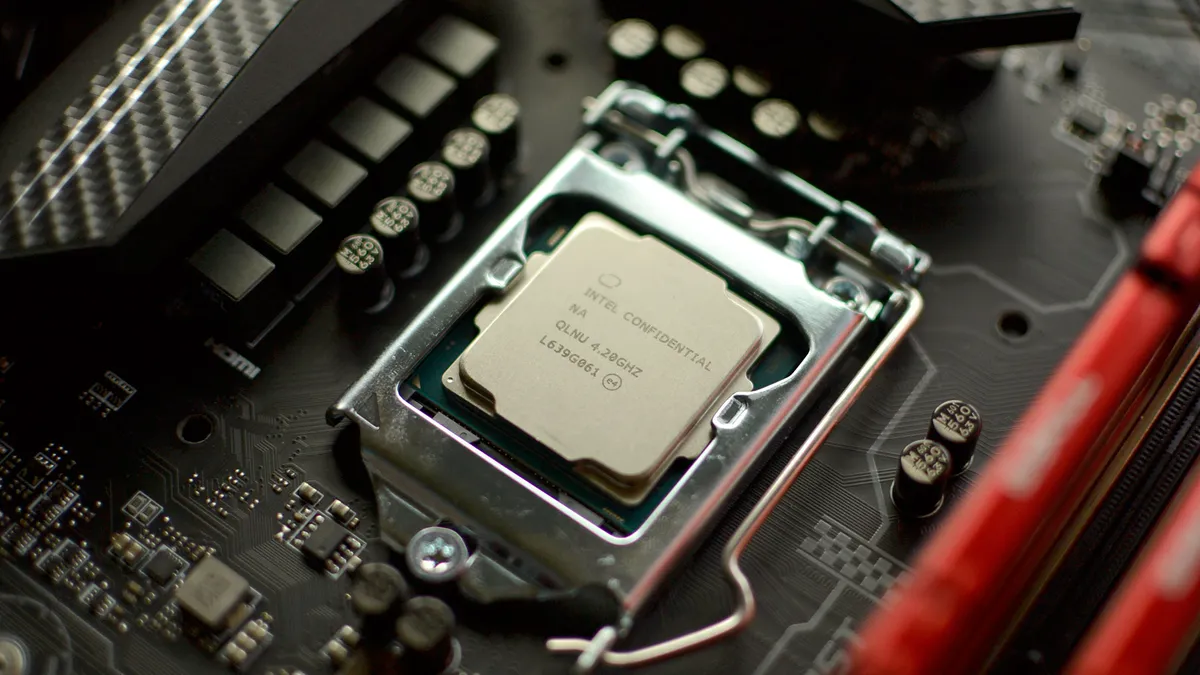
A report on LWN, a Linux kernel development site (sub required), details of a hardware bug in modern Intel CPUs that allows an attacker to access low-level kernel memory that is normally protected from higher level (programs and user) access. As reported on The Register, this bug could have big consequences, requiring OS kernel patches on Windows, Linux, and OS X. Those fixes could actually cause the affected CPUs to perform more slowly, but don't panic: your gaming PC is unlikely going to see a dramatic change as a result.
This is complicated stuff, so I'll try to break it down. The method of attack revolves around identifying virtual memory pages in specific sequences that reveal locations in memory where protected kernel space resides. The bug is a hardware bug, so there's no easy fix except to wait for Intel to implement a fix in its next generation of CPUs. The flaw affects multiple generations of Intel CPUs.
The expected short term solution will come from OSes: operating systems can apply what's called a kernel Page Table Isolation (PTI) that cloaks kernel memory addresses. The caveat is that the fix will force the CPU to constantly flush its caches that hold its TLBs, or translation look-aside buffers, which are essentially caches that allow the CPU to quickly access user memory.
In some instances, a performance hit of up to 30 percent or more can be seen, due to the CPU flushing caches, and having to go to slower main memory to access data. While the instances are currently regulated to I/O intensive applications and virtual machines, it does pose a potential situation for slowdown in a desktop environment.
Right now, there's no evidence that the kernel patches will impact a single-user system and it's unlikely going to pose any serious impact for gaming. According to this breakdown of the issue, it seems that the security-related hardware bug will impact large scale applications, such as cloud services. Amazon, Google, and Microsoft are already working on fixes.
We've reached out to Intel for more information and will report back if we receive further details.
Update: A post by Thomas Lendacky, a PMTS software engineer for AMD, on LKML.org explains that AMD CPUs are not impacted by the same bug. Lendacky says that the PTI patch should not be enabled on AMD CPUs, as its memory controller doesn't allow the same memory references that would allow for less privileged calls to access high-privileged data.
Phoronix (OpenBenchmark.org) has published several gaming benchmarks with Linux 4.5 using pre-patched and post-patched system, showing no impact on gaming-workloads. Benchmark was performed on an Intel Core i7 8700K using an AMD Radeon RX Vega 64:


