





Update 21-Sep-21: ASCII has updated its interview with Raja Koduri to state that Raja did not actually say, "(Intel's) advanced process did not have sufficient capacity yet." Instead, the full quote is now:
Next, about Intel Arc. First, regarding the reason for using TSMC's N6, he said, "It is necessary to first determine the entire process that can be assumed at the start of design," and then "other features such as how much operating frequency can be used are also important factors. Cost is also an issue. These three, that is, the cost performance capacity is taken into consideration when deciding which process to use. " In other words, the first product, Alchemist, happened to have the best balance of TSMC's N6.
The implication that Intel didn't have the capacity to produce Alchemist still stands, but Raja did not, it appears, actually say that.
Original article: Intel's Senior VP and GM of Graphics, Raja Koduri, has admitted why the company turned to TSMC to produce its first Alchemist GPUs instead of using its own '7' production node. When weighing up the cost, performance, and capacity of available nodes, it was decided that "(Intel's) advanced process did not have sufficient capacity yet."
This new quote came in an interview with Japanse Site ASCII, which also included a few other choice insights into where Intel is at with its hotly-anticipated graphics processing units. The first discrete cards are expected to drop next year and in the interview, Raja also confirms existing Iris Xe graphics will support XeSS, Intel's answer to Nvidia's DLSS, and that it is talking with board partners about making their own cards based on Alchemist.
Will we see a graphics card produced by Intel itself, in the same way we see Founder's Editions from Nvidia? Raja wouldn't explicitly say, beyond, "Partners and I think there will be a differentiation of ODM, and that will lead to the ultimate customer interest." In case you're wondering ODM stands for Original Design Manufacturing, and here it basically means card manufacturers.
Intel revealed it was using TSMC's N6 production process at its recent architecture day, but hadn't explicitly stated why. Intel has struggled to get its 10nm production node, now simply called its '7' node, up to speed, with the as then CEO Bob Swan stating that it was looking at other manufacturing solutions at the end of last year.
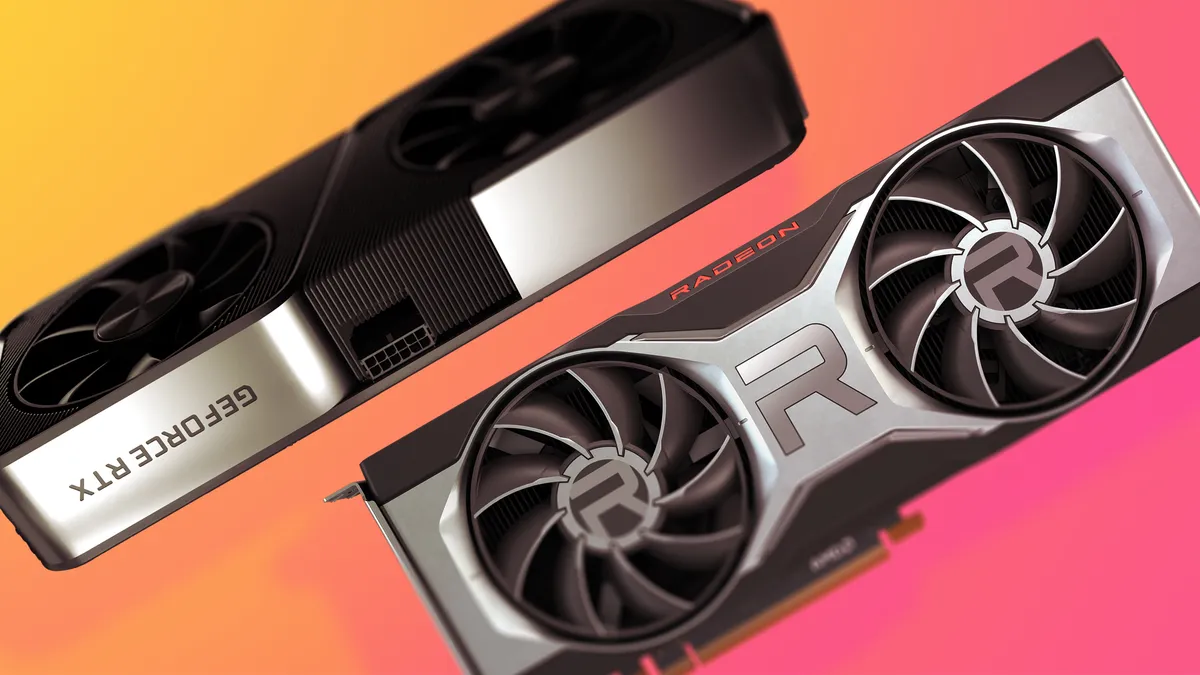
How to buy a graphics card: tips on buying a graphics card in the barren silicon landscape that is 2021
Intel has a new CEO now though, Pat Gelsinger, who has returned with a focus on sorting out Intel's manufacturing woes. Will this mean that Intel will bring its discrete GPU manufacturing back in-house? We'll have to wait and see, but the follow-up to Alchemist, Battlemage, could potentially use TSMC's N5 or N4 processes instead.
We'll hopefully hear more about Alchemist at the Intel Innovation event on October 27–28.

