





It took a lot of time for AMD to release its FidelityFX Super Resolution (FSR). But now that it’s upscaling tech is well established in the hands of developers, AMD is taking the opportunity to proudly announce that there are now 71 supporting games either already released, or under development. AMD goes as far as to state that FSR has become “the fastest adopted software gaming tech in AMD history.”
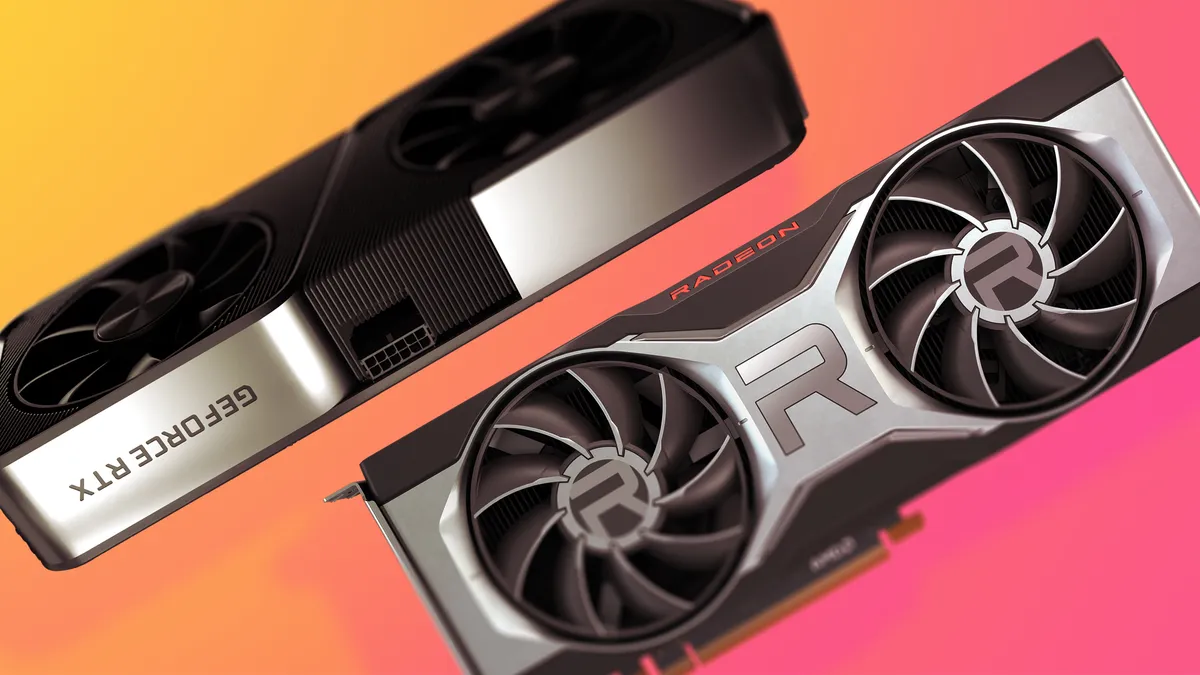
How to buy a graphics card: tips on buying a graphics card in the barren silicon landscape that is 2021
A list of current and upcoming FSR supporting games includes some major titles, such as Far Cry 6, F1 2021, Resident Evil Village, Horizon Zero Dawn, Godfall, Deathloop and God of War. These are just some of the titles on a list that's growing rapidly, and it's certainly impressive given that FSR was only released six months ago.
AMD’s FSR aims to achieve the same thing as Nvidia’s competing, yet functionally different DLSS technology, which is to upscale game images to a higher resolution. The main difference between the two is that while Nvidia uses an AI-based temporal upscaling method, AMD’s FSR relies on spatial upscaling with no AI. This makes AMDs solution easier to implement. There's also baked in Unity and Unreal Engine support
FSR is also an open source technology, and is supported by some older cards, and even many Nvidia cards. In contrast, DLSS is restricted to RTX cards only.
Our experience with FSR is generally positive, with consistent performance and image quality that indicates that FSR is a mature and stable tech, though it’s not perfect. The latest DLSS 2.x titles really do look amazing and in some cases can be all but indistinguishable from native resolution. So while DLSS has the edge in image quality, FSR is a viable alternative that's easier for developers to implement while being less demanding on hardware.
AMD and Nvidia are clearly deeply committed to their upscaling tech. We frequently receive PR emails from both companies touting new game support. Don’t forget, there will soon be a third player in the upscaling game. Intel’s XeSS technology is also based on AI augmentation which makes it more comparable to DLSS than FSR. However, unlike DLSS, XeSS will work on selected competing GPUs, which could make life difficult for both FSR and DLSS.
Is there room in the market for three different image upscaling technologies? Perhaps AMD will develop its own AI based technology, but for now, if you’ve got an FSR supporting game, give it a try. The results might surprise you!

