Back in the 1990s, my fellow PC chums and I thought we had stumbled across a magic trick with Windows 95, something that we thought nobody else knew about: holding the shift key when you hit restart just fired up the operating system again, not the whole PC. Alas, it turns out that we were all just very naive, and Microsoft's software engineers had deliberately coded this functionality.
Yes, I know that's blatantly obvious—it's not like Windows 95 was created out of mystic spells and ground up weevils—but back then, there was surprisingly little in the way of information about the inner workings of Windows, let alone any comprehensive guides to every function and feature.

"The code in win.com prints the 'Please wait while Windows restarts…' message, and then tries to get the system back into the same state that it was in back when win.com had been freshly-launched.
"[If] everything looks good, [then] win.com jumps back to the code that starts protected-mode Windows, and that re-creates the virtual machine manager, and then the graphical user interface launches, and the user sees that Windows has restarted."
Real mode for CPUs back then was a 16-bit, barebones level of function support, whereas protected mode, the normal state for running Windows, enabled better security, much larger memory mapping, and so on. But as Windows 95 existed at a time when there were still a lot of 16-bit applications and hardware around, PCs needed to boot in real mode first, and then switch to protected mode.
In other words, what the shift+restart process does is clear the table, as so to speak, and drop back into real mode. If everything is still all hunky dory, protected mode is fired back up, and Windows gets fully launched. All without restarting the entire system. Neat, yes? I can remember that this didn't always work, though, and Chen suggests that this is possibly down to iffy device drivers. Any readers who used Windows 95 PCs in the 1990s will know just how wonky donkey its drivers could be.

PC enthusiasts who've only ever known Windows 10 or 11 should be aware that this functionality is no longer present. Holding the shift key when you click restart forces a cold reboot and enables the Windows Recovery Environment, a blue screen of…not death, but useful tools for fixing things.
Modern hardware, especially DRAM and SSDs, is so fast compared to the standards of 30 years ago that any code shortcuts for restarting probably wouldn't make any discernable difference. But even so, it would be nice if there were an equivalent for rapidly restarting Windows, just as there is for the display driver (Windows key+ctrl+shift+b), without having to reboot my rig.
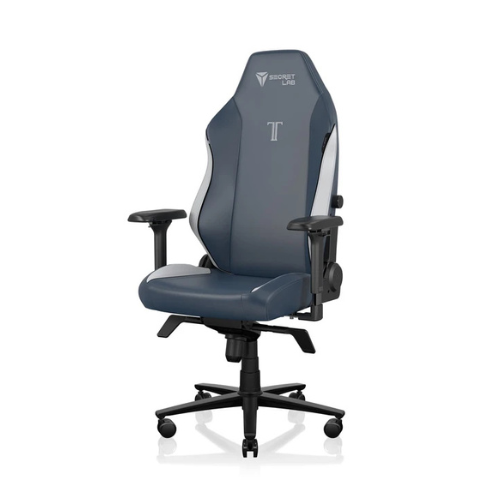
1. Best gaming chair: Secretlab Titan Evo
2. Best gaming desk: Secretlab Magnus Pro XL
3. Best gaming headset: Razer BlackShark V3
4. Best gaming keyboard: Asus ROG Strix Scope II 96 Wireless
5. Best gaming mouse: Razer DeathAdder V4 Pro
6. Best PC controller: GameSir G7 Pro
7. Best steering wheel: Logitech G Pro Racing Wheel
8. Best microphone: Shure MV6 USB Gaming Microphone
9. Best webcam: Elgato Facecam MK.2

You must confirm your public display name before commenting
Please logout and then login again, you will then be prompted to enter your display name.