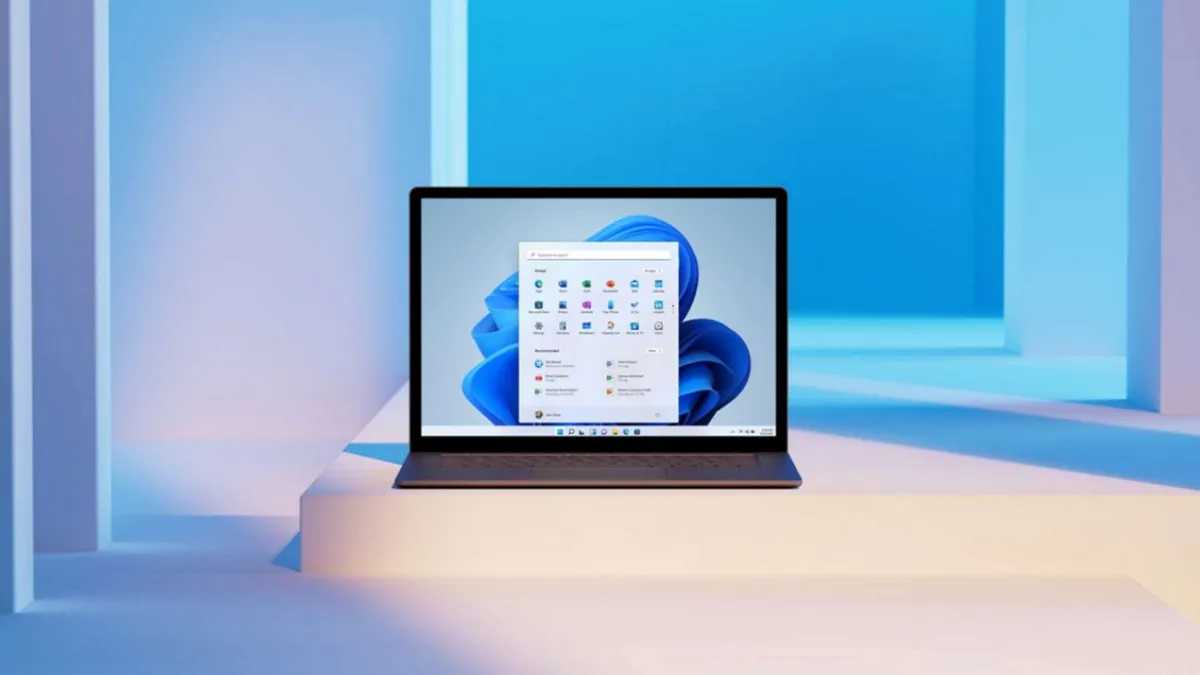
Today feels like a good day for Windows 11 fans. After the revelation that Microsoft might remove the requirement for an online MS account to set up Windows, along with reducing AI pervasiveness and even making Windows Update less of a pain, now we learn that Microsoft once aspired to reduce both the idle memory usage and installed disk size of Windows 11 by 20%. So, could this be back on the cards?
Responding to the blog post we covered earlier today outlining Microsoft's plans to improve the quality of Windows, former Windows development lead Mikhail Parakhin welcomed the new direction and recalled a project of his own that never came to fruition.
So glad Pavan is restarting this push! Back in the day Jeff Johnson and I had this 20/20 project: reducing Windows' idle memory consumption and the fresh install size on disk by 20%. We never got to finish - great to see this focus on fundamentals again. https://t.co/ms4mrPCrWfMarch 20, 2026
"Back in the day, Jeff Johnson and I had this 20/20 project," Parakhin says, "reducing Windows' idle memory consumption and the fresh install size on disk by 20%. We never got to finish—great to see this focus on fundamentals again."
Article continues belowNotably, current Windows and Devices VP at Microsoft, Pavan Davuluri, did not specifically mention an effort to hit 20% targets for memory and storage footprints of Windows 11 in the recent Windows Insider post. However, such a goal would fit pretty comfortably with many of the other measures aimed at improving Windows' "fundamentals."
More to the point, Davuluri does call out resource usage with "improved memory efficiency, lowering the baseline memory footprint for Windows, freeing up more capacity for the apps you run" among the listed ambitions.
In the current context where memory and storage pricing are thoroughly out of control, this feels like an absolutely on-point effort from Microsoft, even if you'd probably be well advised to retain a healthy scepticism regarding delivery. Believe all this when you see it, in other words.
Personally, I really like the sound of the section in Davuluri's Windows Insider post headed, "More fluid and responsive app interactions." Davuluri says the aim here is "improving the shared UI infrastructure that Windows experiences rely on, reducing interaction latency and overhead at the platform level."
My sense, or at least my hope, is that this will mean UI responsiveness and fluidity will finally be fully prioritised within the Windows kernel. At risk of being unceremoniously marched off PCG, anyone who uses both MacOS and Windows can't help but notice that the former feels much smoother in terms of how the interface moves and responds.
I've always assumed that Apple pays more attention to how UI calls are prioritised, ensuring that limited CPU cycles are given to UI processes that dictate the responsiveness and frame rate of the UI. I also think that Apple is better, though not perfect, at setting priorities in a way that minimises UI freezes while waiting for various background events to complete, like network or disk traffic.
MacOS's advantage is such that, in UI terms, it often looks smoother at 60 Hz than Windows does at 120 Hz-plus. Anywho, all this talk of a leaner, lighter, more responsive Windows 11 will be music to the ears of many PC enthusiasts. Here's hoping Microsoft delivers.

1. Best overall: AMD Radeon RX 9070
2. Best value: AMD Radeon RX 9060 XT 16 GB
3. Best budget: Intel Arc B570
4. Best mid-range: Nvidia GeForce RTX 5070 Ti
5. Best high-end: Nvidia GeForce RTX 5090

You must confirm your public display name before commenting
Please logout and then login again, you will then be prompted to enter your display name.