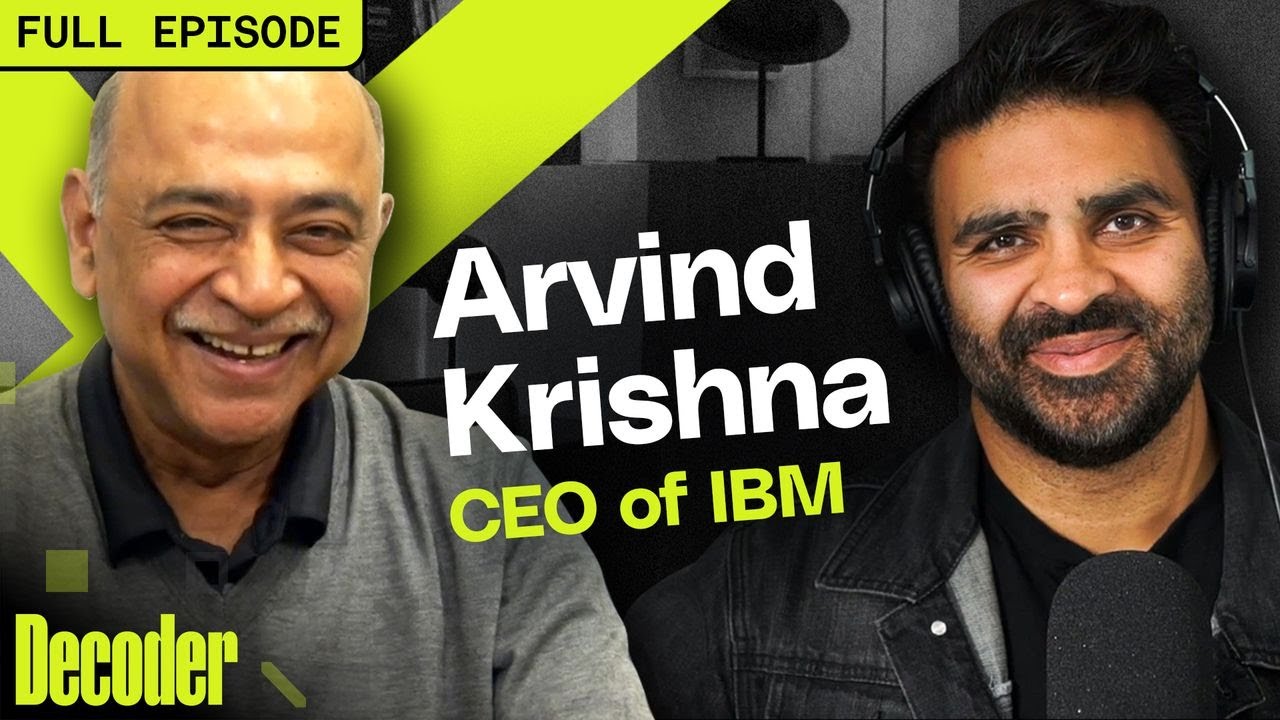
It might just be the industry I'm in and the chatter I'm most surrounded by, but there does seem to be a lot of anti-AI sentiment of late. In particular, there are very reasonable concerns that the AI industry might be a bubble that's getting ready to pop. One person who isn't quite so pessimistic, though, is the CEO of IBM, Arvind Krishna.
Krishna recently spoke with Nilay Patel, EIC of The Verge, on the Decoder podcast and sounded optimistic about the future of AI—which is, to my ears at least, quite refreshing, even if I don't agree on all points. In particular, although he does explicitly say "no", we're not in an AI bubble, his explanation, at least on my listening, doesn't seem to completely rule out this possibility; rather, it explains how such things aren't all-or-nothing.
I say this is "refreshing" just because of how one-dimensional a lot of AI talk can be: either 'AI sucks and the bubble's going to burst' or 'AI is an amazing innovation that will revolutionise everything.' The IBM CEO's perspective, however, injects what I think is a little more nuance and realism into the debate, by reminding us of a very simple fact: in industry, there are often some winners and many more losers. That's not how he phrases it, of course, but that's what I'm taking from it.
He explains that we've already seen the same thing with social media: "This is a race towards who can get more and more of the world’s 7.5 billion people to become subscribers of a given model because the next bet becomes that network scale and those economies of scale that will allow you to go succeed. You’ve seen that movie play out. That was social media in the last generation."
That's another useful reminder for us: The extra returns that are needed if the AI industry is to not be a bubble must come from getting more users on board. There's no way around that. This is a simple point that's often lost in the bigger, more macroeconomic discussions. Whether those users can be captured is an open question, though, as far as I can tell.

Krishna does admit, however, that there's no telling who will be the winner here. Reading between the lines here, perhaps this is what contributes to the view that the AI industry is obviously in a bubble, because people focus on the current big players such as OpenAI. But even if OpenAI can't recoup its investments, someone else might be able to as the technology develops.
He goes on to explain that some of the capital expenditures on AI seem, at present, unable to be recouped, as you'd need hundreds of billions "of profit just to pay for the interest." Sam Altman, the interviewer notes, seems to think he can get these returns.
"But," the IBM CEO replies, "that’s a belief. It’s a belief that one company is going to be the only company that gets the entire market. I got it, that’s a belief. That’s what some people like to chase…I think it’s fine. I mean, they’re chasing it. Some people will make money, some people will lose money. If they make it, then they are the sole surviving company."
The point he's making, it seems to me, is that there can be a small number of big winners, as was the case with the dot-com boom and with social media, but it's anyone's guess who those winners will be. Perhaps, as with dot-com, it might be difficult to tell in advance who they'll be.
None of this, to my ears, is incompatible with the notion that the AI industry is a bubble that must burst. Companies can expend capital that they won't collectively recoup, the market can pop, resulting in most companies going bust, and a few can swoop in to make use of the capital and technological advancements already there, all while the inflated valuation of the industry as a whole shrinks.
But much of this depends on the extent to which the technology improves, of course. And here Krishna is optimistic: "I think you’ll get a 10x advantage on the pure silicon side. You’re going to get a 10x from the design side. Then there’s the third piece. I think there’s a lot of work to be done around memory caching and how you deploy these models.
"So, there’s a 10x advantage from the software side. You put those three 10s together, and that’s a thousand times cheaper. It is going to get a lot cheaper, but it’ll take five years to play through."
I suppose only time will tell.
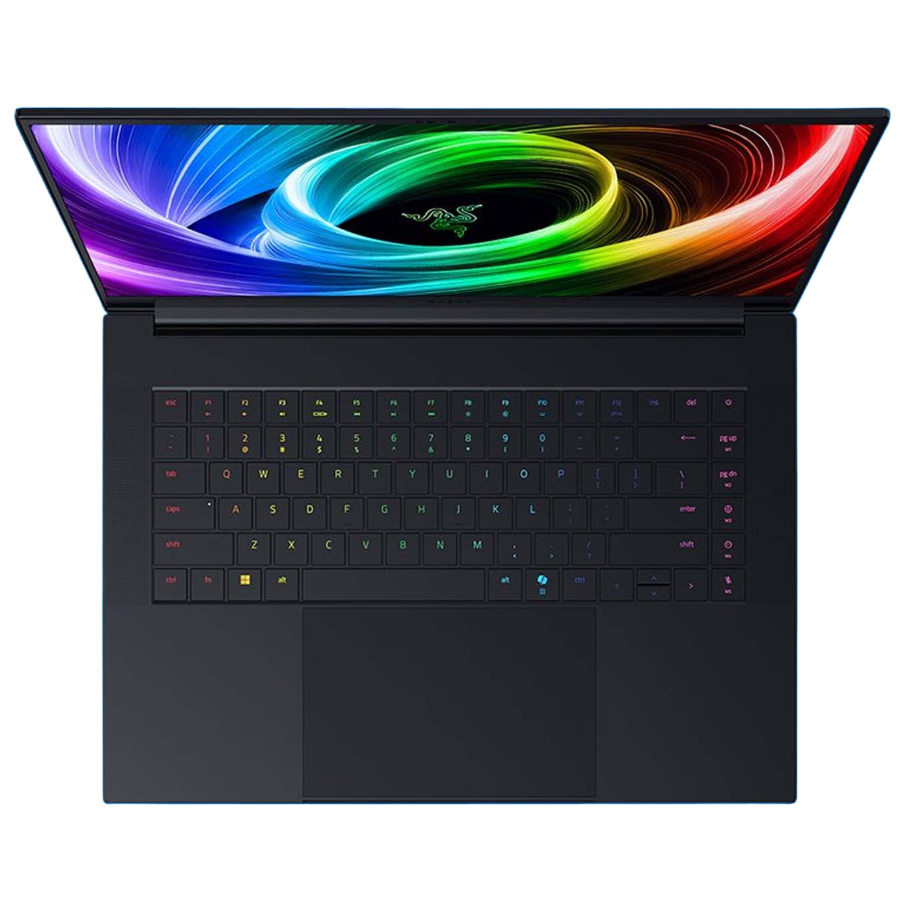
1. Best gaming laptop: Razer Blade 16
2. Best gaming PC: HP Omen 35L
3. Best handheld gaming PC: Lenovo Legion Go S SteamOS ed.
4. Best mini PC: Minisforum AtomMan G7 PT
5. Best VR headset: Meta Quest 3

You must confirm your public display name before commenting
Please logout and then login again, you will then be prompted to enter your display name.