You are now subscribed
Your newsletter sign-up was successful
Want to add more newsletters?

Every Friday
GamesRadar+
Your weekly update on everything you could ever want to know about the games you already love, games we know you're going to love in the near future, and tales from the communities that surround them.

Every Thursday
GTA 6 O'clock
Our special GTA 6 newsletter, with breaking news, insider info, and rumor analysis from the award-winning GTA 6 O'clock experts.

Every Friday
Knowledge
From the creators of Edge: A weekly videogame industry newsletter with analysis from expert writers, guidance from professionals, and insight into what's on the horizon.

Every Thursday
The Setup
Hardware nerds unite, sign up to our free tech newsletter for a weekly digest of the hottest new tech, the latest gadgets on the test bench, and much more.

Every Wednesday
Switch 2 Spotlight
Sign up to our new Switch 2 newsletter, where we bring you the latest talking points on Nintendo's new console each week, bring you up to date on the news, and recommend what games to play.

Every Saturday
The Watchlist
Subscribe for a weekly digest of the movie and TV news that matters, direct to your inbox. From first-look trailers, interviews, reviews and explainers, we've got you covered.

Once a month
SFX
Get sneak previews, exclusive competitions and details of special events each month!

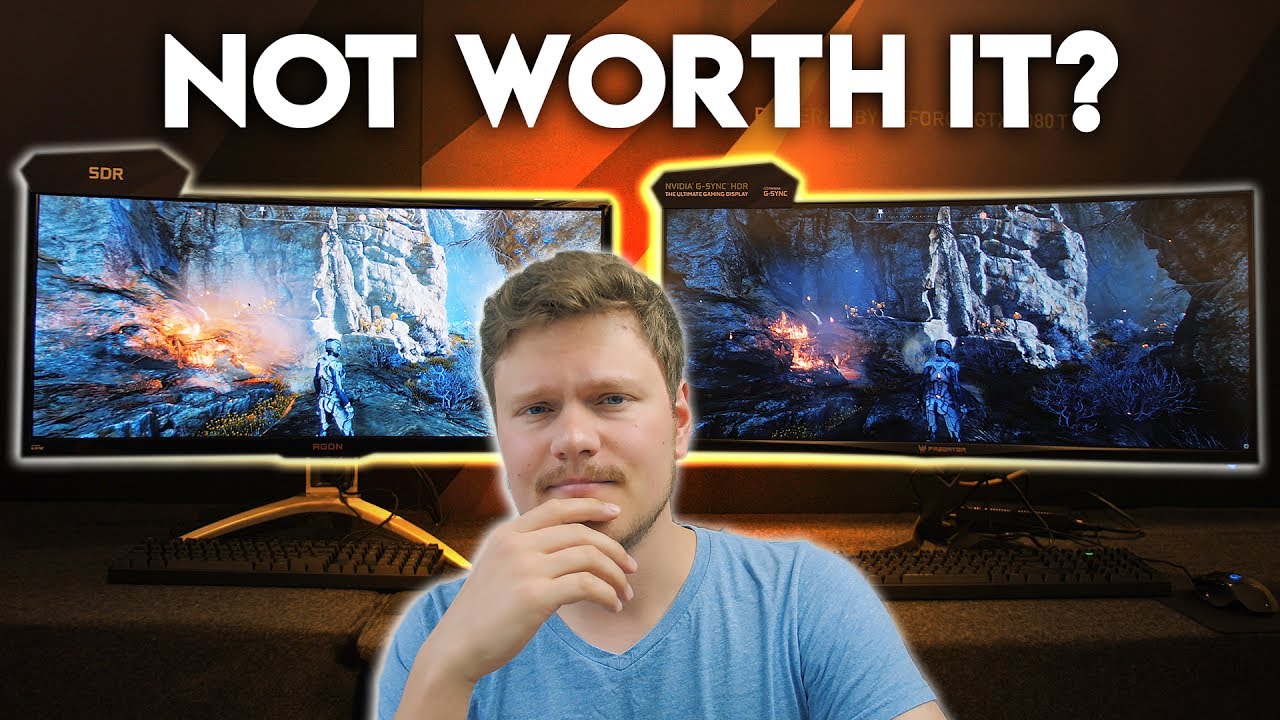
There is lot of hype surrounding high dynamic range (HDR), a new monitor technology that expands the color gamut and contrast on compatible displays. As opposed to the 4K movement, which adds more pixels for a superior picture compared to 1080p, HDR is all about better looking pixels with brighter and more colorful visuals (if you're unfamiliar with HDR, check out TechRadar's detailed primer). This notion was reinforced when Nvidia demonstrated two monitors side-by-side, one with HDR and one without. However, a follow up test by HardwareCanucks reveals the demonstration might have been rigged to make it appear as though HDR looks better than it really does.
After performing a factory reset on the non-HDR monitor, HardwareCanucks performed a second comparison, and this time the SDR looked much better than before, with the HDR monitor even looking worse in some scenes.
Mass Effect: Andromeda was chosen for the test sample since it has an HDR profile that, in theory, should look much better on an HDR display. In some cases, it still does—the sky doesn't look as washed out as it does on the non-HDR monitor. However, there are areas where the HDR displays an overexposed scene due to the lack of color information. In those cases, the non-HDR monitor arguably presents a superior picture. Some scenes also look muted on the HDR monitor versus the non-HDR panel.
As with all new technologies—in this case, HDR for gaming—it’s best to let the issues get ironed out before you run out and make a purchase. The fact that the SDR display had to be adjusted to make the HDR display look “better” is a telling sign. Right now, your best bet for a good gaming display is to focus on panel quality, latency, and refresh rate.
Have a look for yourself and tell us what you think: