If anyone has been thinking that Intel was in trouble, they might want to think again, at least if reports about its order books for the next few years are anything to go by. That's because its chip-making and die-packaging services appear to have captured the interest of Apple, Broadcom, and Google for future processors and other semiconductor devices.
This is all according to a report by GF Securities HK Brokerage Ltd, with Jukan on X offering a key snippet. One particular table shows Intel's 18A-P and 14A process nodes, as well as its EMIB (Embedded Multi-die Interconnect Bridge) packaging technology, being used by Apple for a 'smartphone SoC' and a non-specified ASIC, as well as Google for a future tensor processing unit (TPU), plus several others.
I didn’t see this coming…It looks like Apple’s ASIC—and an unidentified Broadcom ASIC as well—may be using Intel for back-end packaging. https://t.co/zidXMELTOa pic.twitter.com/gt3Y1OKTTBDecember 18, 2025
Another post by Jukan also shows commentary from GF Securities that claims AMD and Nvidia are considering Intel's 14A process node for their server SKUs, though the exact wording of "we continue to expect the likely engagement" is pretty non-commital.
Article continues belowBut even if only a fraction of this is true, it's certainly good news for Intel, as it currently has very few customers for its foundry services beyond, well... itself. We already know that its forthcoming Panther Lake chips will, in part, be manufactured on the 18A process node, and the massive Nova Lake processors are likely to use it more extensively as well. But that's pretty much it for the foundry's latest production tech.
Intel's 14A is still several years away from being fully up-and-running for chip making, so even if all these orders do go ahead, it won't significantly help the company's financials to begin with. But if Intel does manage to secure chip and packaging orders from Apple, et al then the days of the foundry service making huge losses are surely numbered.
GFHK: We see a high likelihood that NVIDIA and AMD’s server SKUs will use Intel 14A.PTL yields reached 60–65% as of November, and the target is 70% by the end of 2025.$INTC pic.twitter.com/K6pcx7gakrDecember 18, 2025
As things currently stand, the majority of high-end processors are made by TSMC, with Samsung in a very distant second place, and as the current DRAM crisis proves, having all your silicon eggs in one photolithographic basket is not good for stability and competition.
Many readers will be familiar with the 'Intel inside' sticker that has adorned many a PC over the years. Perhaps by the end of the decade, we'll see a version of this applied to boxes for phones, network switches, or even CPUs from AMD and Nvidia. Stranger things have happened in the world of tech, that's for sure.
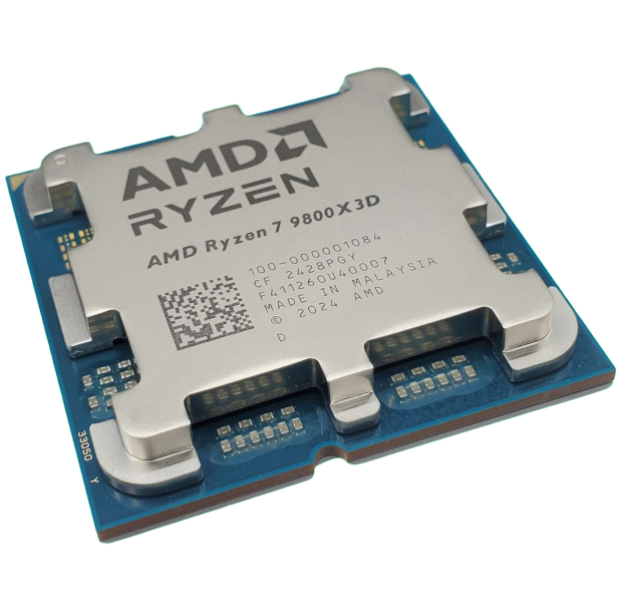
1. Best CPU: AMD Ryzen 7 9800X3D
2. Best motherboard: MSI MAG X870 Tomahawk WiFi
3. Best RAM: G.Skill Trident Z5 RGB 32 GB DDR5-7200
4. Best SSD: WD_Black SN7100
5. Best graphics card: AMD Radeon RX 9070

You must confirm your public display name before commenting
Please logout and then login again, you will then be prompted to enter your display name.