Join The Club





If you've ever wanted to see how a nearly 50-year-old computer fetches data, you're in luck. One designer has recently created a simulation to do just that, and it's beautiful.
Shared to X, user @zzznah (Alex Mordvintsev) has shown a short clip of a simulation of an Atari 2600 grabbing data from ROM at the CMOS FET level. This is to say it is tracking that data moving between circuits on a very tiny level, which is arguably far too scattered to actually make out. It's seriously impressive nonetheless.
Working on the new simulator. I just wanted to see what Atari2600 fetching data from ROM looks like at CMOS FET level(@tinytapeout TT09 Atari circuit by @__ReJ__) pic.twitter.com/RuPrAsOndTFebruary 19, 2026
Mordvintsev has shared that it's the TT09 Atari circuit from Tiny Tapeout, a chip platform that uses community feedback and open source models to create chip models that users can use. In this case, they used Tiny Tapeout's model as a base to build their own simulation.
Article continues belowMordvintseve has said that they are currently working on a version of the simulation that others can test. This means, should you want to, you should be able to run it, or some other old chip, yourself in the near future.
The Atari 2600, on which this simulation is based, launched in 1977 in North America, with Europe and Japan following later, and cost just under $200 at launch (around $1,000 today when accounting for inflation). In other specs, the Atari 2600 has a whopping 128 bytes of RAM, plus an 8-bit 1.19 MHz CPU. As you can assume from the simulation fetching data from ROM, the device uses ROM cartridges for games.

The Atari 2600 launch games tended to be 2K ROMs. But slowly worked their way up in size over time, and eventually ended up using the bank switching technique. With this, some games could even get up to a whopping 64 KB.
Though simulating the transfer of data for a 48-year-old device may not have many practical applications, it's neat to watch and a sign of how far technology has come since. It's also reminded that I haven't even touched a physical ROM in at least a handful of years now.
This all makes me reflect on just how complex things have gotten in the half a century since. Despite its age, even the simulation is moving so quickly, with so many strands, that I find it really hard to keep track of it.
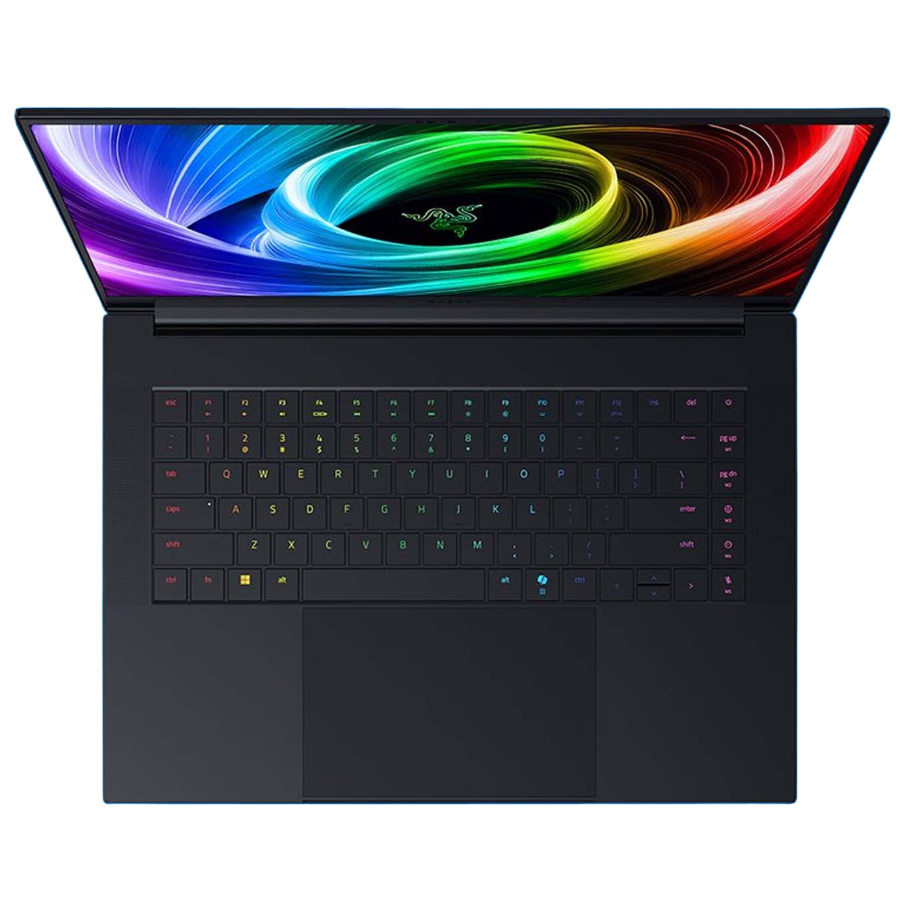
1. Best gaming laptop: Razer Blade 16
2. Best gaming PC: HP Omen 35L
3. Best handheld gaming PC: Lenovo Legion Go S SteamOS ed.
4. Best mini PC: Minisforum AtomMan G7 PT
5. Best VR headset: Meta Quest 3

You must confirm your public display name before commenting
Please logout and then login again, you will then be prompted to enter your display name.