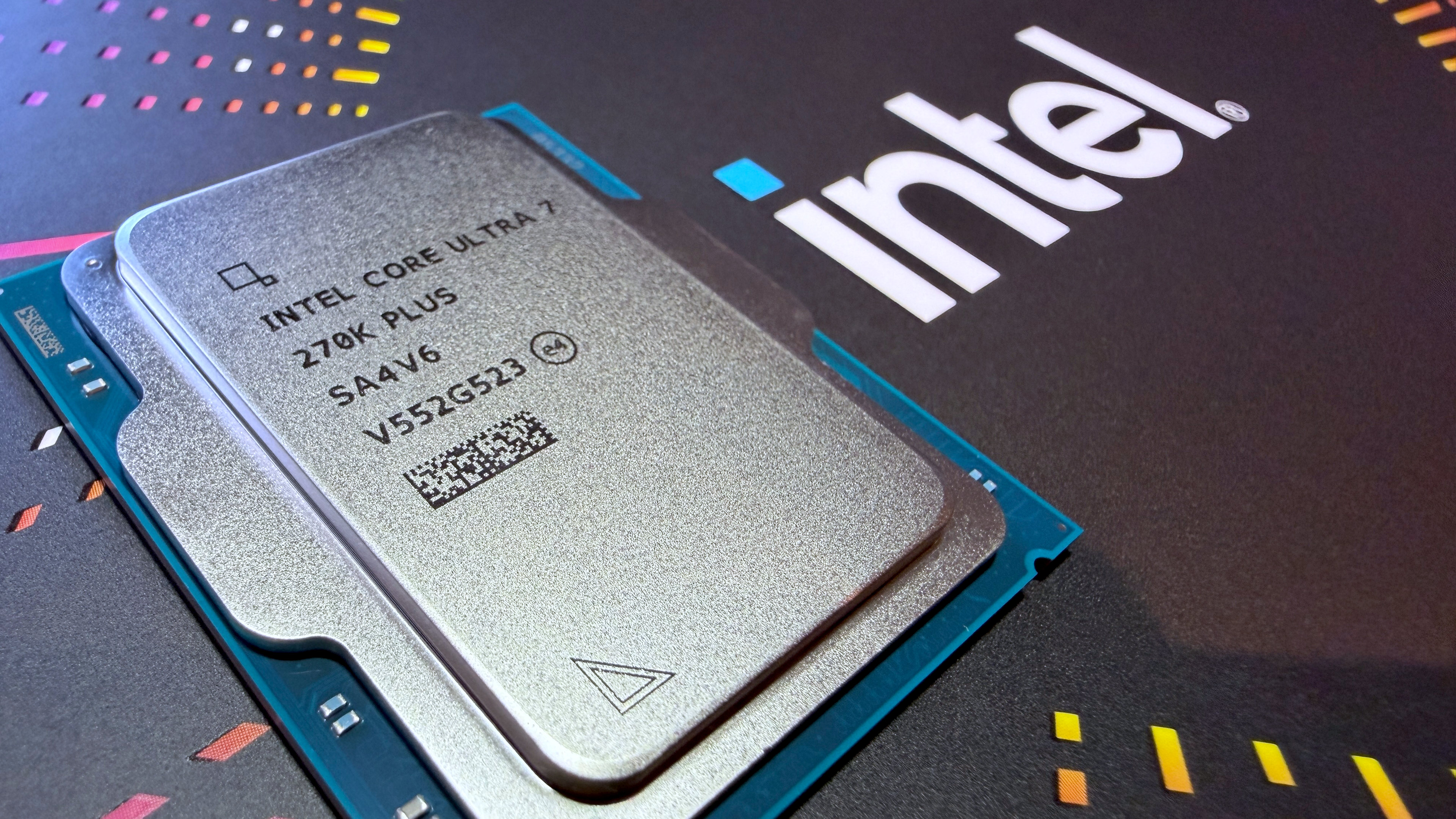
Our Verdict
Don't be fooled by the $199 price tag. The Core Ultra 5 250K Plus might look like a budget processor, but it performs like an Ultra 7 class chip, and there's nothing to touch it for the money. That said, the Core Ultra 7 265K isn't that much more expensive, and it is the better chip for content creation tasks.
For
- Exceptional value for money
- Solid performance
- Great all-round chip
Against
- The 20-core 265K is only $70 more expensive
- A little more power hungry than the 245K
- Dead-end platform
PC Gamer's got your back Our experienced team dedicates many hours to every review, to really get to the heart of what matters most to you. Find out more about how we evaluate games and hardware.
For the refresh of its Arrow Lake-based desktop processor range, Intel has released just two new chips: the brilliant Core Ultra 7 270K Plus and this one, the equally brilliant $199 Core Ultra 5 250K Plus. Apologies for throwing in a review spoiler right at the start like that, but if you've already seen the score and the hardware specs, you won't be surprised in the least bit.
Given its Ultra 5 name, it makes sense to directly compare the 250K Plus to the Core Ultra 5 245K, which was launched back in October 2024. While both processors sport six P-cores, Intel has added four more E-cores to the 250K Plus, for a total of 18 cores and 18 threads.

Cores (P+E): 8+12
Threads: 18
Base clock: 4.2 GHz (P-core)
Boost clock: 5.3 GHz (P-core)
L3 Cache: 30 MB
L2 Cache: 30 MB (Total)
Unlocked: Yes
Max usable PCIe lanes: 24
Graphics: Intel Graphics (4 Xe cores)
Memory support (up to): DDR5-7200
Processor Base Power (W): 125
Maximum Package Power (W): 159
Recommended customer price: $199/£199.99
The P-core boost clock has been raised by 100 MHz to 5.3 GHz, but the E-core boost clocks remain unchanged at 4.2 GHz. However, the Die-to-Die (D2D) clock has been significantly increased, from 2.1 to 3.0 GHz. This clock controls the links between all the tiles in the Arrow Lake processor, and a higher clock means less waiting for data to arrive.
Additionally, Intel has bumped the NGU clock for the fabric that links all the components inside the SoC tile (which is home to the memory controller), from 2.6 to 3.0 GHz, and it's also given the cache memory ring clock a slight nudge: 100 MHz more, so that it runs at 3.9 GHz in the 250K Plus.
Along with a faster memory controller, which now supports DDR5-7200 without resorting to overclocking, you now have a Core Ultra 5 chip that isn't massively different on the outside but is seriously quicker internally. And it's not merely a hand-picked bunch of Arrow Lake chips with an overclock, as the compute tile is a fresh wafer design. You might think that this won't make any difference, but the benchmark results tell you everything you need to know.
PC Gamer test PC specs

MSI MEG Z890 Ace | 32 GB Corsair Vengeance DDR5-6000 CL32 | Thermalright Peerless Assassin 120 SE | Zotac GeForce RTX 4070 | Corsair MP700 2 TB | Be Quiet! Pure Power 12 M 850 W | Thermal Grizzly Der8enchtable
Gaming performance
Gaming performance
Cyberpunk 2077 (1080p RT Ultra + DLSS Balanced)
| Product | Value |
|---|---|
| Intel Core Ultra 5 250K Plus | 118 Avg FPS, 93 1% Low FPS |
| Intel Core Ultra 7 265K | 117 Avg FPS, 90 1% Low FPS |
| Intel Core Ultra 5 245K | 115 Avg FPS, 84 1% Low FPS |
| AMD Ryzen 7 9700X | 99 Avg FPS, 59 1% Low FPS |
| AMD Ryzen 5 7600X3D | 117 Avg FPS, 59 1% Low FPS |
| AMD Ryzen 5 9600X | 107 Avg FPS, 72 1% Low FPS |

In some games, the 250K Plus is no better than the 245K, but it's also no worse than the Core Ultra 7 265K. In Metro Exodus Enhanced Edition and Total War: Warhammer 3, there's no appreciable difference between any of the Core Ultra chips, as a handful of frames per second isn't going to be noticeable during gameplay.
The faster internals of the 250K Plus come to light in Homeworld 3 and Baldur's Gate 3, and while you're not seeing an enormous leap in performance for the former, just 5% here and there, Baldur's Gate 3 ran 9% better on average, with 8% higher lows.
And then there's Cyberpunk 2077. Compared to the 245K, the 250K Plus only achieves a 3% higher frame rate overall, but thanks to its faster internals and more L3 cache (by virtue of having an additional E-core cluster), the 1% lows are an impressive 11% higher. An AMD X3D chip is better, of course, but they cost a fair bit more than $199.
It's worth noting that all of these figures were achieved with a top-end graphics card, pushing all of the game performance onto the CPU. The RTX 4070 is very much a mainstream card, and by the standards of what Intel's processors support, DDR5-6000 isn't especially fast, either.
What I'm getting at here is that you'll see this kind of performance with 'mere mortal' hardware: there's nothing special going on behind the scenes to make the 250K Plus this good in gaming, other than the fundamental architecture.
Content creation performance
Cinebench 2024
| Product | Value |
|---|---|
| Intel Core Ultra 5 250K Plus | 138 Single-core index score, 1817 Multi-core index score |
| Intel Core Ultra 7 265K | 135 Single-core index score, 1989 Multi-core index score |
| Intel Core Ultra 5 245K | 134 Single-core index score, 1471 Multi-core index score |
| AMD Ryzen 7 9700X | 131 Single-core index score, 1148 Multi-core index score |
| AMD Ryzen 5 7600X3D | 107 Single-core index score, 810 Multi-core index score |
| AMD Ryzen 5 9600X | 133 Single-core index score, 911 Multi-core index score |
Where things really stand out are in the content creation tests. If you use your PC for more than just gaming, you'll be pleased by the 250K Plus' single-core performance, and thanks to its support for 18 threads, you won't be disappointed in the least bit by how well it handles multithreaded workloads.
For photo and video editing, code compiling and offline rendering, the little 250K Plus is genuinely very good. In anything heavily multithreaded, there's nothing to touch it in this price bracket: not from Intel, not from AMD.
Power and thermals
Power and thermal performance
Average power consumption in Baldur's Gate 3
| Product | Value |
|---|---|
| Intel Core Ultra 5 250K Plus | 91 |
| Intel Core Ultra 7 265K | 94 |
| Intel Core Ultra 5 245K | 83 |
| AMD Ryzen 7 9700X | 75 |
| AMD Ryzen 5 7600X3D | 68 |
| AMD Ryzen 5 9600X | 86 |
The downside to all this extra performance is that the Core Ultra 2 250K Plus requires more power than the 245K. In Baldur's Gate 3, it's only an additional eight watts (91 vs 83 W), which is nothing to worry about, and a mere two watts more in the Cinebench multicore test, on average.
However, the 250K Plus hits a peak of 170 W in the latter benchmark, albeit only briefly, whereas the 245K always stays under its 159 W limit. The good news is that none of the power levels reached are enough to stress a simple air cooler, and where you'd preferably want to use a big AIO liquid cooler with the 270K Plus, a $40 air system is more than enough to keep temperatures under 70 degrees Celsius.
Overall verdict

Right at the top of this review, I've said Intel's new chip offers "Ultra 7 class performance for an Ultra 3 class price tag," and while there is a touch of hyperbole to that statement (the 250K isn't quite as good as the 265K in content creation), it's not far off the mark, as shown by my test results.
It's arguably a better processor than AMD's Ryzen 5 9600X, both in terms of outright performance and value-for-money, and it's a more rounded/useful product than the Core Ultra 5 245K. Sure, you can pick up a Ryzen 5 9600X for $183 at Amazon, at the time of writing, but for an extra $16, you're getting a lot more for a handful of bucks. Compared to the Ryzen 7 9700X, which is $75 more expensive than the 250K Plus, it looks like a must-buy, right?
Well, perhaps not in some cases, and definitely not in others. Starting with the former, while $199 is extremely competitive, you can buy the Core Ultra 7 265K for around $260-270, at the time of writing. It's not as good as the new chip in gaming, but it does handle content creation tasks better, thanks to having two more P-cores.

If that's important to you, it's worth paying the extra for the 265K or perhaps splashing out even more for the superb Core Ultra 7 270K Plus.
What's most likely to put a lot of PC enthusiasts off from grabbing a 250K Plus for a new build is the fact that these Arrow Lake Refresh chips are likely to be the last we'll see from Intel for its LGA 1851 socket. This has always been the case with Intel processors, where its platforms only support a handful of CPU generations, unlike AMD's AM4 and AM5 sockets, which seemingly support everything (especially the former) churned out by Team Red.
So, if you're the kind of PC gamer who likes to buy a motherboard and keep it for many years, upgrading the CPU when funds permit, then you'd be better off going down the AM5 route. On the other hand, if you're like me—use the same processor and board for years, swapping them both when upgrading—then the dead-end nature of the LGA 1851 socket won't matter so much.
And if that's the case, getting an 18-core, 18-thread processor for $199 instead of a six-core, 12-thread or an eight-core, 16-thread chip makes an awful lot of sense.
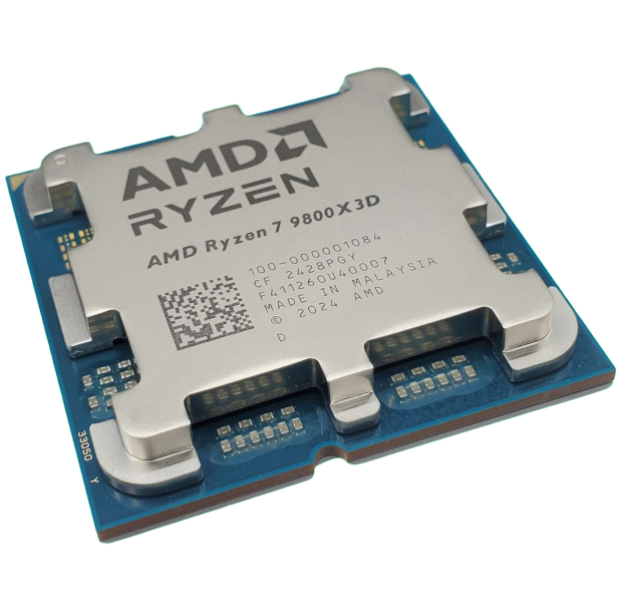
1. Best overall:
AMD Ryzen 7 9800X3D
2. Best budget:
AMD Ryzen 5 5500
3. Best mid-range:
Intel Core Ultra 5 250K Plus
4. Best high-end:
AMD Ryzen 9 9950X3D
5. Best AM4 upgrade:
AMD Ryzen 7 5700X3D
6. Best CPU graphics:
AMD Ryzen 7 8700G
Don't be fooled by the $199 price tag. The Core Ultra 5 250K Plus might look like a budget processor, but it performs like an Ultra 7 class chip, and there's nothing to touch it for the money. That said, the Core Ultra 7 265K isn't that much more expensive, and it is the better chip for content creation tasks.

You must confirm your public display name before commenting
Please logout and then login again, you will then be prompted to enter your display name.