Has AMD decided to have its arch rival, Intel, manufacture chips in the USA? That's the dramatic conclusion some observers are drawing from a job ad posted by AMD.
According to this post on X, AMD is looking for new hires with experience of "taping out" chips with "PowerVia" technology. "This is HUGE!" the post concludes.
You heard it here first: AMD $AMD is planning to use Intel $INTC foundry to manufacture chips in the USA (not just packaging). During my job listing research, I uncovered a job listing posted by AMD that mentions Intel’s “PowerVia” under preferred experience… This is HUGE! pic.twitter.com/BSZgjadWDODecember 12, 2025
For sure, the Intel connection is clear enough. "PowerVia" is Intel's branding for what's known more generically in the chip-making industry as backside power. In the simplest terms, it's a new technology that involves moving the power delivery networks in chips below the transistors. It's claimed to result in faster and more efficient chips.
Article continues belowWhat's more, PowerVia is being introduced on Intel's upcoming Intel 18A node. Put all that together with Intel's stated desire to make chips for all comers on its new process nodes, the fact that "taping out" refers to how chip designs are finalised and sent to the factory for manufacturing and the broader impetus to bring chip manufacturing back to the US, and you have one possible and pretty exciting conclusion: AMD is going to make chips with Intel.
Of course, that is but one conclusion. It's also possible that AMD is merely evaluating Intel's new nodes and wants some hires with experience of Intel's latest tech.
Indeed, if you want to cover off all the bases, you'd have to account for the possibility that AMD has no real intention to make chips with Intel, but that if it wants to maximise the use of Intel as a bargaining tool against TSMC, where AMD currently makes most of its chips, it could pay to understand Intel's offering really well.
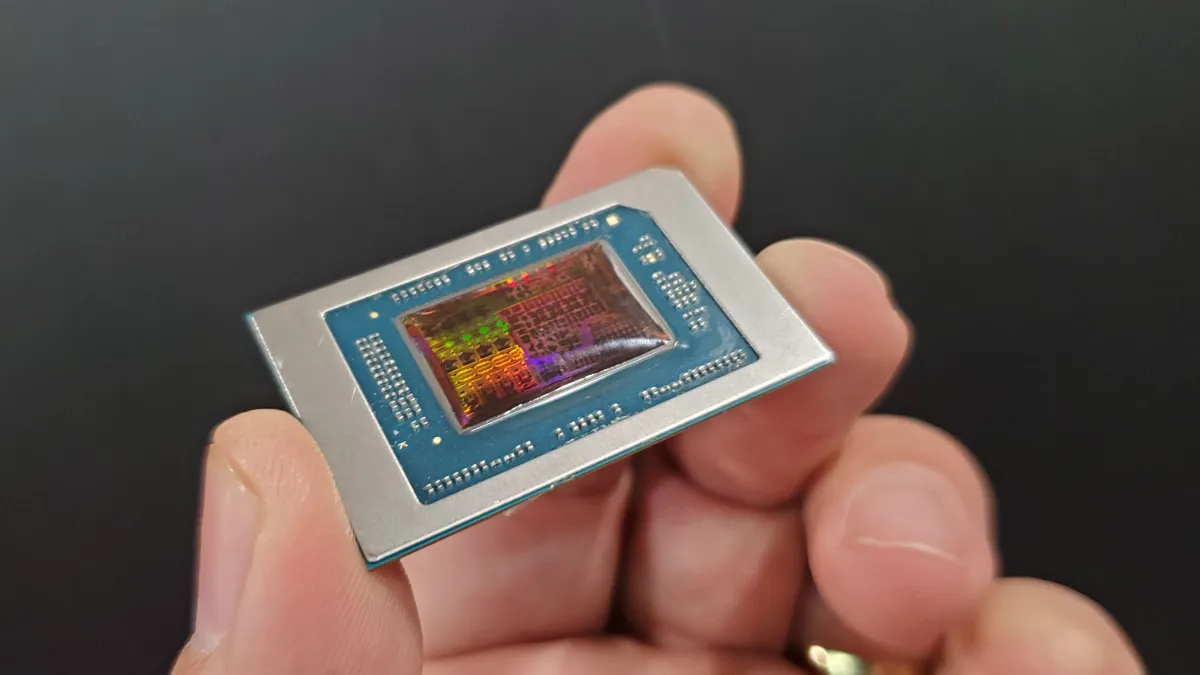
That's particularly true when you consider that TSMC, too, is planning on introducing backside power on its future A16 node, due to go into volume production late next year. On paper, this puts Intel ahead of TSMC when it comes to introducing backside power. And that could be a stick with which AMD might gently tap TSMC.
The reality, of course, is probably more complicated. Intel says it will release its new Panther Lake CPU using 18A silicon with PowerVia tech in January. Even if that does happen, it won't be entirely clear if Intel is really ahead of TSMC.
In the past, Intel has pushed chips out on nodes with poor yields in order to hit deadlines. One obvious example is the Cannon Lake chip on 10 nm in 2018. It was a tiny CPU without integrated graphics on account of Intel's inability to make 10 nm silicon at scale. But Intel wanted to be able to say it was selling 10 nm chips, so a small number of Cannon Lake CPUs were sold.
It wasn't until Ice Lake in late 2019 that intel was making proper 10 nm CPUs. And it really took until the release of Alder Lake in 2021 for Intel to move a substantial chunk of its CPU manufacturing onto 10 nm-class technology, by then rebranded to Intel 7.
In that context, it's hard to say exactly where Intel is with 18A. Maybe it's a killer node, ready to go at scale with great yields and performance and AMD is close to announcing plans to make the move.
Or maybe it's only just about usable for Intel internally, as per Intel 10 nm and Cannon Lake, and there's a great deal to prove before AMD, or any other really big customer like, I dunno, Apple, would seriously risk its relationship with TSMC to go with Intel's untested fabs.
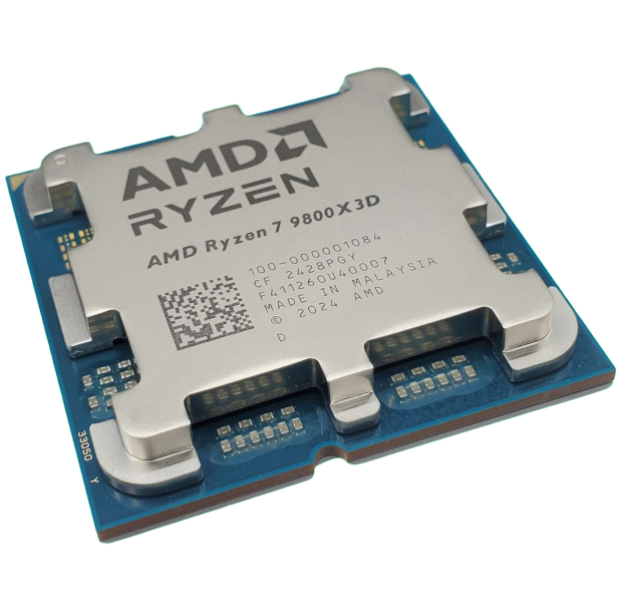
1. Best overall:
AMD Ryzen 7 9800X3D
2. Best budget:
AMD Ryzen 5 7600X
3. Best mid-range:
AMD Ryzen 7 9700X
4. Best high-end:
AMD Ryzen 9 9950X3D
5. Best AM4 upgrade:
AMD Ryzen 7 5700X3D
6. Best CPU graphics:
AMD Ryzen 7 8700G

You must confirm your public display name before commenting
Please logout and then login again, you will then be prompted to enter your display name.